About Curculio nucum C.Linnaeus, 1758
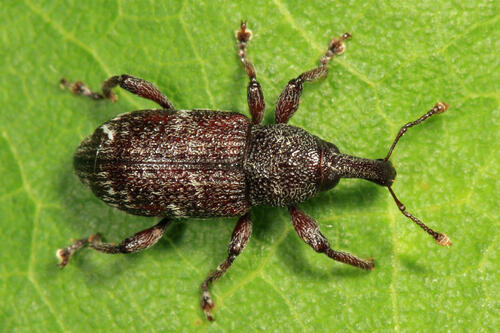
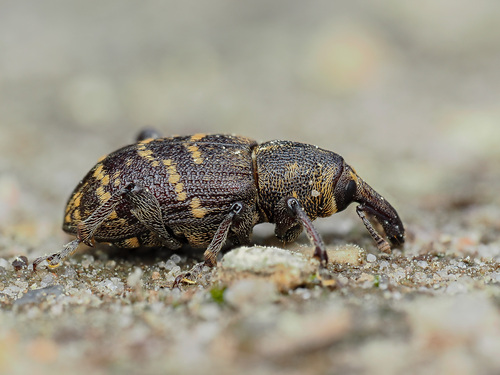
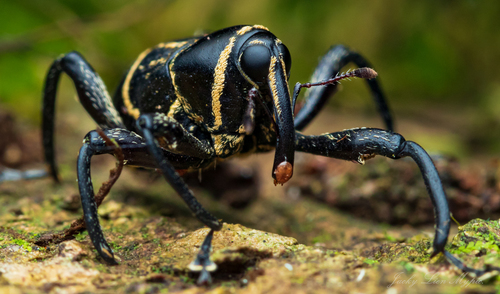
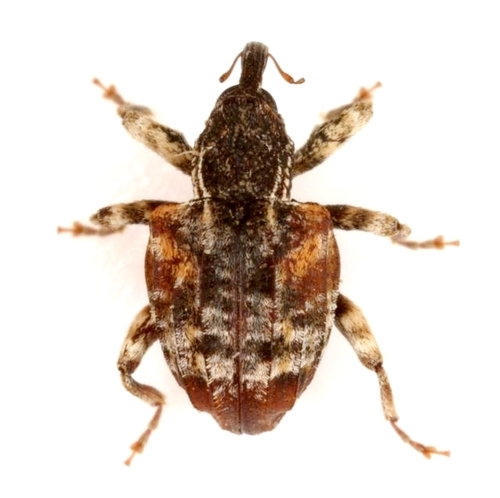
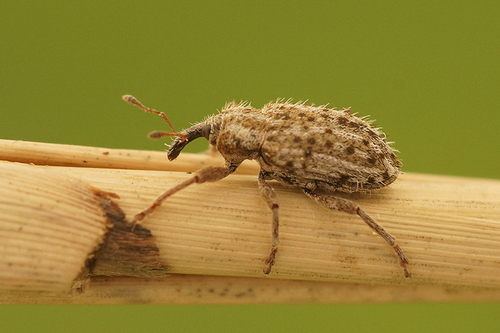
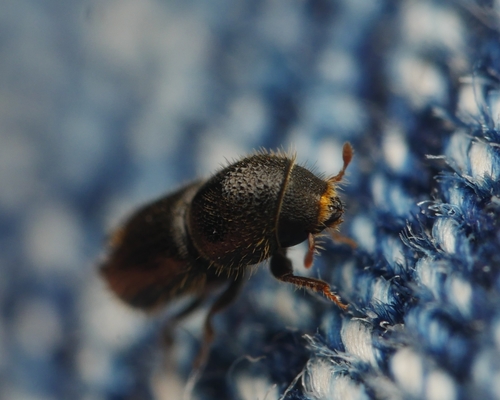
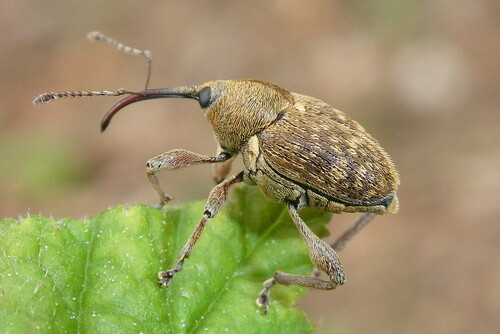
Curculio nucum, the nut weevil, has an adult body length between 6 and 8.5 mm. Females have a snout as long as the rest of their body, with a reddish tip, while males have a snout roughly one third shorter than this. The body covering is typically light brown, matching the color of mature hazelnuts. This species is frequently confused with Curculio glandium, the gland weevil, a common weevil in the same genus that lives on oaks. While the two species are similar overall, they differ in specific morphological traits: C. nucum has broader flagellum segments covered with semi-erect hairs, while C. glandium has adpressed hairs on its flagellum segments. C. glandium is closely related to C. nucum and C. undulatus, and all three are grouped into the glandium clade. C. cameliae from Japan is also related to this group. Other similar European species that live on oaks, including Curculio pellitus, C. venosus, and C. elephas, are grouped into the elephas clade. Species in the elephas clade have convex elytra and dense vestiture that hides the line of the first ventral segment. In contrast, weevils of the glandium clade have flattened elytra, and the first ventral segment is clearly visible through their sparse scales. The tribe Curculionini differs from other weevils and all other beetles by its unique cone-shaped mandibles, which move vertically rather than horizontally. The development of C. nucum mostly follows a two-year life cycle. Adult beetles emerge in spring from soil, where they have overwintered as mature adults. They feed on hazel buds and leaves, and adults can be found from May through the end of August. Females lay eggs inside maturing hazelnuts, laying one large, yolk-rich egg per nut around late July to early August. A single female can lay up to 20 to 30 eggs total. Larvae hatch one week after eggs are deposited, and immediately begin feeding inside the host hazelnut. They spend approximately one month inside the nut, consuming most of the nut's internal contents. By the end of summer, mature larvae exit the nuts through round holes, then burrow into the ground to build individual cells. After their first overwintering, most larvae enter diapause for the entire growing season and undergo metamorphosis the following summer. Newly formed adults then overwinter in their pupal cases before emerging the next spring. Adult females are reproductively immature when they first emerge, and ovarian development is only completed 1 to 2 months later, after they have finished feeding. A small number of individuals delay metamorphosis and spend more than one winter in the soil. This alternative life history, where individuals overwinter more than once, may provide additional benefits compared to a one-year life cycle, such as allowing survival through poor conditions like a lack of host hazelnuts. On the other hand, prolonged development can increase exposure to predators. Additionally, adult overwintering diapause may be more energetically costly than larval diapause, but it can allow adults to be better synchronized with their host plants.