About Cunonia capensis L.
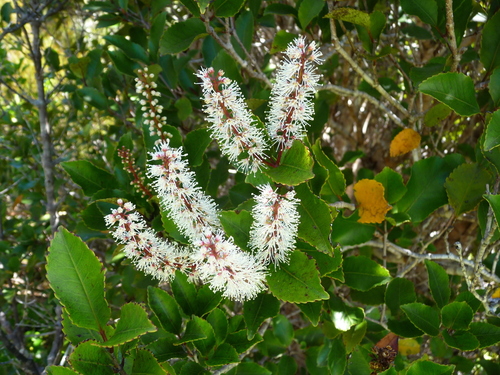
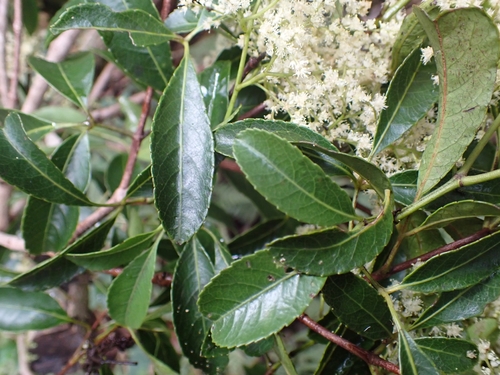
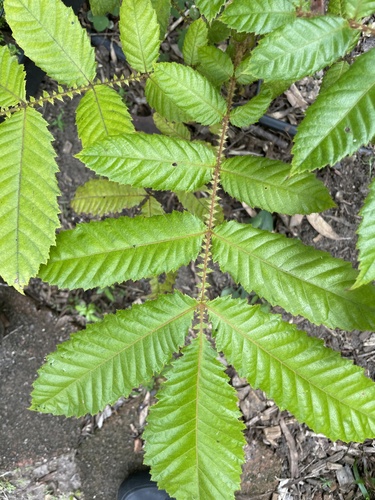
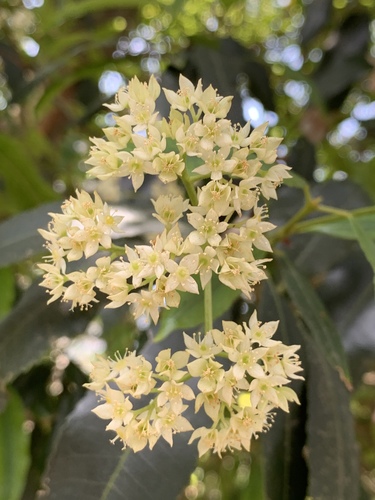
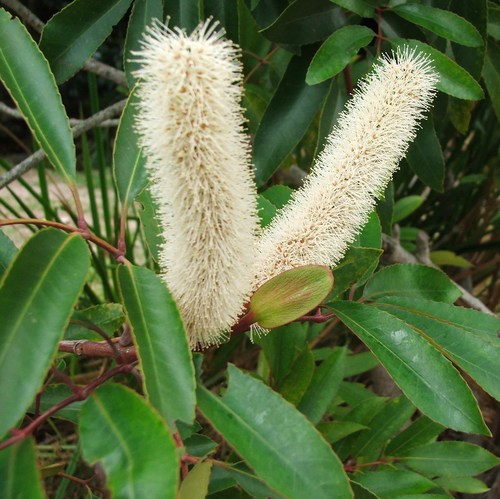
Cunonia capensis L., commonly known as the butterspoon tree, butterknife tree, African red alder, red alder, or rooiels, is a small tree native to southern Africa. It naturally occurs in the region’s Afromontane forests and along river banks, and strongly prefers moist sites or areas with high rainfall. Its natural distribution extends from Cape Town and the Western Cape of South Africa eastward to Eswatini and southern Mozambique. The entire genus Cunonia has a disjunct natural distribution: 23 of its 24 total species are found exclusively on the Pacific island of New Caledonia, making C. capensis the only species in the genus that grows outside of New Caledonia. This species is grown as an ornamental garden tree, valued for its attractive glossy foliage and clusters of tiny, scented white flowers. It is increasingly cultivated as an ornamental specimen tree across southern Africa. Cultivated specimens have glossy foliage with a red tint and clusters of cream-colored flowers. It grows successfully in both full sun and shade, and has a gentle, non-invasive root system that allows it to be planted safely near buildings. This trait has made it popular for use in built-up areas. It requires a consistently moist environment; trees planted in arid regions need frequent watering, particularly when young. This moisture requirement also makes it an excellent choice for marshy, waterlogged gardens or planting along river banks. It is usually propagated from its very small seeds, and young plants need plenty of water and some protection from direct sunlight. It is one of the fastest growing tree species native to southern Africa.