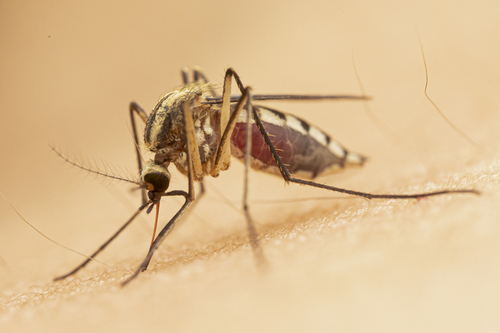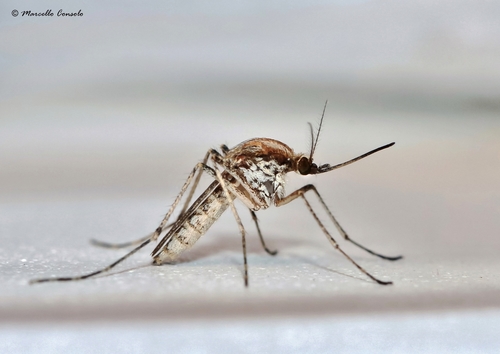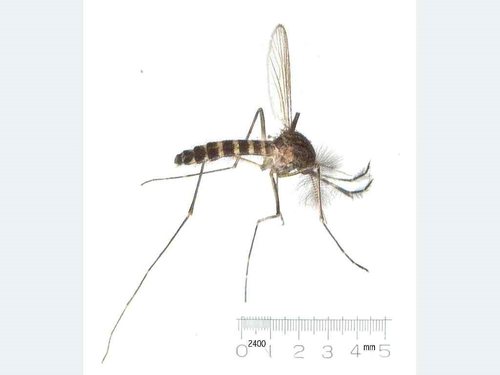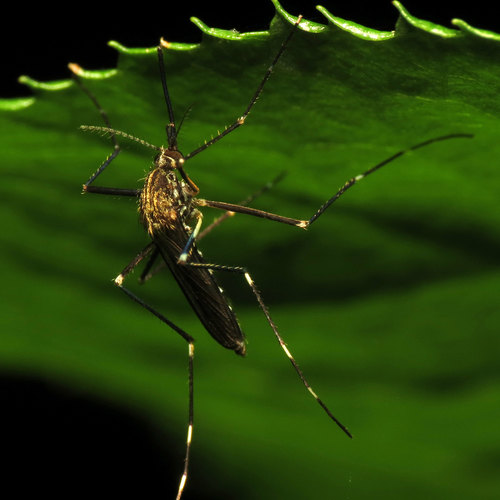
About Culex restuans Theobald, 1901
Culex restuans (Theobald, 1901) is a species of mosquito that has been recorded in Canada, the United States, Mexico, Guatemala, Honduras, and the Bahamas. This mosquito acts as a disease vector for St. Louis encephalitis and West Nile virus. West Nile Virus-positive specimens of this species were collected in Southern California in 2013. Like all dipterans, Cx. restuans is a holometabolous insect, meaning it has four distinct life stages: egg, larval, pupal, and adult. Gravid, blood-fed females of this species lay eggs in floating masses called egg rafts on the surface of standing water. Larval Cx. restuans can develop in a wide range of water qualities, from clean to heavily polluted. Larvae go through four separate larval instars before entering the pupal stage and finally emerging as fully developed adult mosquitoes. Under favorable conditions with abundant organic matter in the water, this entire life cycle can be completed in as little as 10 days. Immature Cx. restuans are most commonly found in small standing water containers, and discarded vehicle tires are a particularly common habitat for this species. These tire habitats matter for disease vector dynamics because they are often located close to human residential areas, and they help support the spread of the mosquito's range. Female Cx. restuans are less likely to lay eggs in containers that already hold larvae of their own species, and they prefer to oviposit in water that is high in nutrients. This oviposition behavior indicates that females choose egg-laying sites to reduce future competition for their offspring.