About Cucurbita ficifolia Bouché
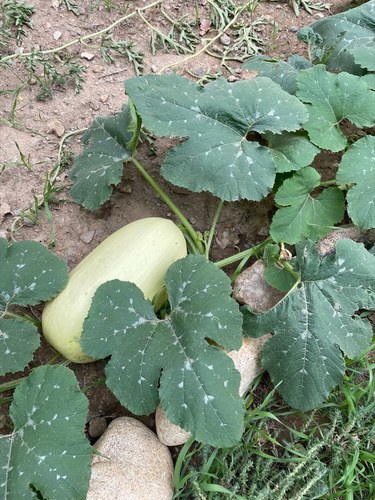
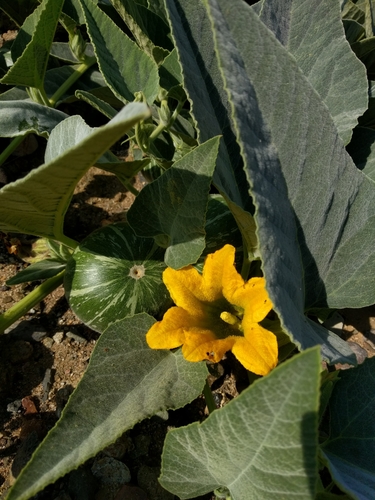
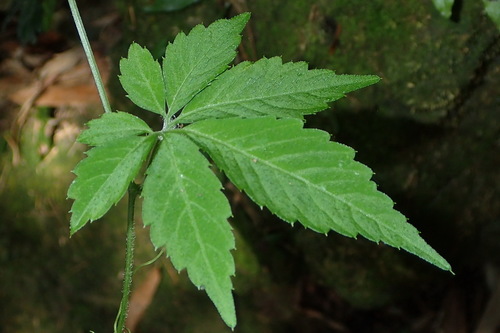
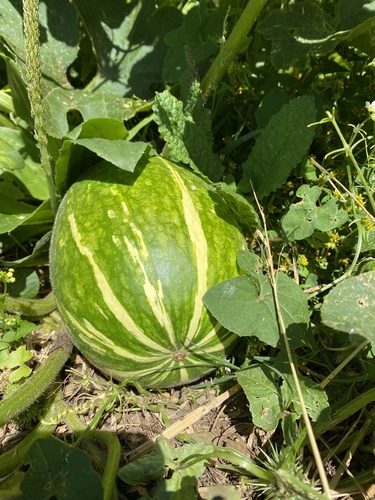
Early botanical keys described Cucurbita ficifolia Bouché as a perennial grown as an annual in temperate climates. More recent investigations have found that C. ficifolia is an annual, with the same lifespan as other annual domesticated Cucurbita species. Like these other annual species, C. ficifolia has a vining growth habit that can develop roots at its nodes. When given proper conditions, including a frost-free climate, it can grow indefinitely this way. Its stems can reach 5 to 15 meters long and produce tendrils that help it climb adjacent plants and structures. Its leaves resemble fig leaves, which explains its Latin species name ficifolia, meaning fig leaf. This plant is monoecious, with imperfect flowers: each flower is either male or female, but both flower types grow on the same individual. Its flowers are pollinated by insects, especially bees, and range in color from yellow to orange. Biosystematic studies confirm that C. ficifolia comes from an earlier evolutionary branch than the other major cultivated Cucurbita species, but also show that this species is not as biologically distinct as some earlier botanists thought. Unlike other domesticated Cucurbita, which have highly variable fruit, C. ficifolia fruit is consistent in size, shape, and color. The fruit is always oval and resembles a watermelon. This species is the only Cucurbita with black seeds, though some C. ficifolia plants also produce dark brown or buff-colored seeds that match those seen in other genus members. The oblong fruit has a diameter of 20 centimeters (eight inches), weighs 5 to 6 kilograms (11 to 13 pounds), and can produce up to 500 seeds. Its fruit skin ranges in color from light or dark green to cream. A single plant can produce more than 50 fruit, and harvested fruit can remain intact without decomposing for several years if kept dry. Genetic diversity within this species is shown by its cultivation across a wide geographic range. It also grows in a wide variety of agricultural systems, ranging from high-competition settings like dense rainy-season maize fields, to lower-competition, more intensive systems like dry-season maize fields, vegetable gardens, and commercial agricultural plots. Variations in productivity may also reflect underlying genetic diversity within the species. C. ficifolia is known to form interspecific hybrids with Cucurbita maxima, Cucurbita moschata, and Cucurbita pepo. Interspecific hybrids are almost always infertile after the first generation unless special techniques like embryo cultivation are used. C. ficifolia is native to the Americas, though the exact center of its domestication is unclear. Linguistic evidence suggests a Mexican origin, because names derived from the Nahuatl name "tzilacayotli" or "chilacayohtli" are used across a wide range, stretching as far south as Argentina. Biosystematic research has not been able to confirm this origin hypothesis. A literal translation of tzilacayotli is "smooth squash". Archeological records indicate that C. ficifolia was once the most widely distributed Cucurbita species in the Americas, cultivated from northern Chile and Argentina northwest all the way to Mexico. It is thought to have first spread from South America to the Malabar Coast of India in the 16th and 17th centuries, before later reaching Europe. Several of its common names, including Asian pumpkin, Malabar gourd, Siam squash, and Thai marrow, reflect this dispersal route to Europe. The fig-leaved gourd grows in temperate highlands at elevations up to 2,000 meters (6,600 ft). It is often used as a grafting rootstock for other cucurbit species with lower disease or stress resistance. C. ficifolia can be propagated by planting seeds or by layering. Rooted nodes can be cut to grow new plants. It cannot tolerate severe frosts. Across Asia, eating Cucurbita ficifolia is said to benefit people with diabetes. Multiple scientific studies have confirmed its hypoglycemic effect. It is used effectively to treat diabetes due to its high D-Chiro-Inositol content.