About Cucumis myriocarpus Naudin
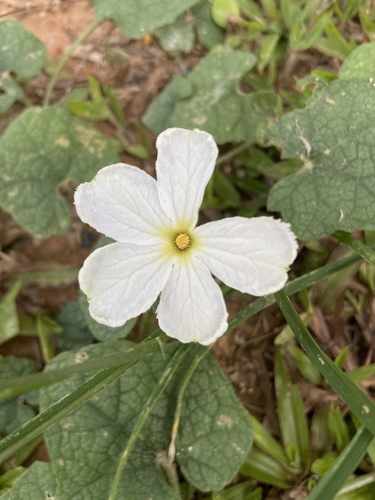
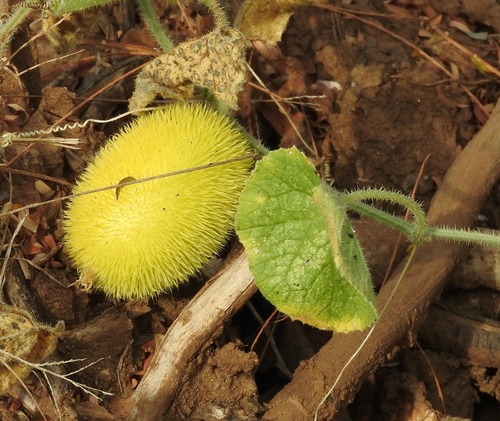
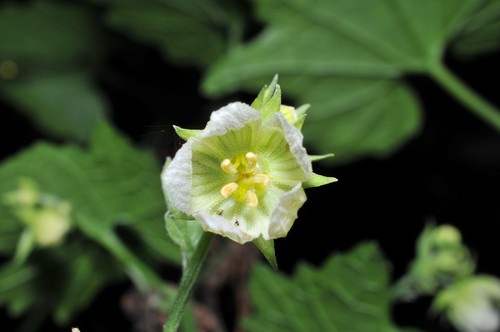
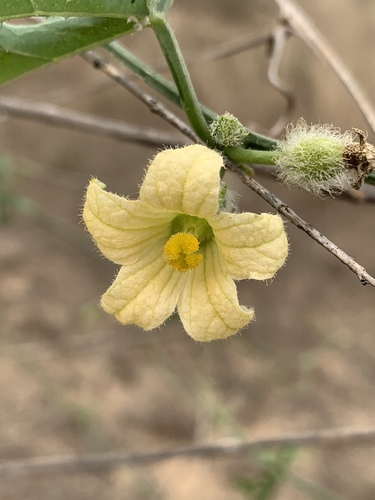
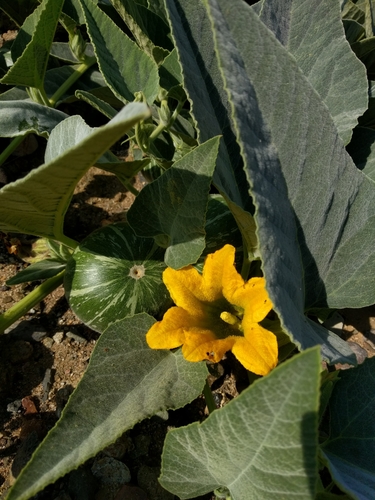
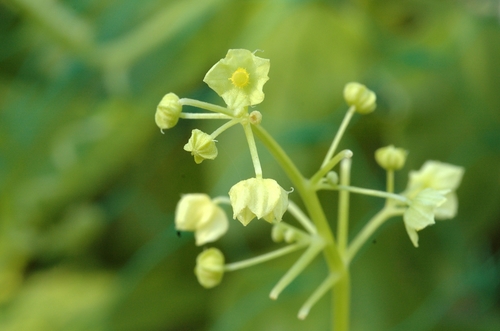
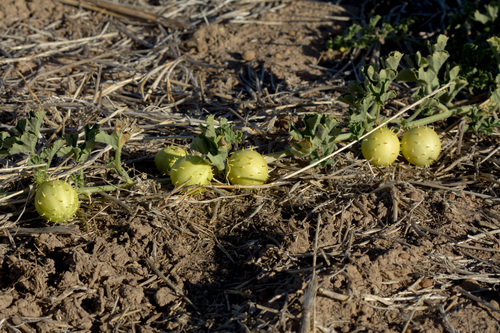
Cucumis myriocarpus Naudin, commonly called gooseberry cucumber, gooseberry gourd, paddy melon, mallee pear, or prickly paddy melon, is a prostrate or climbing annual herb native to tropical and southern Africa. This species has small yellow flowers, deeply lobed light green leaves, and small round fruits that are yellow-green or green-striped, covered in soft spines. It grows in disturbed soil, cleared areas, and bare areas, and grows best when summer moisture is available. Both the fruit and foliage of this plant are toxic because they contain cucurbitacin. It is toxic to humans, horses, sheep, cattle, and pigs, and has been linked to livestock deaths. While it has been used by humans as an emetic, there are confirmed recorded cases of human poisoning from the plant. Cucumis myriocarpus is classified as a noxious weed in Australia and California, where it may also be called prickly paddy melon, bitter apple, gooseberry gourd, or gooseberry cucumber. As an invasive species in Australia, it causes major economic damage, with farmers absorbing most of this cost. In Australia, where both are introduced species, Cucumis myriocarpus is frequently confused with Citrullus lanatus, which is known as Afghan melon, camel melon, or bitter wooly melon. Cucumis myriocarpus produces many small fruits that grow hidden under its leaves. Its fruits are smaller than a golf ball, and start out green before turning yellow when mature. The larger melons commonly found along rural Australian roadsides are actually Citrullus lanatus, a wild relative of the watermelon. This confusion is so widespread in Australia that in common speech, the term "paddy melon" is usually used to refer to the larger green/yellow fruit of Citrullus lanatus. Children in rural Australia often use the fruit of Cucumis myriocarpus for informal play, such as throwing it at each other's feet, or squeezing the fruit to shoot seeds at one another. In Australia, paddy melons and Afghan melons, which are collectively called wild melons, sometimes grow together in mixed infestations. They have only slight differences in color and appearance: the leaves of Citrullus lanatus are slightly more variegated than the leaves of Cucumis myriocarpus, and fruit size is the clearest feature used to tell them apart. Management practices for all wild melons are similar, though the two species differ slightly in their sensitivity to the herbicide glyphosate. Mechanical removal is the simplest control method for small infestations, and cultivating land during early plant growth can also be effective. Large infestations are sometimes controlled via the spray-graze method: plants are sprayed with a sublethal dose of hormone herbicide to make them more palatable to livestock, and the area is heavily grazed three days after spraying. Toxicity risks are managed by providing other feed sources for livestock. Both wild melon species give off an unpleasant odor when broken or disturbed. This odor makes them less appealing to livestock, so poisoning typically only happens when very little other feed is available. The plant is also naturalized in Spain, where it is known by the common names habanera or sandía habanera.