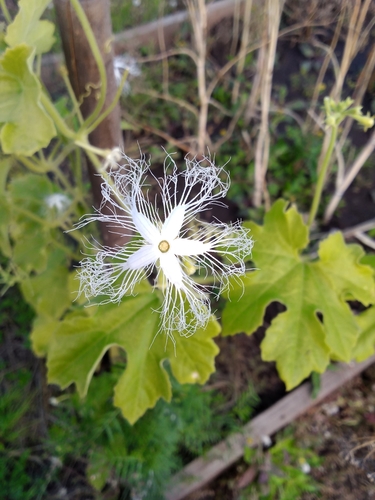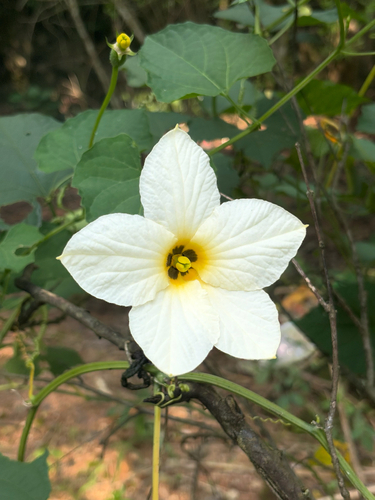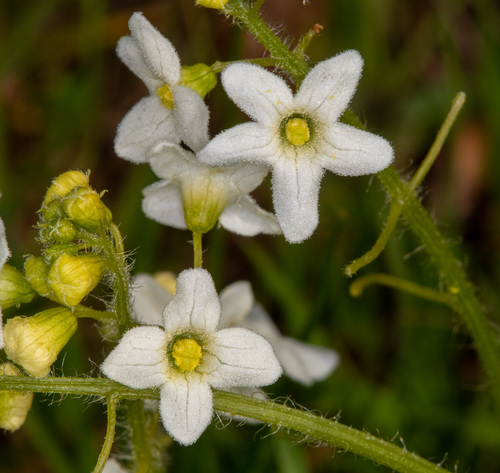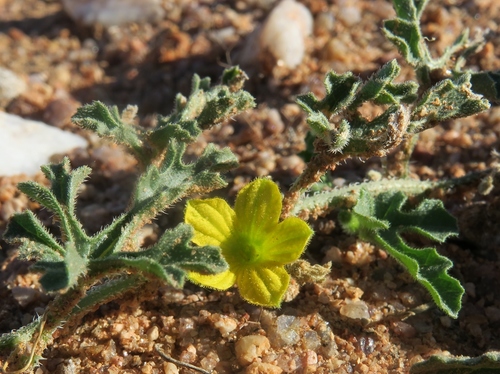
About Cucumis anguria L.
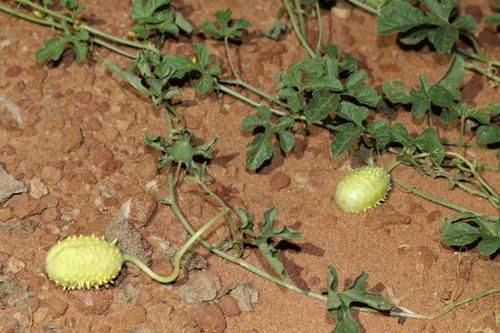
Cucumis anguria L. is a thinly stemmed, herbaceous scrambling vine that can reach up to 3 meters in length. Its fruits measure 4–5 cm by 3–4 cm, grow on long stalks, and are shaped ovoid to oblong. The fruit surface has spines or wart-like bumps, and is covered in long hairs; the inner flesh ranges from pale to green. While this species has become naturalized across many parts of the New World, it is native only to Africa, specifically found in Angola, Botswana, the Democratic Republic of the Congo, Malawi, Mozambique, Namibia, South Africa (in KwaZulu-Natal, Limpopo, and Mpumalanga), Eswatini, Tanzania, Zambia, and Zimbabwe. It has become naturalized in Anguilla, Antigua and Barbuda, Australia (Queensland and Western Australia), Barbados, Brazil, the Cayman Islands, Costa Rica, Cuba, the Dominican Republic, Ecuador, French Guiana, Grenada, Guadeloupe, Guatemala, Haiti, Honduras, Jamaica, Madagascar, Martinique, Mexico, Netherlands Antilles, Nicaragua, Panama, Peru, Puerto Rico, Saint Lucia, Saint Vincent and the Grenadines, Suriname, the United States (California, Florida, Georgia, Massachusetts, Montana, New York, Oregon, Texas, Minnesota, Wisconsin, and Washington), Canada (Ontario, Niagara Region, Nova Scotia, Hants County), Venezuela, and both the British and American Virgin Islands. Cucumis anguria is also cultivated in Cape Verde, Réunion, Senegal, and parts of the Caribbean not already listed, though it is not native to these areas and is not currently believed to have become naturalized there. Cucumis anguria is primarily cultivated as a crop for its edible fruit. The fruit can be eaten raw, cooked as a vegetable, or used for pickling, and has a flavor similar to that of the common cucumber. Fruits of C. anguria are popular in northern and northeastern Brazil, where they are included in the local version of cozido, a meat-and-vegetable stew. This species has also been used in folk medicine to treat stomach ailments.