About Cuculus sparverioides Vigors, 1832
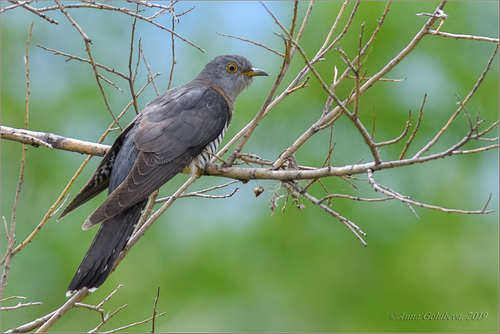
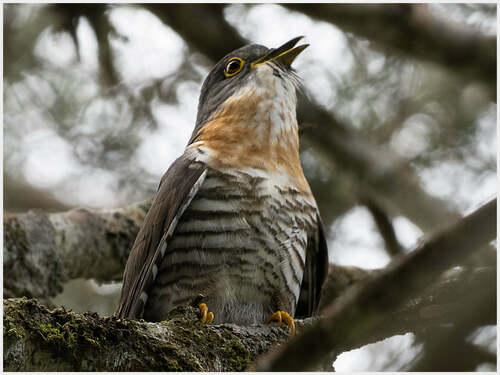
The large hawk-cuckoo, currently classified as Hierococcyx sparverioides (with the scientific name Cuculus sparverioides published by Vigors in 1832), is a cuckoo species that belongs to the Cuculidae family. It has a broad breeding range that stretches from temperate Asia along the Himalayas all the way to East Asia. Most of its populations migrate further south to spend the winter. This species is well known for its loud, repetitive calls. The calls are similar to those of the common hawk-cuckoo, but unlike the common hawk-cuckoo's calls, they do not increase in volume in a crescendo. The large hawk-cuckoo is also somewhat larger in size than the common hawk-cuckoo. Adult large hawk-cuckoos can be easily distinguished from smaller common hawk-cuckoos by the presence of a distinct black patch on the chin. Like many other cuckoos, the large hawk-cuckoo is a brood parasite, and it lays its eggs in the nests of babblers and laughing-thrushes. This cuckoo has been recorded in Bangladesh, Bhutan, Cambodia, China, India, Indonesia, Laos, Malaysia, Myanmar, Nepal, Pakistan, the Philippines, Singapore, Taiwan, Thailand, and Vietnam. It occurs as a vagrant on Christmas Island. The subspecies H. s. bocki found in the Malay Peninsula, Sumatra, and Borneo is generally treated by researchers as a separate species called the dark hawk-cuckoo.