About Cuculus optatus Gould, 1845
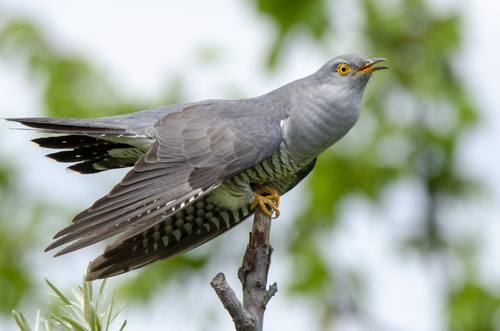
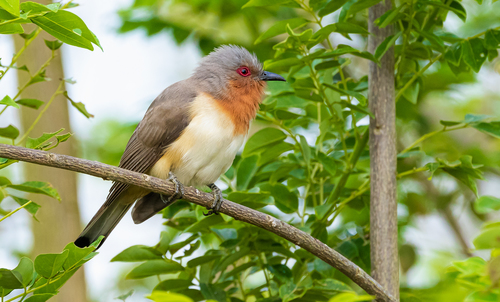
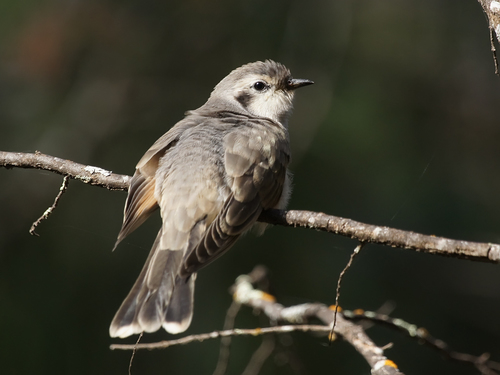
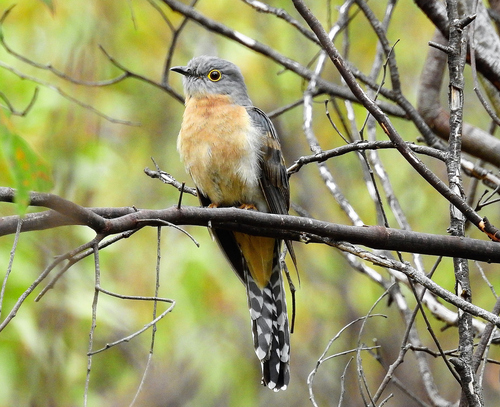
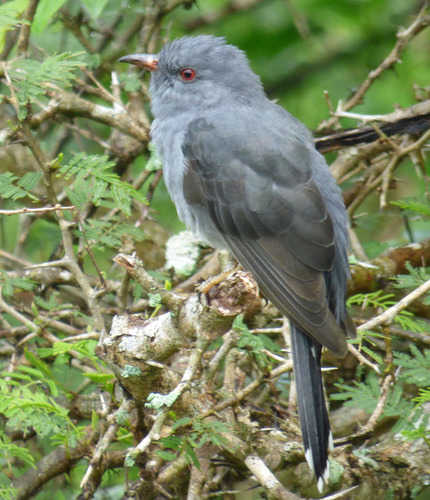
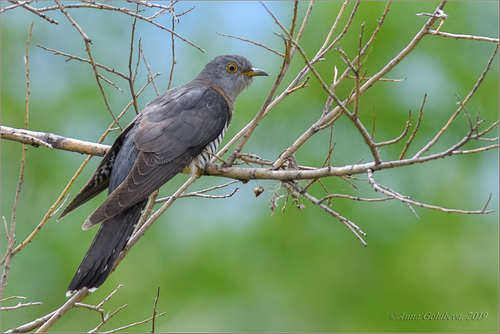
Cuculus optatus (Oriental cuckoo), first described by Gould in 1845, measures 30–32 centimetres in length, has a wingspan of 51–57 centimetres, and weighs 73–156 grams. Adult males have grey heads, breasts, and upperparts; their bellies are creamy-white with dark bars, and their vents are often buff with few markings. Their legs and feet are orange-yellow, and they have a bare yellow ring around the eye. Adult females and juveniles have two distinct morphs. The grey morph resembles the male but has a brownish tint to the breast. The rufous morph is reddish-brown on the upperparts, paler on the underparts, and has thick dark bands across its entire body including the rump. It is very similar in appearance to the common cuckoo (C. canorus), but the common cuckoo is slightly bulkier, with longer wings and tail, and a slightly smaller head and bill. Common cuckoos are also slightly paler grey, and have slightly narrower barring on their underparts. Most common cuckoos have a white vent with dark bars, though a small number of individuals have a vent matching that of the Oriental cuckoo. Unlike the Oriental cuckoo, rufous morph common cuckoos have a plain, unbarred rump. It has been hypothesized that rufous morphs evolved to deter male harassment or mobbing by host species, and that this morph may be ancestral to both common cuckoos and Oriental cuckoos. The Himalayan cuckoo (C. saturatus) is extremely similar in appearance to the Oriental cuckoo, but is slightly smaller with shorter wings. The call of a male Oriental cuckoo is a series of low paired notes, poo-poo, with both notes stressed equally. This call is somewhat similar to the call of a hoopoe. The call may start with a four to eight note phrase, or sometimes with grating notes. The female Oriental cuckoo's call is a deep bubbling trill. Outside of the breeding season, Oriental cuckoos are usually silent. By contrast, the call of a male Himalayan cuckoo is a series of three or four note phrases, with a short, high-pitched introductory note. The Oriental cuckoo has a large breeding range across northern Eurasia. It breeds across most of Russia west to the Komi Republic, with occasional breeding records as far west as Saint Petersburg. It also breeds in northern Kazakhstan, Mongolia, northern China, Korea, and Japan. The full extent of its wintering range is not certain, because the species has secretive habits and is hard to tell apart from the Himalayan cuckoo and other similar species. It is thought to winter across the Malay Peninsula, Indonesia, the Philippines, New Guinea, western Micronesia, the Solomon Islands, and northern and eastern Australia, with occasional individual birds reaching New Zealand. It has been recorded as a vagrant in Ukraine, Israel, and Alaska. The Oriental cuckoo mainly lives in forests, including coniferous, deciduous, and mixed forest types. It feeds mostly on insects and their larvae, foraging for food in trees and bushes as well as on the ground. It is typically secretive and hard to observe. In southern Russia, it usually arrives at its breeding grounds (around the end of April) later than the sympatric common cuckoo. It is a brood parasite, meaning it lays its eggs in the nests of other bird species. It most commonly uses nests of Phylloscopus warblers, including the Arctic warbler, eastern crowned warbler, willow warbler, and chiffchaff. Other recorded host species are the olive-backed pipit and Asian stubtail. Its eggs are smooth, slightly glossy, and variable in colour, and sometimes mimic the colour of the host species' eggs. The eggs are incubated for around 12 days. Newly hatched young cuckoos are naked, with an orange gape marked by black patches. Within a few days of hatching, the young cuckoo pushes the host's eggs or young out of the nest. Older Oriental cuckoo nestlings have blackish feathers with white fringes; their bellies are dark brown with white bands. Young cuckoos fledge after around 17–19 days.