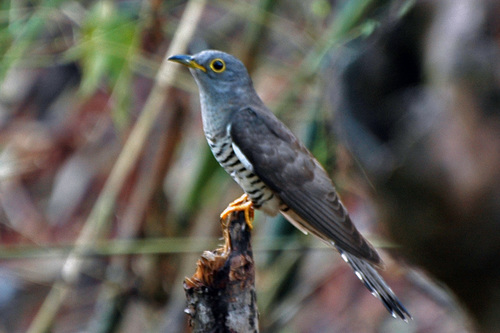
About Cuculus fugax Horsfield, 1821
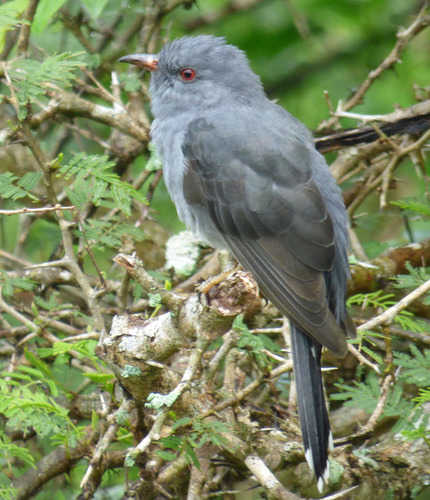
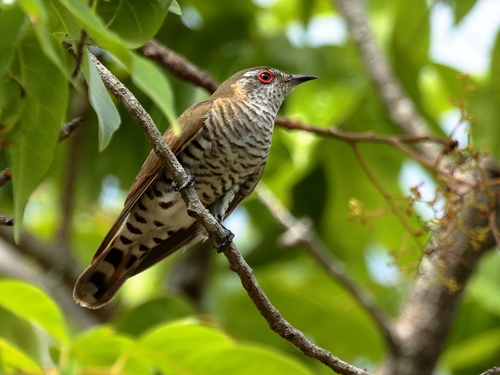
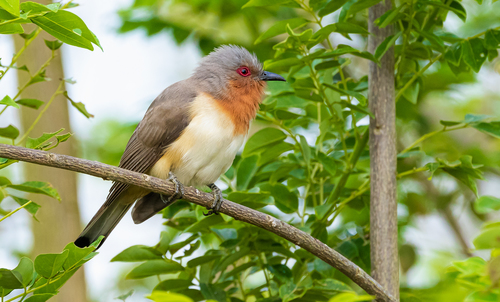
Hodgson's hawk-cuckoo (Hierococcyx nisicolor), also called the whistling hawk-cuckoo, is a cuckoo species found in north-eastern India, Myanmar, southern China, and southeast Asia. Hodgson's hawk-cuckoo is a brood parasite. After hatching, its chick evicts the original nest occupants from the parasitized nest, becoming the only occupant. Normally, having only one chick to feed would cause foster parents to bring food at a lower rate, as they only see one begging gape. To make up for this, Hodgson's hawk-cuckoo has gape-coloured skin patches under its wings that mimic additional begging gapes. This strategy appears to increase the rate at which foster parents bring food. This adaptation differs from that of other cuckoo species, such as the common cuckoo, which increase how quickly they make high-pitched hunger calls to boost their food provisioning rate. Even though these coloured skin patches are not shaped like actual gapes, they are convincing enough that host parents sometimes attempt to place food directly into the patches. Hodgson's hawk-cuckoo was formerly classified as a single species with four subspecies. The Philippine hawk-cuckoo is now widely recognized as a separate species, H. pectoralis. The remaining original forms have also since been split into three distinct species: Malaysian hawk-cuckoo (H. fugax), Hodgson's hawk-cuckoo (H. nisicolor), and rufous hawk-cuckoo (also called northern hawk-cuckoo, H. hyperythrus). The common name of this species honors the British naturalist Brian Houghton Hodgson.