About Ctenotus schomburgkii (Peters, 1863)
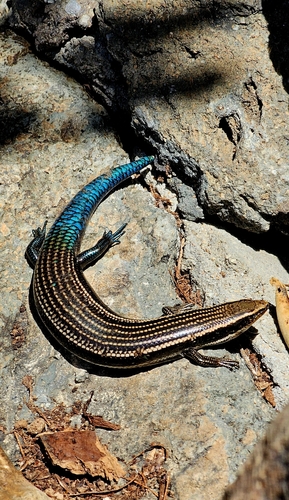
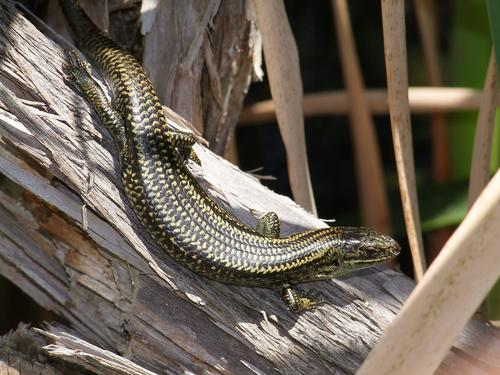
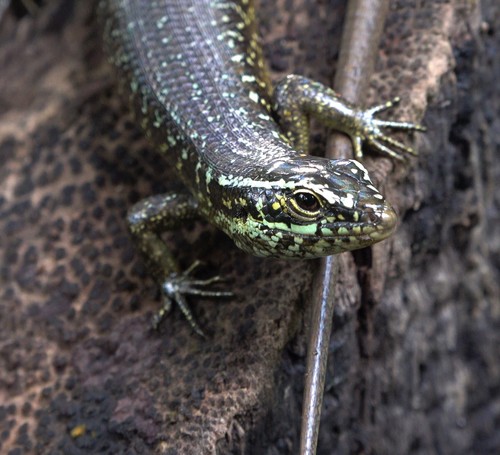
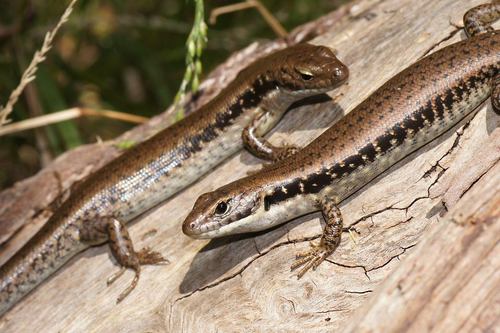
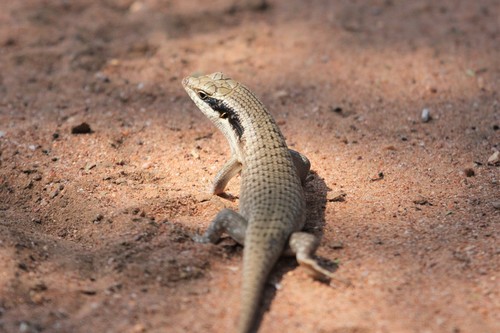
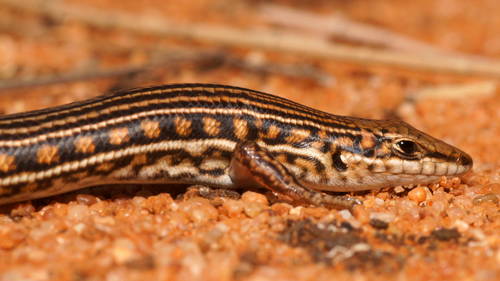
Ctenotus schomburgkii is a small skink that reaches up to 5 centimeters in length. It can be distinguished by unique orange dots running along its sides, and brown and orange stripes on its back. This species is distributed across an area stretching from central western New South Wales and Queensland, through South Australia and the southern half of the Northern Territory, to the southern half of Western Australia. Ctenotus schomburgkii is an ectotherm, meaning it depends on external environmental heat sources to regulate its body temperature. It obtains heat from solar radiation or conduction, for example by sitting in the sun or absorbing heat from a warmed rock. It is a highly adaptable skink with relatively unspecialized dietary needs, allowing it to use a wide range of habitats. Ctenotus schomburgkii lives in sympatry with other Ctenotus lizards, all of which use spinifex grasses growing under trees. Because of its high adaptability, it faces minimal competition from both interspecific and intraspecific species. Spinifex grasses of the genera Triodia and Plectrachne are extremely important to Ctenotus schomburgkii. Termite tunnels have been found in the centers of spinifex grass tussocks, connecting to nearby termite mounds. This makes the grasses ideal habitat for lizards that feed on termites, and higher thriving termite populations have been directly linked to higher populations of this lizard.