About Ctenotus robustus Storr, 1970
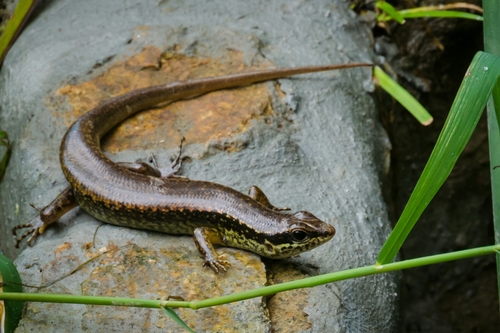
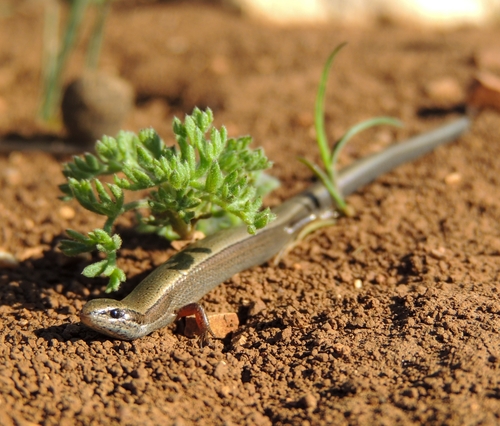
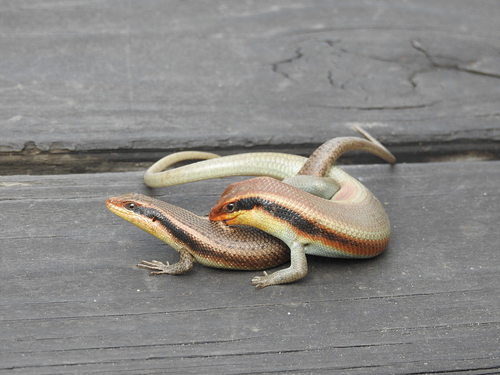
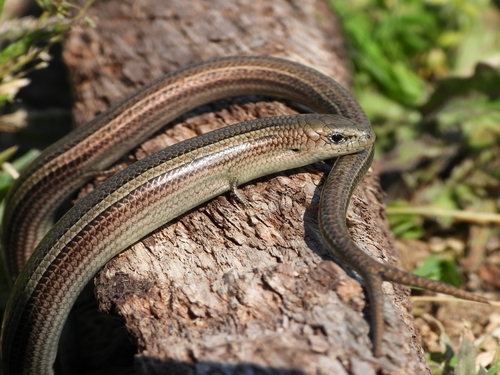
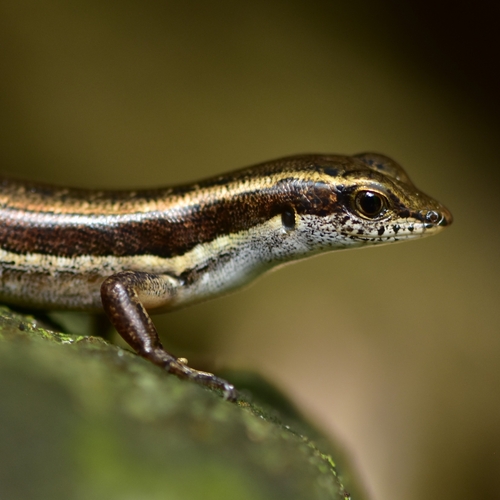
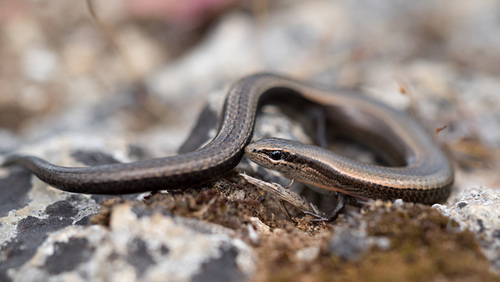
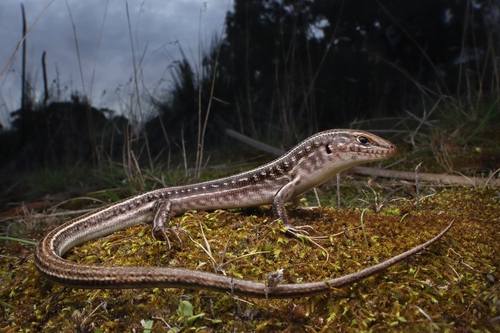
Ctenotus robustus, commonly called the eastern striped skink, is a species of skink that lives across Australia in a wide range of habitats. It is a fairly large, long-tailed, fast-moving skink, reaching a maximum total length of about 30 cm; the tail makes up roughly two-thirds of this total length. Its base body color is mostly brown, with a black stripe edged in white running the full length of its back and tail. It has broad brown stripes along its sides, marked with rows of white spots. The sides lighten toward the underside, becoming an off-white color that extends from the groin up to the chin. This species is similar in appearance to the spotted-back skink Ctenotus uber orientalis; the main identifying difference is the solid continuous stripe running down C. robustus' back, while C. uber orientalis has a row of dots instead. The eastern striped skink is a wary, diurnal species that typically lives in open areas that provide shelter in grass, low shrubs, or rocks. When seeking shelter, it will burrow under rocks or logs. The eastern striped skink has an extensive distribution across Australia, ranging from northern Western Australia and the Northern Territory, through eastern Queensland, New South Wales, and Victoria, to the eastern parts of South Australia. It prefers relatively undisturbed areas or areas with low grazing pressure, where there has been less anthropogenic disturbance and human activity. It occupies warmer sections of forests, woodlands, shrublands, and heathlands, as well as warm grassy hillsides in temperate regions. C. robustus is diurnal and active on the surface. It uses rocks, logs, and ground litter for shelter, and digs burrows under rocks for hibernation and nesting. All skinks in the Ctenotus genus are egg layers; female C. robustus lay between 4 and 8 eggs, and larger individuals typically lay more eggs. Eggs are laid in late spring, between October and December, and hatch approximately two months after being laid. The eastern striped skink feeds mostly on arthropods, and will occasionally eat other young lizards. It is preyed on by snakes and feral cats. It is very shy and extremely quick, and will retreat into shelter immediately when humans or other larger animals approach. This wariness and speed makes the species difficult to spot in the wild.