About Ctenopharyngodon idella (Valenciennes, 1844)
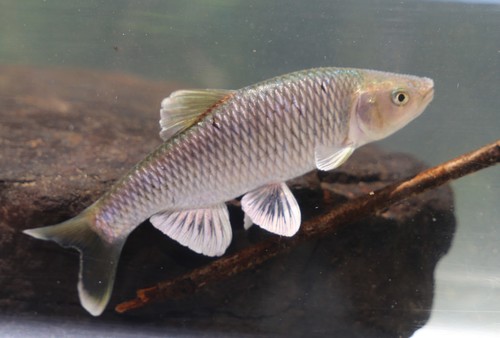
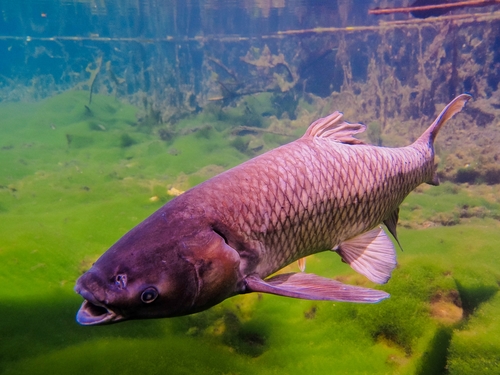
Grass carp (Ctenopharyngodon idella) have elongated, chubby, torpedo-shaped bodies. Their terminal mouth is slightly oblique, with firm, non-fleshy lips and no barbels. Their complete lateral line holds 40 to 42 scales. Broad, ridged pharyngeal teeth follow a "2, 4-4, 2" arrangement formula. The dorsal fin has eight to 10 soft rays, and the anal fin is positioned closer to the tail than that of most other cyprinids. Body color is dark olive, shading to brownish-yellow along the sides, with a white belly and large, faintly outlined scales. Grass carp grow very rapidly. Young fish stocked in spring at 20 cm (7.9 in) will grow to over 45 cm (18 in) by fall. Typical adult length ranges from 60–100 cm (23.5–39.5 in). The maximum recorded length is 2.0 m (6.6 ft), and the maximum recorded weight is 45 kg (99 lb). Grass carp live in lakes, ponds, pools, and backwaters of large rivers. They prefer large, slow-flowing or standing water bodies with abundant vegetation. In the wild, grass carp spawn in fast-moving rivers. Their eggs are slightly heavier than water, and develop while drifting downstream, kept suspended by water turbulence. Grass carp need long rivers for their eggs and very young fish to survive; eggs are thought to die if they sink to the bottom. Adult grass carp feed primarily on aquatic plants, including both higher aquatic plants and submerged terrestrial vegetation, but may also consume detritus, insects, and other invertebrates. They can eat up to three times their own body weight daily, and thrive in small lakes and backwaters that have abundant vegetation supplies. One study records that grass carp typically live 5–9 years, with the oldest recorded individual surviving 11 years. A thriving population of grass carp in Silver Lake, Washington, has reached ages past the 15-year mark. Grass carp is one of the most common farmed freshwater fish in China, and counts as one of the Four Domestic Fish alongside black carp, silver carp, and bighead carp. Its meat is tender with few bones. Grass carp is featured as a dish in many styles of Chinese cuisine, including Cantonese cuisine. In some Asian countries, people believe that eating raw grass carp bile or entire grass carp gall bladders can improve visual acuity and overall health. However, consuming these parts can actually cause severe poisoning.