About Ctenomorpha marginipennis Gray, 1833
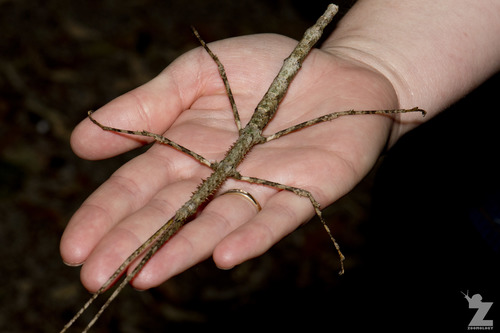
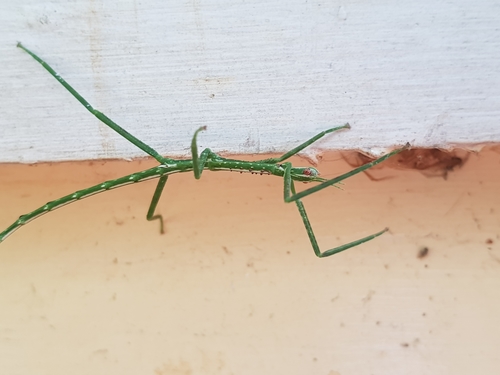
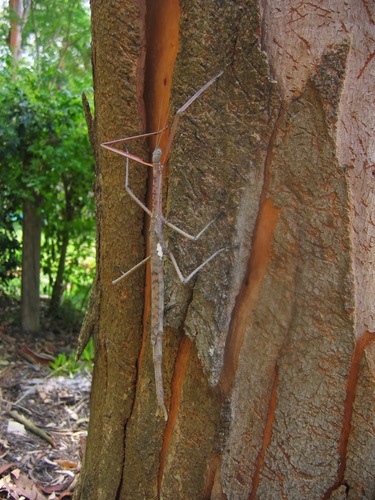
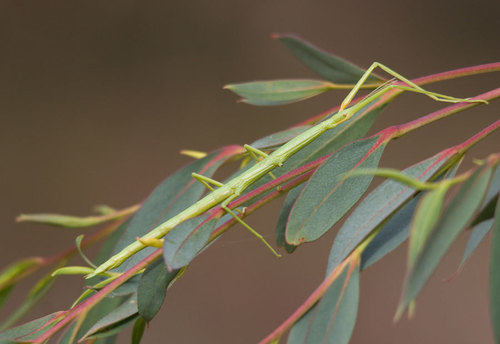
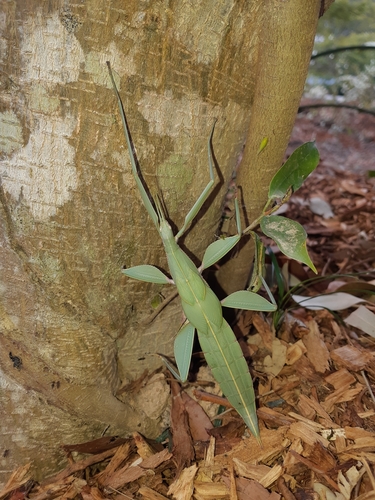
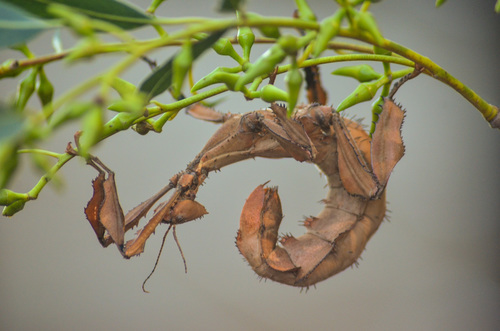
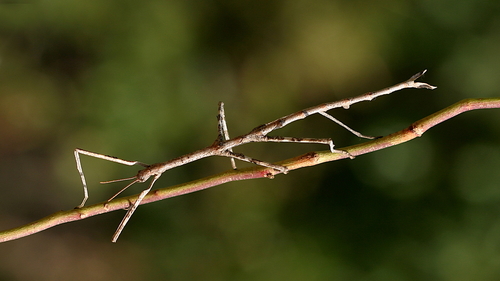
Ctenomorpha marginipennis, first described by Gray in 1833, resembles a eucalyptus twig and can reach up to 20 centimetres in length. Males of this species are long and slender, have fully developed wings and are capable of flight. Females are larger than males, have blackish hindwings, and their wings are smaller than those of males. The legs, head and prothorax are light pinkish brown, and the legs have a toothed, dentated shape. The mesothorax, tegmina, abdomen and leaflets are all blackish green; the mesothorax may also have small tubercles, and the abdomen is marked with numerous small spots. The cerci are extremely long and may also be somewhat dentated. Nymphs have a similar appearance to adult C. marginipennis, but only develop small wing buds rather than the full-length wings grown by mature adults. This species can be told apart from other members of its family by its extremely long cerci and the unique appearance of its eggs. C. marginipennis is quite common in heaths and woodlands ranging from southern Queensland south to Victoria, Australia, and prefers coastal habitats. Females of the species lay 3 millimetre elliptical eggs that resemble plant seeds. Like most phasmids, C. marginipennis flicks its eggs onto the soil. A small knob on the egg called the capitullum attracts ants, which carry the eggs to an ant nest refinery, where the eggs hatch. This species is capable of parthenogenetic reproduction. Ctenomorpha marginipennis feeds on leaves from eucalyptus trees, as well as leaves from other tree species. It is a twig mimic, and its body shape and colouration provide effective camouflage among eucalyptus twigs.