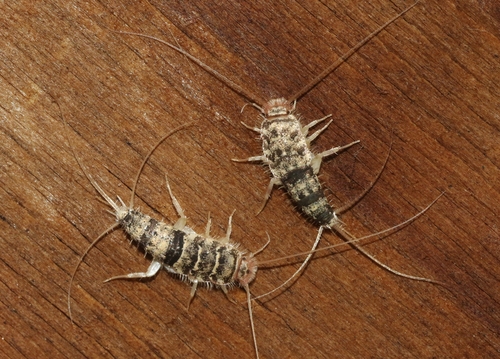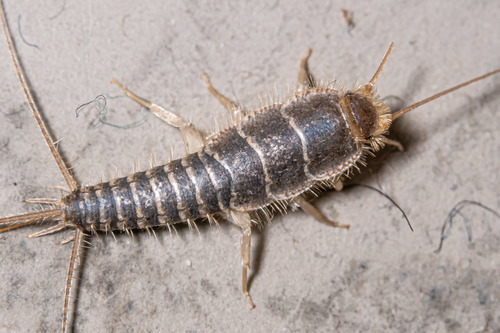
About Ctenolepisma longicaudatum Escherich, 1905
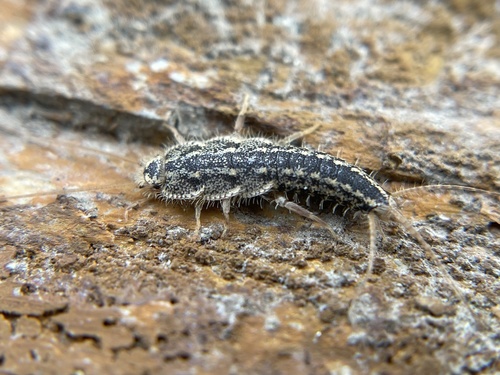
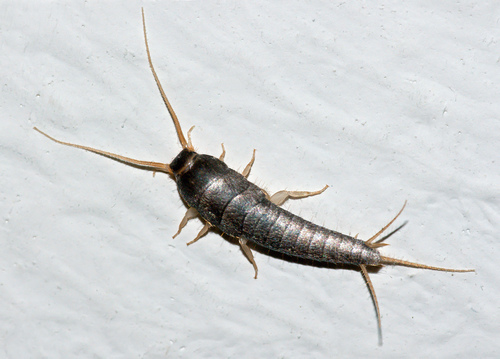
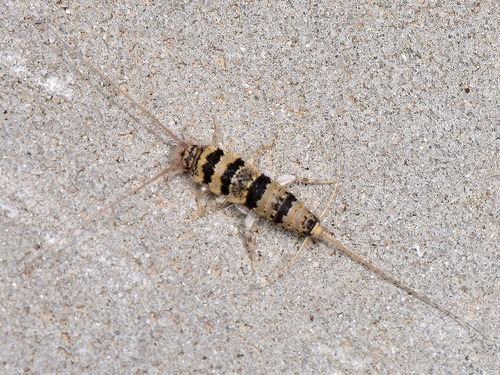
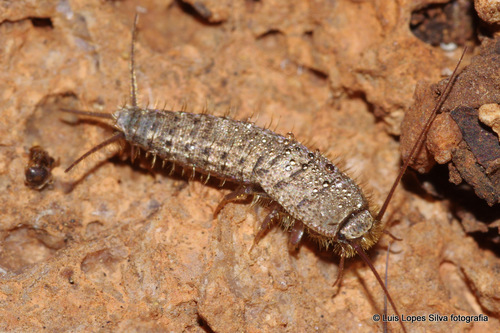
Description: Nymphs and adults of Ctenolepisma longicaudatum, commonly known as gray silverfish, are slender, agile, fast-moving insects. They have long paired antennae and three long appendages at the posterior abdomen: a pair of cerci and one central epiproct. Except for the earliest instars, their bodies are covered in scales, which give light- to dark grayish individuals a glimmering appearance. With brushes and bristles along their body sides, gray silverfish look somewhat similar to the related firebrats. Their eyes are made up of twelve stemmata, which are rather more rounded in early instars.
Distribution: The natural distribution of the gray silverfish is unknown, because all observations have been made inside or near human dwellings. Currently, recorded observations exist for Oceanian countries and regions including Australia (oldest record from 1905), New Caledonia, New Zealand, and Vanuatu; no country records are listed for Europe, Africa, the Americas, or other parts of Asia/Oceania.
Reproduction: Gray silverfish have slow reproduction. They reach sexual maturity at two to three years of age, and can reproduce for at least three years. In comparison, the related firebrat reproduces only once a year at irregular intervals.
Poisoning and pest control: Toxic baits are one method to reduce or eradicate gray silverfish infestations. A 2020 study by Aak et al. tested the effect of several commercially available paste-based products (with active ingredients imidacloprid, clothianidin, fipronil, or indoxacarb) for gray silverfish pest management. The study found imidacloprid caused a mortality rate of less than 50% after 18 days, while the other three pesticides caused mortality rates above 90%. Field trials with indoxacarb application reduced gray silverfish populations to less than 10% within 10 to 12 weeks.
Because gray silverfish consume dead insects, including other gray silverfish, secondary poisoning from eating already poisoned individuals creates an additional population-reducing effect. Indoxacarb was found to be far more potent for secondary poisoning, causing 75% mortality, compared to clothianidin which caused only 15% mortality. As a result, indoxacarb was evaluated as the most effective poison against gray silverfish, and even six-month old indoxacarb bait still caused high mortality. However, approval for indoxacarb use was withdrawn in 2022, so it is not permitted for use in the EU and Switzerland. Fipronil as a poison was not studied further due to its comparatively high toxicity to humans.
When using toxic baits, it is important to place them securely to minimize the risk of accidental ingestion by pets or children. Placing small droplets of gel-based poison into gaps, crevices and cracks that gray silverfish use as daytime hiding spots reduces the chance of unintended contact, while also increasing the chance that gray silverfish will ingest the poison. Spreading many small poison bait droplets evenly across the infested area, instead of using a few large portions, further improves the success of poison treatment. A 2012 study by Sims & Appel tested the efficacy of various poisonous baits (containing boric acid, hydramethylnon, indoxacarb, abamectin, chlorfenapyr, dinotefuran, fipronil, metaflumizone, and novaluron) against two related Lepismatidae species: Thermobia domestica and Lepisma saccharinum.