About Ctenoides ales (Finlay, 1927)
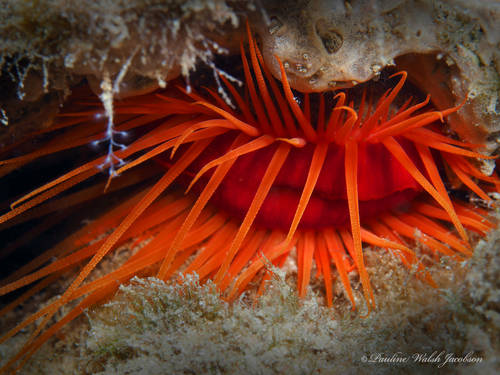
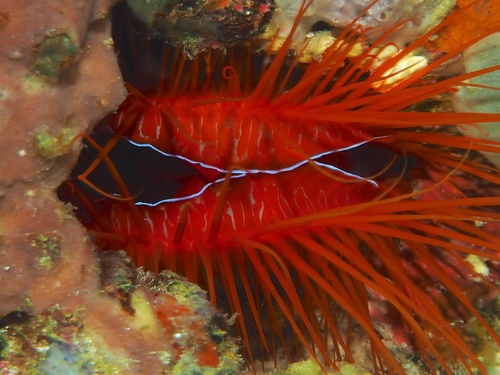
Ctenoides ales (Finlay, 1927) is a species of saltwater clam, a marine bivalve mollusk that belongs to Limidae, the file clam family. It has multiple common names: electric flame scallop, disco scallop, electric clam, and disco clam. These nicknames refer to the fact that the clam's soft tissues flash light like a disco ball. Alongside Ctenoides scaber, this species is one of the only bivalves known to produce visible light displays. Ctenoides ales is widespread across the tropical waters of the central Indo-Pacific, ranging from Indonesia to the Palau Islands and New Caledonia. Research by graduate student Lindsey Dougherty confirmed that the clam's apparent flashing light display is not caused by bioluminescence. Instead, the effect comes from reflection of ambient light, such as sunlight or artificial light used by divers. In August 2013, Dougherty conducted field work with Dimpy Jacobs at Lembeh Resort in Indonesia. A staff member from the resort explained that the clams have highly reflective tissue along the outermost edge of their mantle, which they rapidly expose and hide. The quick alternation between the exposed white reflective tissue and the underlying red tissue creates the visual illusion of flashing. Dougherty further found that the brightly reflective mantle edge of these clams contains nanospheres made of silica, which are responsible for the tissue's high reflectivity. In 2016, Dougherty published a second study of C. ales that proposed the flashing behavior most likely evolved to deter predators.