About Cryptotis parva (Say, 1823)
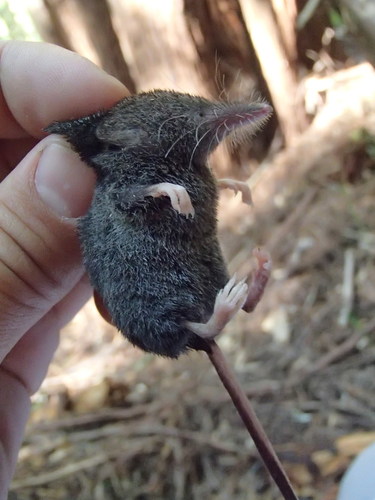
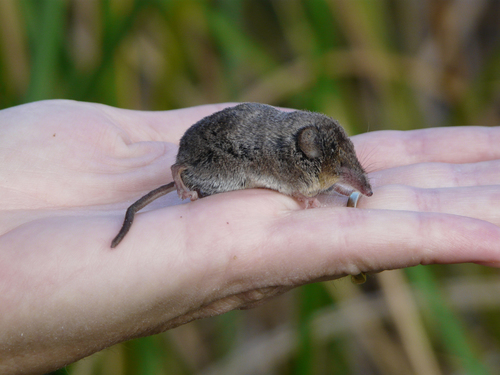
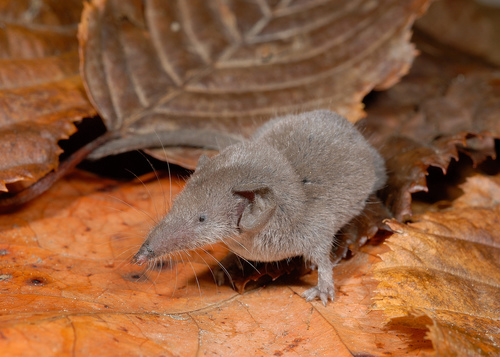
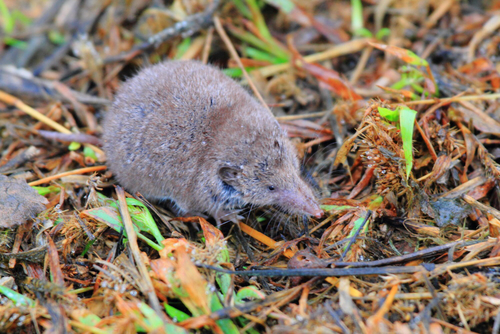
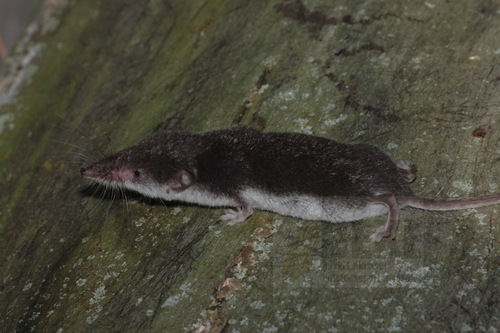
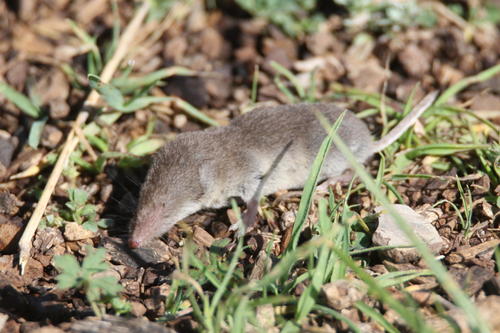
The North American least shrew, scientifically named Cryptotis parva (Say, 1823), is one of the smallest mammals, reaching a maximum length of only 3 inches. It has a long, pointed snout, and its tail is never more than twice the length of its hind foot. Its dense fur coat is either grayish-brown or reddish-brown with a white belly, and the fur lightens in summer and darkens in winter. Though it looks similar to many rodent species, all shrews belong to the order Eulipotyphla, so this species should not be mistaken for a rodent. The North American least shrew has small eyes and ears that are completely hidden by its short fur, resulting in very poor eyesight and hearing. This shrew is distributed from the grasslands of southern Canada through eastern and central United States, down to Mexico. In Canada, only a small population of the species has been recorded at Long Point, Ontario. It mostly lives in mesic grasslands, marshes, and meadows. While most shrews prefer these wet habitats, the North American least shrew will also occupy dry upland regions. This species can be found in meadows, fields, and weedy areas, where the vegetation draws in the insects that make up its diet.