About Cryptoporus volvatus (Peck) Shear
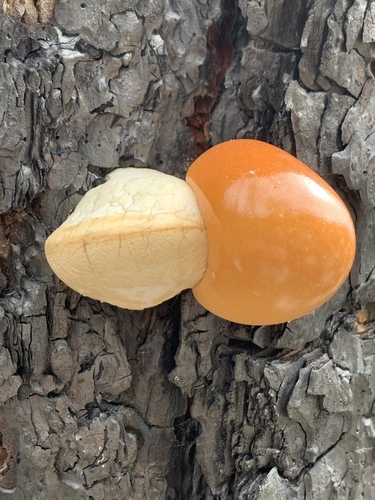
Cryptoporus volvatus, commonly known as the veiled polypore or cryptic globe fungus, is a polypore fungus that decomposes the rotting sapwood of conifers. It typically appears after pine bark beetles have attacked a tree. The fungus was first described in 1875 by American mycologist Charles Horton Peck, under the name Polyporus volvatus. In 1902, Cornelius Lott Shear reclassified it to the genus Cryptoporus, giving it the current scientific name Cryptoporus volvatus (Peck) Shear. Its fruiting body is 1.5–8.5 centimetres (1⁄2–3+1⁄4 inches) across, and is cream or tan in color. The interior of the fruiting body is hollow, and an opening forms on the underside either when torn by insects or as a natural split. There are 3–4 whitish pores per millimetre, which are hidden by a veil-like margin. The spores of the fungus are pinkish. Some insects lay their larvae inside the hollow fruiting body. Because of its tough texture, Cryptoporus volvatus is considered inedible.