About Cryptophasa albacosta (Lewin, 1805)
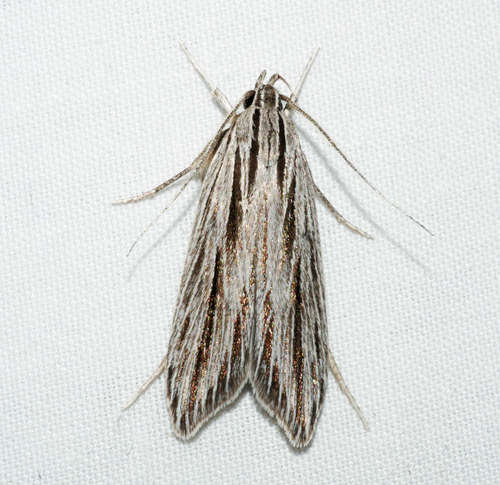
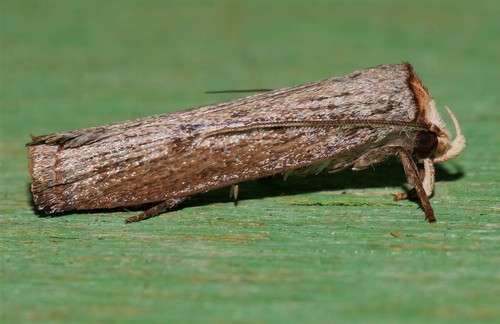
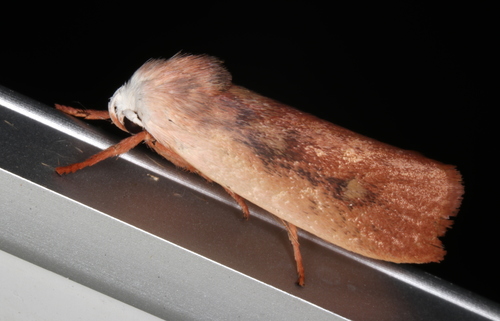
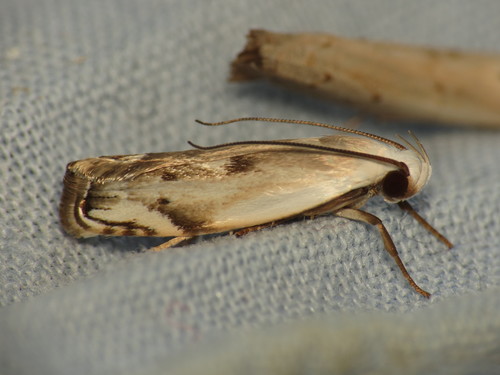
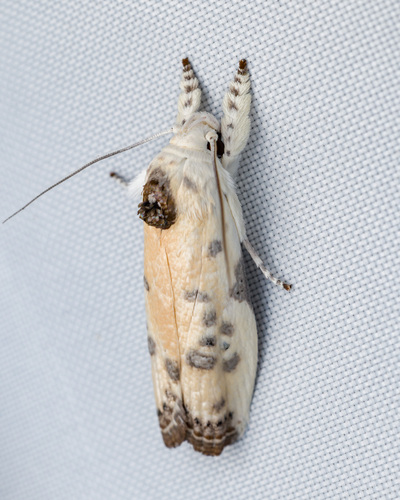
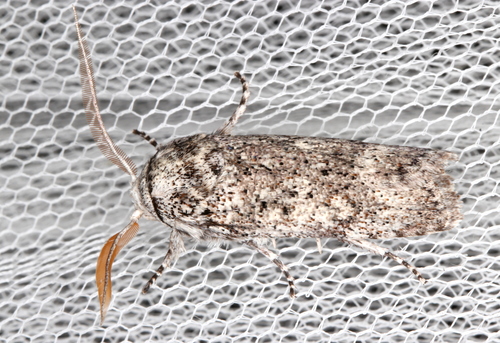
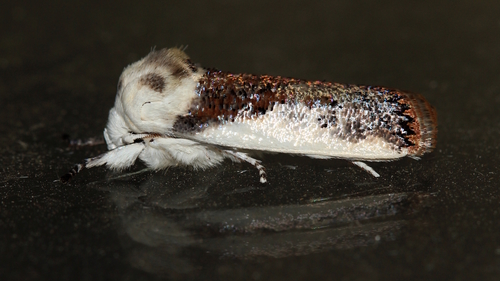
Cryptophasa albacosta, commonly called the small fruit tree borer, is a species of moth belonging to the family Xyloryctidae. It was first described by John Lewin in 1805. This moth is found in Australia, with confirmed records from New South Wales, Queensland, South Australia, Tasmania, and Victoria. Adults have a wingspan ranging from 40 to 56 millimeters. The forewings are shining white, marked with a very large, sub-triangular grey blotch. This blotch is more or less suffused with ochreous-brown, sprinkled with black, and sits on the inner margin from before one-third of the wing to five-sixths of the wing, with its apex nearly touching the costa near the base. At two-fifths of the wing, a minute black dot ringed with grey sits in the disc, resting on the posterior edge of the blotch. A grey reniform spot that is sometimes white-centered is located in the disc at three-fifths of the wing. There is a more or less developed grey fascia starting from the middle of the disc, and a second starting from beyond the reniform spot that does not rise above the spot; these two fasciae are confluent below the reniform spot, run into the posterior angle of the main blotch, and vary in breadth. Rarely, they broaden enough to coalesce with the hindmarginal fascia. A moderate light grey hindmarginal fascia is also present, which contains a brownish-ochreous hindmarginal line. This fascia is preceded by a row of black dots each ringed with ochreous-whitish. The hindwings are a rather dark fuscous-grey, with a cloudy white streak along the upper half of the hindmargin that dilates into a spot at the apex. The larvae of Cryptophasa albacosta feed on Banksia serrata, Macadamia integrifolia, Ceratopetalum gummiferum, Callicoma serratifolia, as well as introduced Tamarix species, poplar, apricot, and plum. Larvae bore into the stems of their host plants, and tie cut leaves to the entrance of their bore.