About Cryptolithodes typicus Brandt, 1848
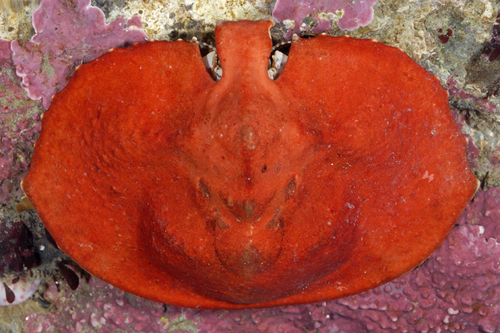
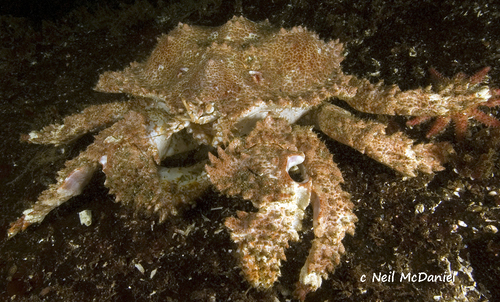
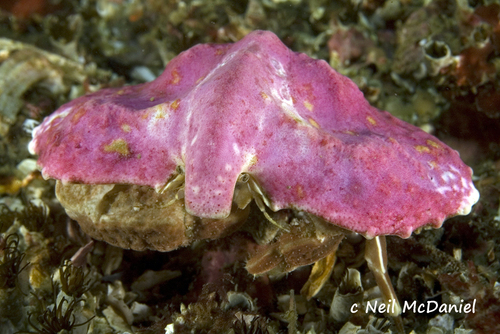
This crab, commonly known as the butterfly crab, has a butterfly-shaped carapace with stone-like camouflage that helps it blend into rocks in subtidal and low intertidal zones. The carapace color of this species varies widely: small individuals under 15 mm (0.6 in) in length are typically white, while larger individuals usually have a range of vibrant colors. The carapace is exceptionally broad, and completely hides the crab's appendages when viewed from above or the side. It has a median raised crest that is often a contrasting different color from the rest of the carapace. The widest point of a male's carapace is located further back than the widest point of a female's carapace. The male's chelipeds are relatively larger than the widest point of the female's carapace. The crab's right claw is larger than the left claw, and both claws are sharp, curved, and stout. Every segment of the crab's walking legs has a dorsal crest. The butterfly crab lives on rocks in subtidal and low intertidal zones. When extreme low tide exposes its intertidal habitat to the atmosphere, it can be found clinging to the substrate in rock crevices or at the base of the seagrass Phyllospadix. It has been recorded at depths up to 73 meters (240 ft).