About Cryptochiton stelleri (Middendorff, 1847)
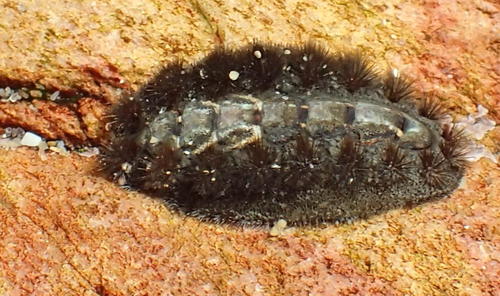
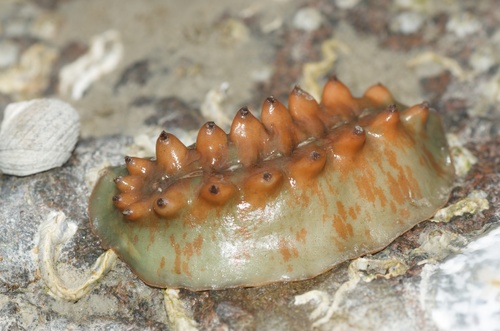
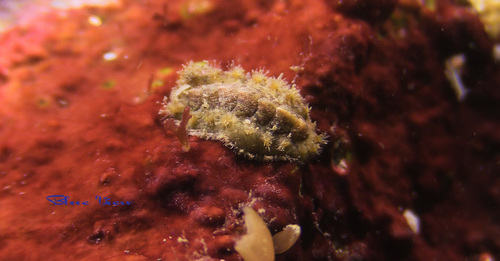
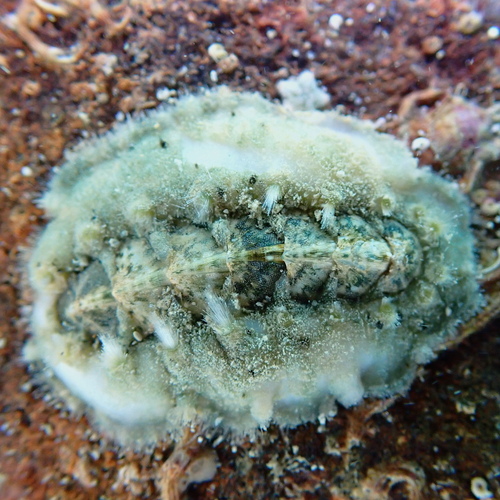
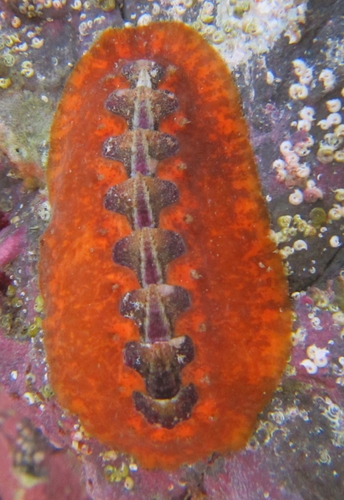
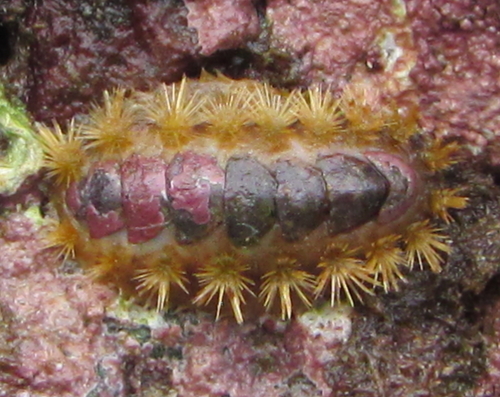
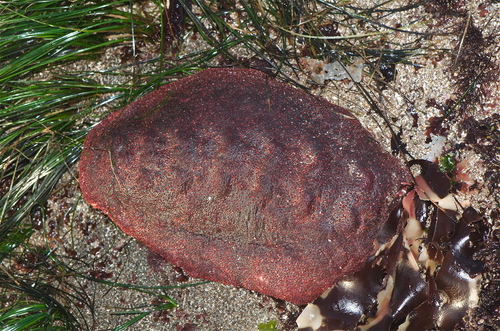
The gumboot chiton, with the scientific name Cryptochiton stelleri (Middendorff, 1847), is also called the giant western fiery chiton or giant Pacific chiton. It is the largest known chiton species, growing up to 36 cm (14 in) long and reaching weights of over 2 kg (4.4 lb). This species is found along northern Pacific Ocean shorelines, ranging from Central California north to Alaska, extending across the Aleutian Islands to the Kamchatka Peninsula, and south to Japan. It lives on rocky coastlines in the lower intertidal and subtidal zones. Because of its appearance, tidepoolers affectionately call the gumboot chiton the "wandering meatloaf". The common name "gumboot chiton" is thought to come from its resemblance to part of a rubber Wellington boot, also called a gum rubber boot. Chitons are molluscs that have eight armored plates known as valves arranged in a flexible line along their back. Unlike most chiton species, the gumboot chiton’s valves are completely hidden by its leathery upper girdle (skin). This girdle is usually reddish-brown or brown, and it is occasionally orange. Chitons have long rows of fine teeth that are partially composed of magnetite, which makes the teeth hard enough to scrape algae from rock surfaces. The styli that enclose these teeth contain the mineral santabarbaraite, and the gumboot chiton is the first organism known to use this material. Its flesh is edible, and it has been eaten as food by Native Americans and by Russian settlers in Southeast Alaska. However, it is generally not considered palatable, with a texture described as extremely tough and rubbery. The authors of Between Pacific Tides shared their culinary evaluation of the gumboot chiton: "After one experiment the writers decided to reserve the animals for times of famine; one tough, paper-thin steak was all that could be obtained from a large cryptochiton, and it radiated such a penetrating fishy odor that it was discarded before it reached the frying pan."