About Cryptocarya obovata R.Br.
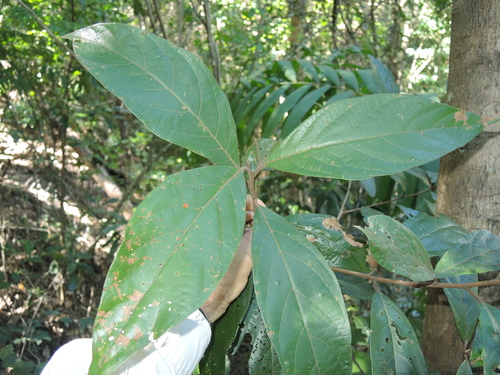
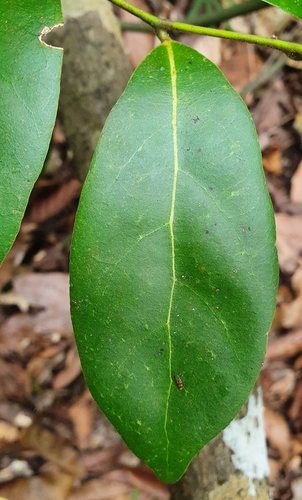
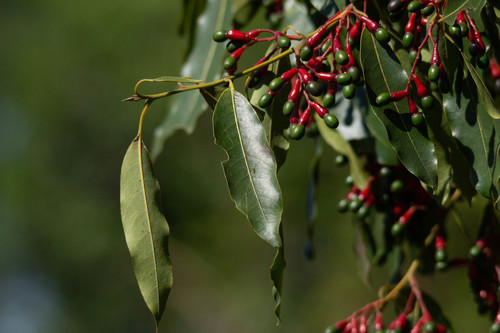
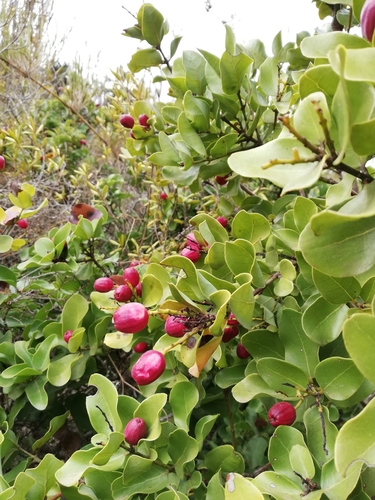
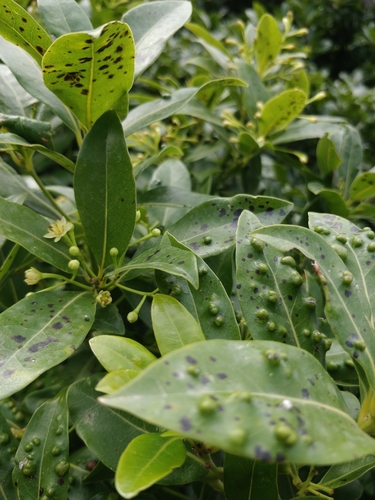
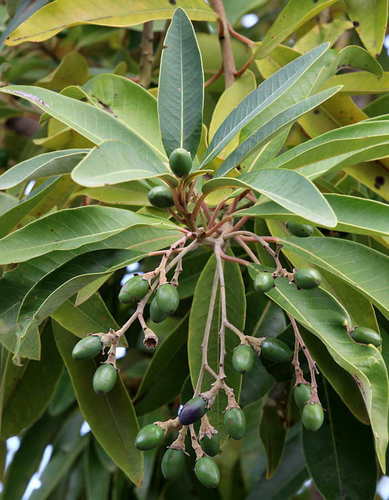
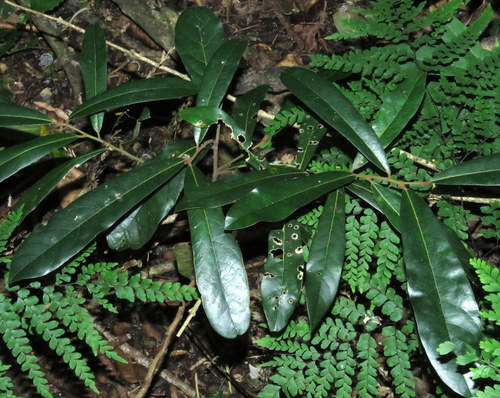
Cryptocarya obovata, commonly called pepperberry, is a tree that typically reaches a maximum height of 40 meters (130 feet) with a trunk diameter at breast height up to 90 centimeters (35 inches), and its stems are sometimes buttressed. Its leaves are oblong to egg-shaped, with the narrower end located at the base. The leaves measure 50–105 millimeters (2.0–4.1 inches) long and 20–40 millimeters (0.79–1.57 inches) wide, and are usually glaucous. The hairy underside of the leaves gives the tree a rusty appearance when viewed from below. Leaf veins are brownish-orange or yellow, prominent, and the midrib and lateral veins are covered in brown hairs. The flowers are creamy-green with an unpleasant scent, and arranged in panicles that are shorter than the leaves. The perianth tube is 1.0–1.6 millimeters (0.039–0.063 inches) long, 1.4–1.7 millimeters (0.055–0.067 inches) wide, and has soft hairs on its inner surface. Outer tepals measure 1.8–2.0 millimeters (0.071–0.079 inches) long and 0.9–1.3 millimeters (0.035–0.051 inches) wide, while inner tepals measure 1.7–2.0 millimeters (0.067–0.079 inches) long and 1.2–1.5 millimeters (0.047–0.059 inches) wide. The ovary is 1.0–1.1 millimeters (0.039–0.043 inches) long and 0.4–0.5 millimeters (0.016–0.020 inches) wide, and is usually covered in soft hairs. Flowering occurs from January to May. The fruit is a spherical black drupe, around 12 millimeters (0.47 inches) long and 11–13 millimeters (0.43–0.51 inches) wide, with white or cream-coloured cotyledons. Pepperberry grows on basaltic and fertile alluvial soils in rainforests, ranging from Wyong in New South Wales to Gympie in Queensland. It is extinct in the Illawarra region of New South Wales; the last reported sighting in Illawarra was in 1818 by Allan Cunningham. For its ecology, fruit of this species ripen from March to May, and are eaten by the Australasian figbird, rose-crowned fruit-dove, topknot pigeon, and wompoo fruit dove.