About Cryphonectria parasitica (Murrill) M.E.Barr
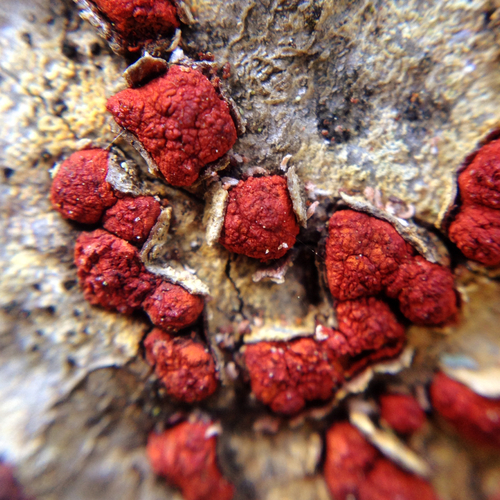
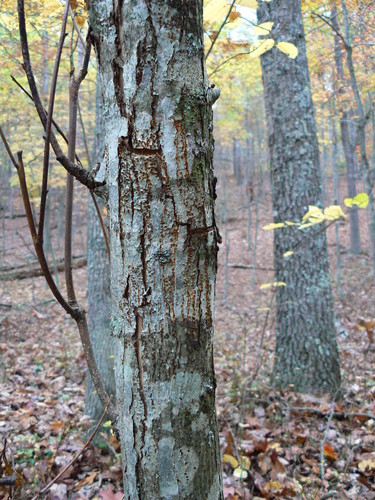
Cryphonectria parasitica (Murrill) M.E.Barr, formerly known as Endothia parasitica, is a pathogenic fungus that belongs to the phylum Ascomycota, the sac fungi. This necrotrophic species is native to East and Southeast Asia, and was introduced into Europe and North America in the early 1900s. Different strains of this fungus vary in virulence and spread at different rates, and have caused significant tree losses in both introduced regions. The primary plant tissues C. parasitica targets are the inner bark, which hosts the tree's conductive tissue, and the cambium, the layer of actively dividing cells that produces secondary vascular tissues. In these tissues, the pathogen forms diffuse cankers, where the fungus's mycelium overwinters. The following spring, two types of fruiting bodies develop: pycnidia, which usually form first, followed by perithecia. After rainfall, pycnidia ooze orange tendrils that hold conidia, the asexual spores of the fungus, while perithecia forcibly eject ascospores, the sexual spores. Once released, ascospores become airborne and are carried by wind eddies to new host trees or other parts of the same existing tree. When insects, birds, or other wildlife come into contact with C. parasitica cankers, they can mechanically carry conidia to new hosts. Asexual conidia can also be dispersed by rain splash. After spores reach a new host or a new area on an existing tree, they can germinate and infect the inner bark through insect wounds and cracks in the outer bark. If cankers keep forming and expanding, the fungus can girdle the tree stem, cutting off the flow of water and nutrients to the tree's vital above-ground vegetative tissues. This disruption of nutrient movement causes the death of all above-ground parts of the tree, though the root system may remain alive. As a result, American chestnuts now exist mainly as shrubs that sprout from old, surviving root systems. These sprouts almost always become infected with C. parasitica and die before they reach sexual maturity.