About Cruziohyla sylviae Gray, 2018
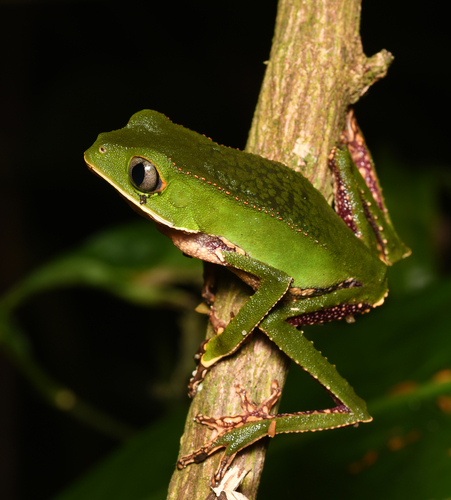
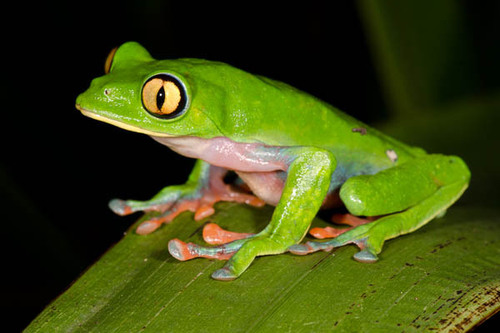
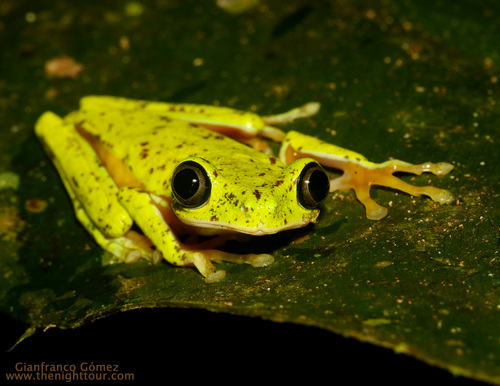
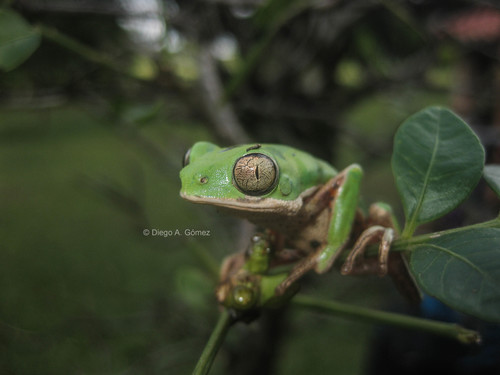
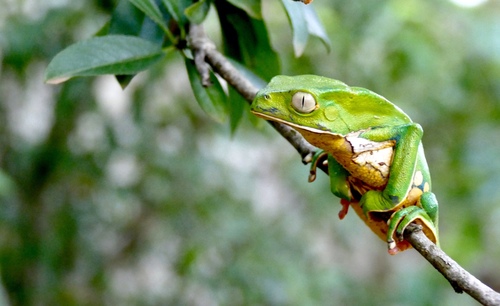
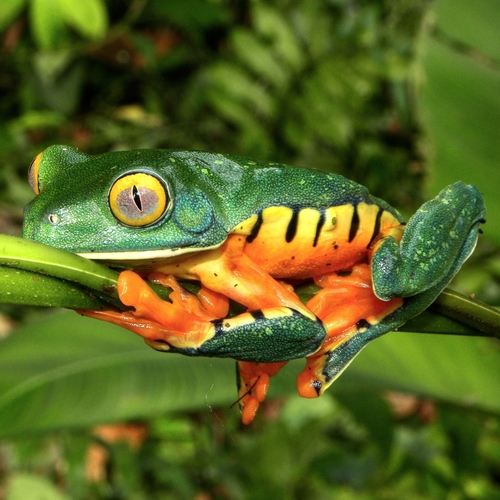
Cruziohyla sylviae was first described in 2018 by zoologist Andrew Gray, who named the species after his granddaughter. This species can be distinguished from its close relative Cruziohyla calcarifer, the Splendid Tree Frog, by several key traits. Instead of the white or pale blue spots seen on C. calcarifer, C. sylviae has small green, lichen-like markings on its dorsal body surfaces. C. sylviae also lacks the distinct dark ventral markings on the under-thighs that are unique to C. calcarifer among Cruziohyla species. Additionally, C. sylviae is easily identifiable by its large external eardrum, called a tympanum, which is almost the same size as the eye. In comparison, the tympanum of C. calcarifer is only half the size of the eye. DNA analysis shows that C. sylviae is genetically closer to its sister species C. craspedopus than it is to the true C. calcarifer originally described by George A. Boulenger in 1902. Adult male C. sylviae measure 44.3 to 67.0 mm in snout-vent length, while adult females measure 73.5 to 88.2 mm in this measurement. C. sylviae is distributed across the area from Panama to Honduras, where it inhabits primary forest. The type locality for the species is Guayacán, located in Limón province, Costa Rica. Before 2018, this species was misidentified as the splendid tree frog C. calcarifer, which is distributed from Ecuador to Costa Rica. C. sylviae lives high in the canopy of forests and flood plains. It descends to lower branches to breed. Female C. sylviae lay their eggs in water that collects inside dead trees. Tadpoles of this species have also been observed in reservoirs located near trees, which suggests that tree cover is more important for the frog's survival than completely undisturbed habitat.