About Croton monanthogynus Michx.
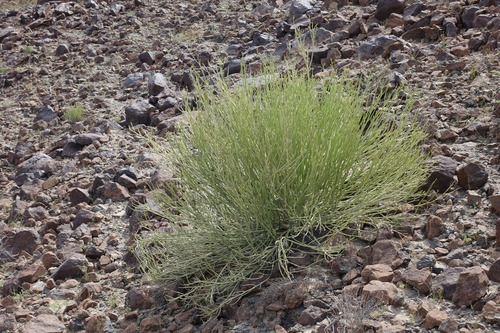
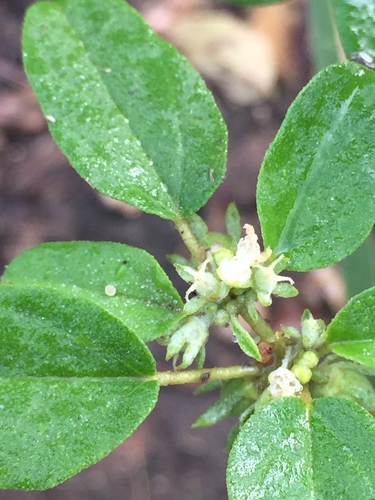
Croton monanthogynus Michx. is a species of flowering plant in the spurge family, commonly known by the names prairie tea, one-seed croton, dove weed, and prairie goatweed. It is a summer annual plant, with an alternate leaf arrangement (phyllotaxis). The undersides of its leaves are gray, and it has entire leaf margins. This species is monoecious, meaning it bears separate clusters of male and female reproductive organs on the same individual plant. It grows a tap root, and typically reaches 6 inches to 3 feet tall, though dwarf plants may be shorter than 6 inches. It often has a bushy appearance with a flattened top. Its flowers are small, inconspicuous, white, and have sepals. The plant has glands that emit a pleasant odor, and it blooms from April through September. Its fruit is a capsule, and its seeds are black. Croton monanthogynus is native to the southeastern United States and the southern Great Plains, and is adventive in more northern U.S. states. It has been recorded in the following U.S. states: Alabama, Arkansas, Arizona, Georgia, Iowa, Illinois, Indiana, Kansas, Kentucky, Louisiana, Maryland, Michigan, Missouri, Mississippi, North Carolina, Nebraska, Ohio, Oklahoma, Pennsylvania, South Carolina, Tennessee, Texas, Virginia, Wisconsin, West Virginia. It grows in sunny, dry habitats that are both disturbed and high-quality, and prefers full sun, dry conditions, and poor soil. This plant provides food for wildlife; sparrows, mourning dove, wild turkey, prairie chicken, bobwhite, and cowbird all feed on its seeds. Some people have allergic reactions to this member of the spurge family. The sweet-smelling leaves can be used to make a mildly flavored golden tea; dried leaves produce a stronger flavor than fresh leaves. It is also said that prairie tea can be used as a spice in the same way as basil.