About Crotaphytus reticulatus Baird, 1858
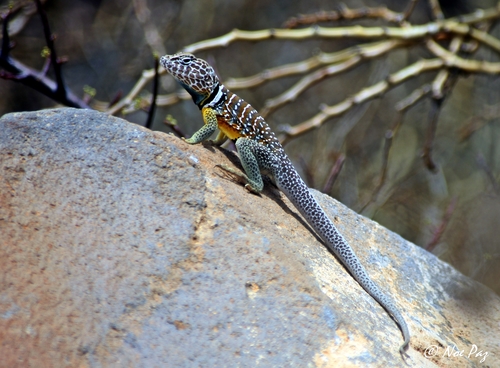
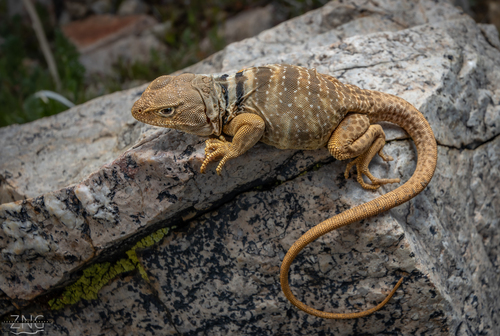
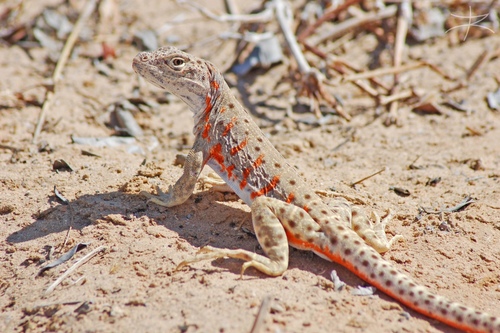
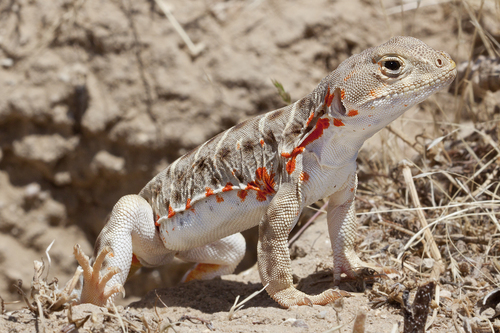
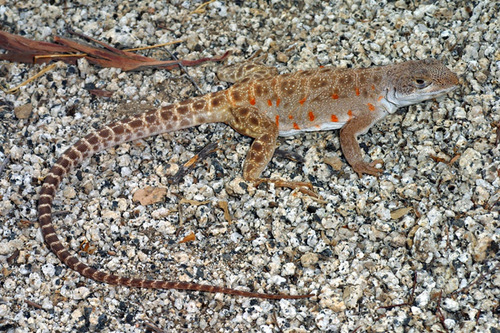
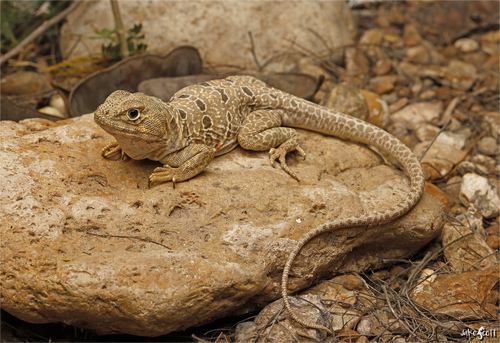
Crotaphytus reticulatus is a tan to brown lizard with a net-like reticulated pattern covering most of its back, limbs, and tail. Some of the spaces within this reticulated pattern are filled with black pigment, and symmetrical black spots also appear as part of the species' pattern. This species differs from other members of the genus Crotaphytus in several key traits. Most notably, there is no color difference between males and females outside of the breeding season. When breeding season arrives, males develop bright yellow coloration on their chests; males also naturally have a black neck collar and yellow markings on the chest and throat. The collars of C. reticulatus are generally faint, and the front collar is fully continuous along the underside of the body. The dewlap (gular throat area) of this species is greenish-gray with black pigment at its center. During breeding season, females have a white to yellow gular area that lacks the central black pigment. When females are ready to lay eggs, they also develop orange bars along their underside. The ventral (underside) surface of the body is white or cream. Adult C. reticulatus reach a total length of 41 cm (16 in) including the tail. All other collared lizards in this genus have small mite pockets at the base of the tail and skin folds above the front legs, where mites and chiggers often collect; C. reticulatus lacks the postfemoral mite pockets that the rest of the genus has. This absence of postfemoral mite pockets has been suggested to indicate that this species split from the ancestral Crotaphytus lineage earlier than other members of the genus. C. reticulatus also has black melanin in its mouth and black secretions from its femoral pores. All other members of the genus except Crotaphytus antiquus have gray femoral pore secretions.