About Crotaphytus bicinctores Smith & Tanner, 1972
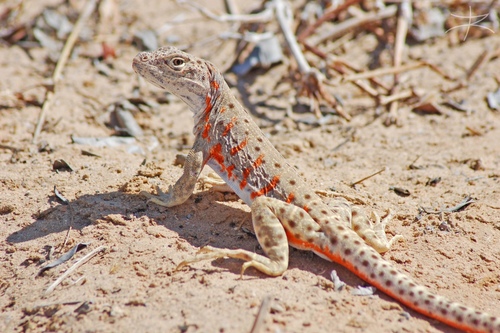
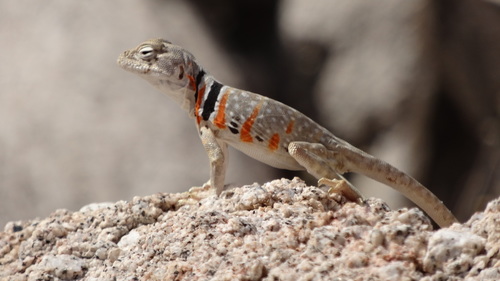
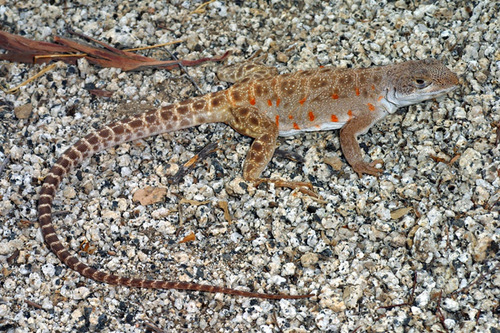
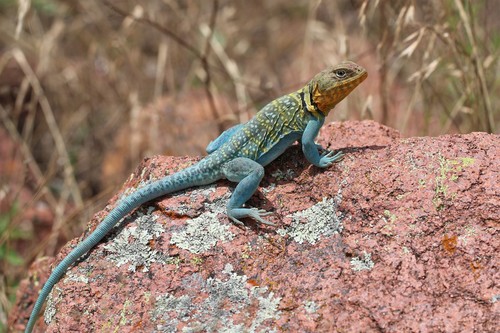
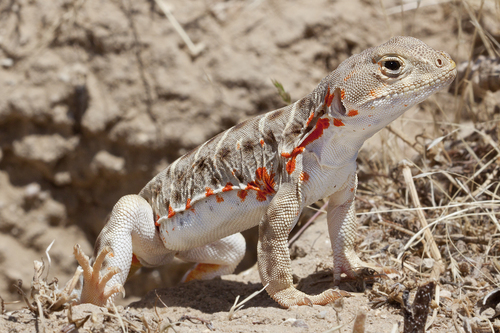
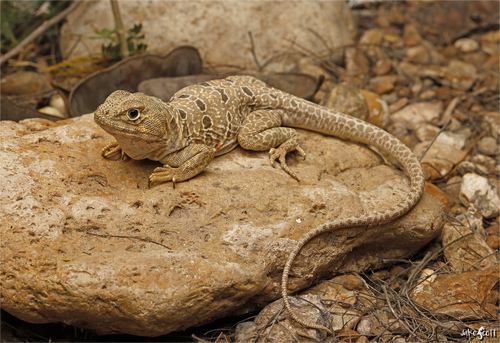
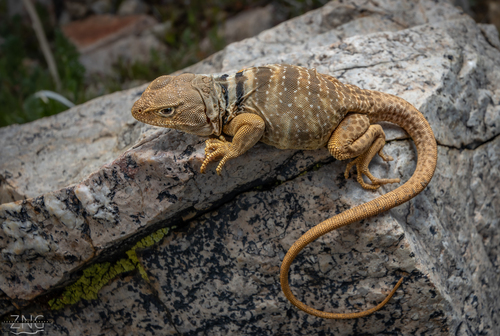
Crotaphytus bicinctores is very similar in shape and size to the common collared lizard, Crotaphytus collaris, but lacks bright, extravagant coloration. Male C. bicinctores can be brown to orange, with some red or pink pigment on the belly. Females are typically more black or dark brown. This species has elongated scales near the claws, and its tail is more triangular in cross-section, rather than round like the tail of C. collaris. C. bicinctores has a broad head and large hind legs, and its specific name comes from the pair of black bands on its neck. Males have broader heads than females, along with a dark-colored throat and more pronounced orange crossbands on the body. Adult C. bicinctores range from 2.5 to 4.5 inches (6.4 to 11.4 cm) in snout-to-vent length (SVL), and have a thick tail that is often twice as long as the body. Commonly called the Great Basin collared lizard, this species is endemic to the Western United States. It can be found in California, most of Nevada, southeastern Oregon, southern Idaho, and the western regions of Utah and Arizona. It usually inhabits rocky areas of arid deserts, and is most common in desert scrub and desert wash habitats. It is widely distributed throughout the Mojave, Sonoran, and southeastern Great Basin deserts.