About Crotalus viridis Rafinesque, 1818
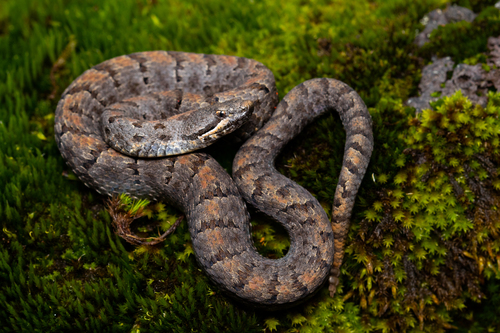
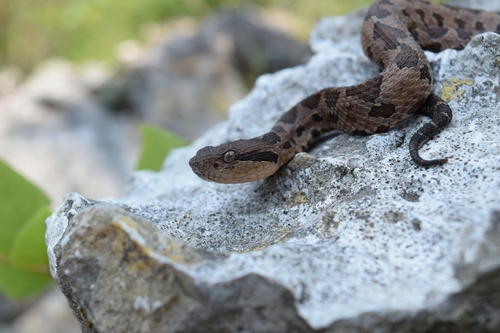
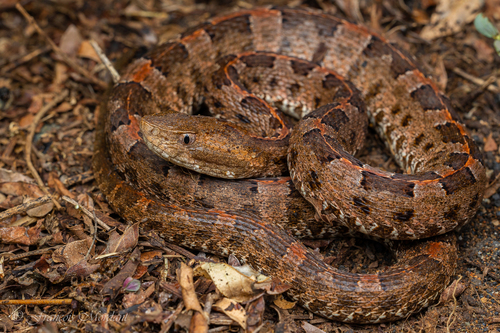
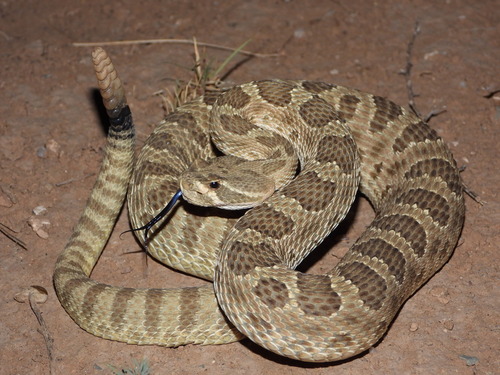
Crotalus viridis Rafinesque, 1818, commonly known as the prairie rattlesnake, most often grows to over 100 cm (3.3 ft) in length. The maximum recorded size for this species is 151.5 cm (4.97 ft). In Montana, where the species reaches its maximum overall size, specimens occasionally exceed 120 centimetres (3.9 ft) in length. One of the species' most characteristic features is the presence of three or more internasal scales, usually four. Identification features vary between subspecies. Generally, prairie rattlesnakes are lightly colored in shades of brown, with dark brown patches arranged in a pattern along the dorsal side. A color band may be visible at the back of the eye. Members of the prairie rattlesnake group have the distinctive triangular head shape, plus pit sensory organs located on either side of the head. A key trait that helps distinguish prairie rattlesnakes from other rattlesnakes is two internasals that contact the rostral scale. This species is distributed across North America, ranging from southwestern Canada through the United States to northern Mexico. It covers most of the Great Plains, plus the eastern foothills and some intermontane valleys of the Rocky Mountains. In Canada, it occurs in Alberta and Saskatchewan. In the United States, it is found in eastern Idaho, most of Montana, North Dakota, South Dakota, Wyoming, Nebraska, Colorado, Kansas, Oklahoma, Texas, New Mexico, northeastern Arizona, and extreme western Iowa. In Mexico, it occurs in northern Coahuila and northwestern Chihuahua. Both Wright and Wright (1957) and Klauber (1997) list Utah as part of the species' range, with maps showing it restricted to the extreme southeastern portion of the state. The species' original type locality is described as "the Upper Missouri [Valley, USA]", and H.M. Smith and Taylor (1950) proposed an emendation to "Gross, Boyd County, Nebraska." Its elevation range extends from 100 m (330 ft) near the Rio Grande to over 2,775 m (9,104 ft) in Wyoming. Habitat characteristics vary by subspecies and geographic range. Generally, these rattlesnakes occupy areas with an abundant prey base. Many subspecies live in somewhat rocky areas, where rock outcrops act as den sites. Prairie rattlesnakes are known to use burrows dug by other animals. They prefer dry areas with moderate vegetation coverage, and vegetation cover varies by region and subspecies. Prairie rattlesnakes are viviparous, producing 1 to 25 young per reproductive event. The average number of young ranges from four to 12, but this number can vary greatly depending on food availability and environmental conditions. During the breeding season, males may compete for access to females, and female western rattlesnakes do not necessarily breed every year. Females give birth in late summer or early fall, and gather in communal dens to give birth and care for their young. Females have been observed "babysitting" unrelated juveniles when the juveniles' mothers need to leave, and also engaging in other social behaviors such as drinking rainwater off of each other's backs. Newborn snakelets measure 22–28 cm long, are venomous from birth, and reach sexual maturity at three years of age.