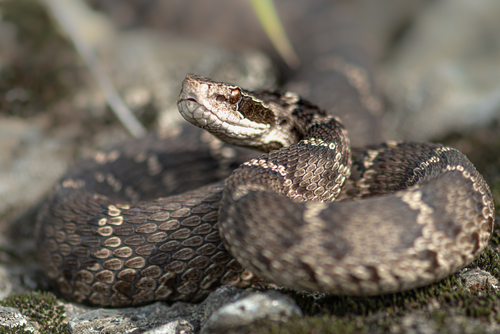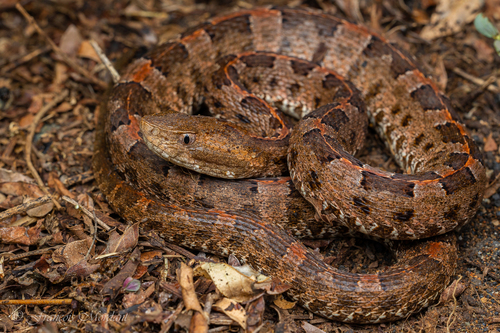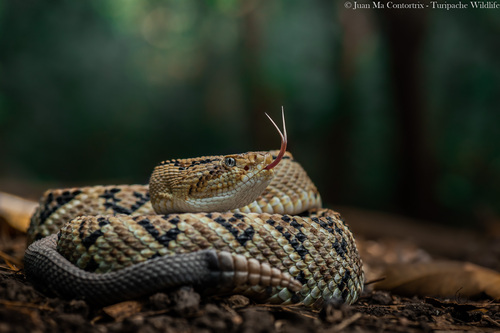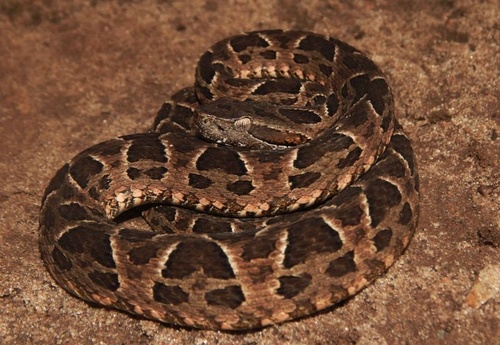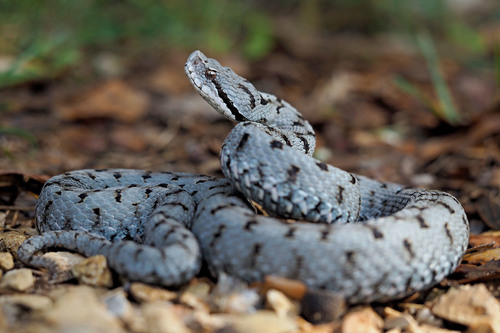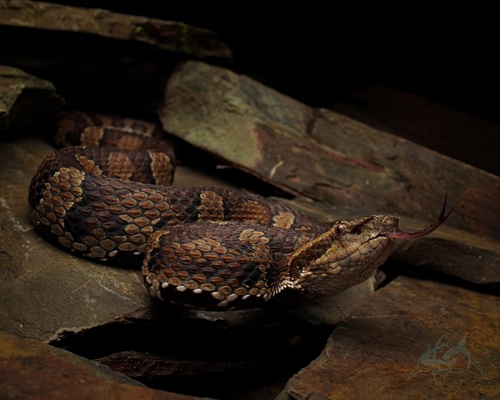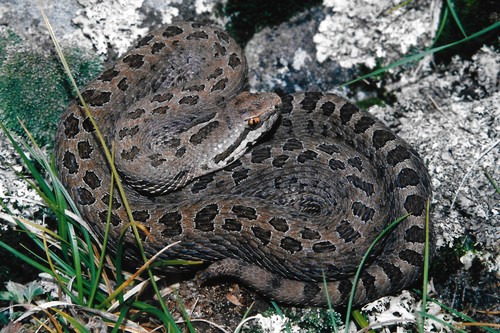
About Crotalus triseriatus Wagler, 1830
Adult males of Crotalus triseriatus typically reach a total length (including the tail) of over 60 cm (24 in), and females of this species are somewhat smaller than males. The maximum total length ever recorded for this species is 68.3 cm (26.9 in). This species is native to Mexico, where it occurs along the southern edge of the Mexican Plateau in the highlands of the Transverse Volcanic Cordillera. Its confirmed range covers the Mexican states of Jalisco, México, Michoacán, Morelos, Nayarit, Puebla, Tlaxcala, and Veracruz. In the original 1830 description by Wagler, the given type locality for the species was simply "Mexico". In 1950, H.M. Smith and Taylor proposed a restriction of this type locality to "Alvarez, San Luis Potosí, Mexico". Crotalus triseriatus inhabits pine-oak forest, boreal forest, coniferous forest, and bunchgrass grasslands. On Volcán Orizaba, the species occurs at very high altitudes, within the zone that stretches from the approximate 4,572 m (15,000 ft) snow line up to 4,573 m (15,000 ft) where green plants grow. It is most commonly found at elevations between 2,700 and 3,350 metres (8,860 to 10,990 ft).