About Crotalus simus Latreille, 1801
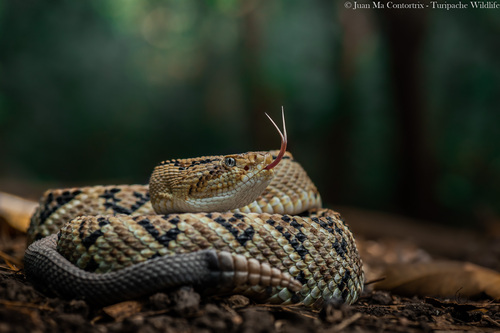
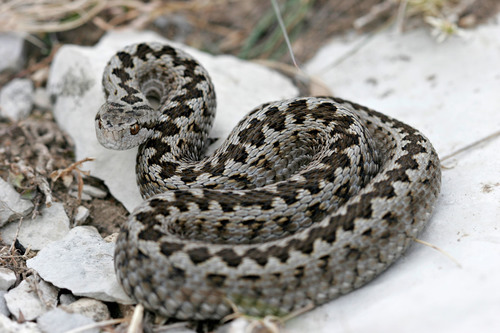
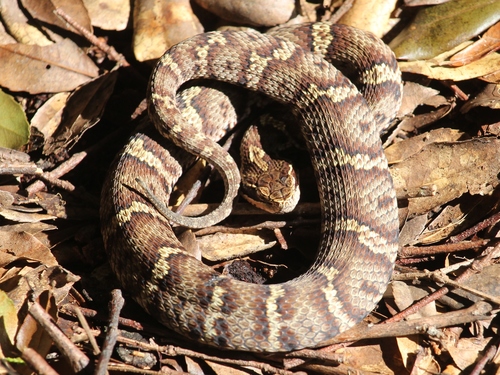
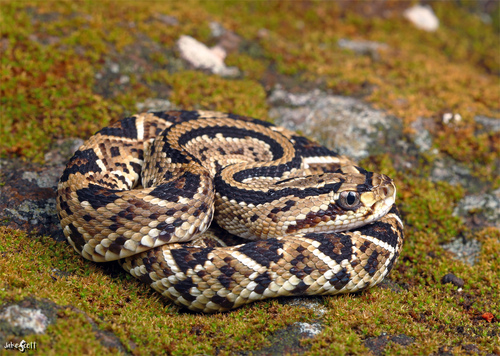
Description: Adult Crotalus simus commonly grow longer than 130 cm (51 in), and males reach larger sizes than females. In some populations, large males reach 140–160 cm (55–63 in) in length. The maximum recorded length for this species is 180 cm (71 in). The body has a rough texture because its dorsal scale keels are developed into distinct protuberances or tuberculations. This trait is most prominent on the scale rows along either side of the body, and becomes less pronounced in lower scale rows. Vertebral scales have keels that are roughly as prominent as the keels on the fourth scale row down the flank, counting vertebral scales as the first row.
Distribution and habitat: This species is found along Mexico's Pacific coast from southwestern Michoacán, and along Mexico's Atlantic coast from Veracruz to the Yucatan Peninsula. Its range extends south through Belize, Guatemala, El Salvador, Honduras, and Nicaragua to west-central Costa Rica. It is not present in Panama, but it is believed to occur on the Atlantic side of Colombia. The originally given type locality is "Ceylan", which is incorrect. A neotype was selected from the area near El Arenal, Zacapa Department, Guatemala, at 360 m above sea level. It inhabits semiarid environments, including dry or very dry tropical forests, thorn woodland, and arid scrub forest. It can also be found in mesic forests that contain relatively dry, open areas.
Uses: The Yucatan population, previously classified as C. tzabcan, is greatly revered by the Mayan people. The word tzabcan means rattlesnake in the Mayan language. Snakes are depicted in many Maya artworks, and many Maya temples feature carvings shaped like rattlesnakes, but the exact symbolic meaning of the rattlesnake to the Maya is unknown. Mayan shamans dry and roast rattlesnakes, grind them into powder, and use this powder as medicine.