About Crotalus pyrrhus (Cope, 1866)
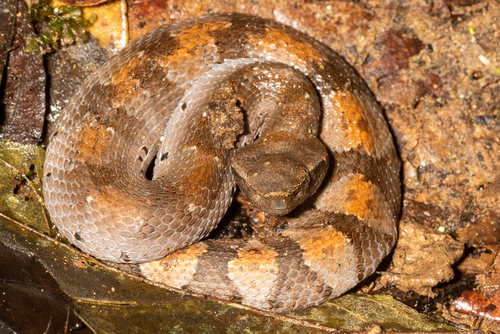
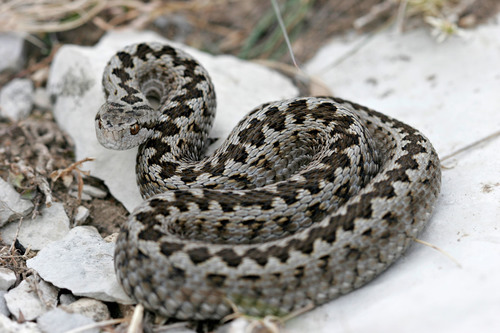
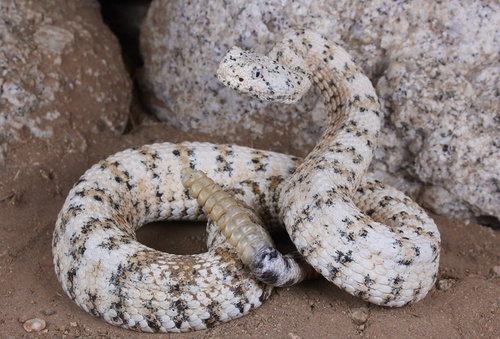
Adults of Crotalus pyrrhus have an average total length of 3 feet (91 cm), and may occasionally grow longer than 4 feet (120 cm). This species' color pattern is variable, matching the color of the rocks and soil in its local habitat. The snake's base ground color can be pink, brown, gray, yellow, or nearly white, with a fine speckling of black and white scales. When a distinct pattern is present, it can be made up of rhombus-shaped markings, crossbands, or irregular blotches. The tail is marked with light and dark rings. This species is found in the southwestern United States, specifically in southern California, southern Nevada, southwestern Utah, and western Arizona. It also occurs in northwestern Mexico, in northwestern Sonora and northern Baja California. Cope's original 1867 description of the species did not include a formal type locality. In 1875, Coues, working within Wheeler's published expedition report, listed the type locality as "Cañon Prieto, a locality near Fort Whipple [Yavapai County], Arizona." Crotalus pyrrhus occupies rocky terrain, including rocky hillsides, canyons, talus slopes, and rock ledges. In southern California, individuals have sometimes been found in chaparral or areas dominated by cacti, but almost never wander far from rocky outcrops that provide their primary shelter. The species is not restricted exclusively to rocky habitats, and individuals have been observed emerging from mammal burrows at dusk. It has been recorded at elevations over 5,000 feet (1,500 m). Crotalus pyrrhus is ovoviviparous; females give birth to live young, with litters reaching up to 12 offspring per birth. Newborn neonates measure 12 inches (30 cm) in length, and feed primarily on lizards.