About Crotalus lepidus Kennicott, 1861
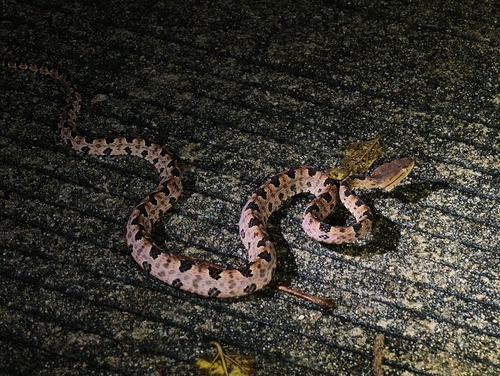
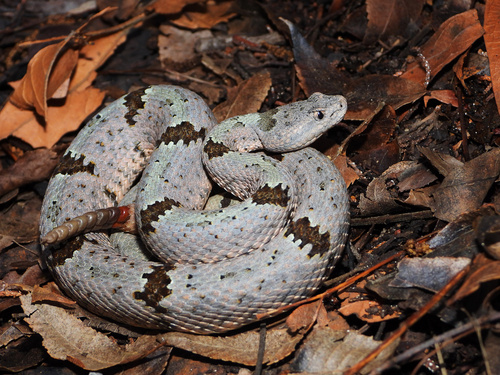
Crotalus lepidus Kennicott, 1861 is a small rattlesnake species that rarely reaches more than 32 inches (81.3 cm) in length. It has a large, rounded head, a fairly heavy body for its size, and eyes with vertical pupils. Like all other rattlesnakes, its tail bears a rattle made of keratin. A new segment is added to the rattle each time the snake sheds its skin. However, the rattle is fragile and can break off, and the frequency of skin shedding varies between individuals. For these reasons, a snake's age cannot be determined by the number of rattle segments or the total length of the rattle. This species' color pattern varies widely, and generally matches the color of the rocks in the snake's native habitat. Individuals found near areas with mostly limestone rock tend to be light grey with darker grey banding. Individuals living at higher altitudes have darker overall coloration. Specimens of the nominate subspecies, the mottled rock rattlesnake (C. l. lepidus), from the Davis Mountains region often have a distinct pink coloration, with dark-grey speckling instead of clear, distinct banding. The banded rock rattlesnake (C. l. klauberi) gets its common name from its distinctive, well-defined banding, which usually occurs with very little speckling or mottling. This species is distributed across the Southwestern United States, including Arizona, southern New Mexico, and southwestern Texas, as well as northern central Mexico. Its originally given type locality is "Presidio del Norte and Eagle Pass", located in Texas, USA. H.M. Smith and Taylor emended this type locality in 1950 to "Presidio (del Norte), Presidio County, Texas". Crotalus lepidus is ovoviviparous. These snakes breed once per year in the spring, and give birth to between six and eight young approximately four months after breeding. Newly born young look like miniature versions of adult snakes, and require three or more years to reach sexual maturity.