About Crotalus enyo Cope, 1861
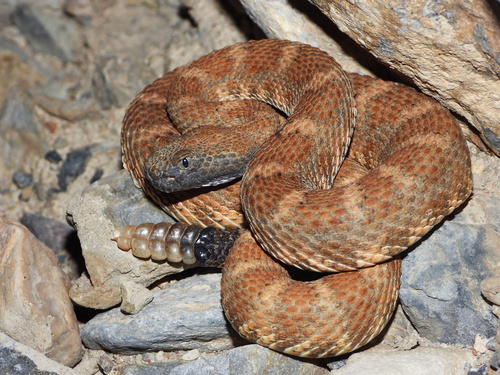
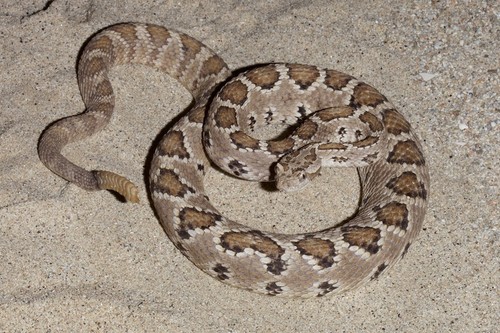
Crotalus enyo Cope, 1861 has a maximum reported total length of 89.8 cm (35.4 in). This species shows sexual dimorphism, with males typically growing larger than females. It has a distinctly small, narrow head, and proportionately large eyes. This species ranges across western Mexico. On the Baja California Peninsula, its territory extends from around Río San Telmo on the west coast, and from opposite Isla Angel de la Guarda on the gulf coast, south all the way to Cabo San Lucas. It also occurs on multiple Gulf of California islands: San Marcos, Carmen, San José, San Francisco, Partida del Sur, Espírita Santo, and Cerralvo. Additionally, it can be found on the Pacific coast island of San Margarita. The species' type locality is Cape San Lucas, Baja California Sur. Crotalus enyo generally prefers desert habitats. In the northwestern portion of its range, it can also live in chaparral. In the cape region of the Sierra de San Lázaro, it inhabits pine-oak forest and tropical deciduous forest. It is often found in rocky areas with arid thorn scrub and cacti, but occasionally occurs in sand dunes as well. It is frequently drawn to human settlements, where it has been recorded in refuse piles. Captive individuals of this species give birth to litters of two to seven young. Recorded newborn lengths range from 20.6 to 22.2 cm (8.1 to 8.7 in). Grismer (2002) documented wild neonates between late July and mid October. This timing suggests the species mates in spring, and gives birth in summer or early fall.