About Crotalus campbelli Bryson Jr, Linkem, Dorcas, Lathrop, Jones, Alvarado-Díaz, Grünwald & Murphy, 2014
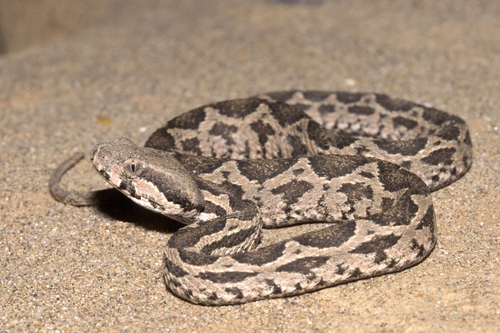
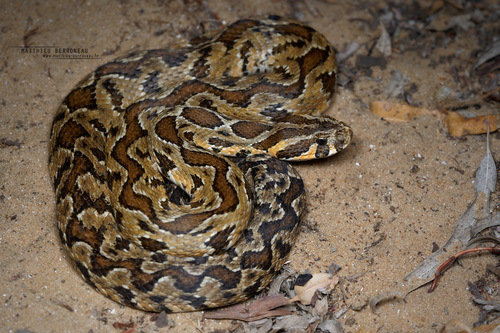
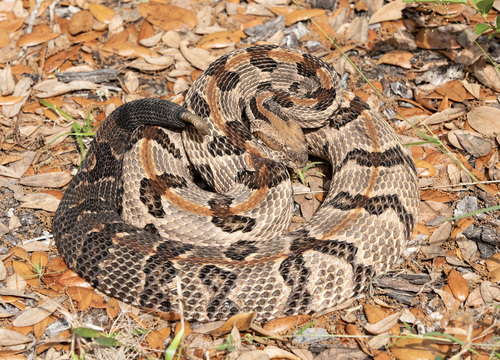
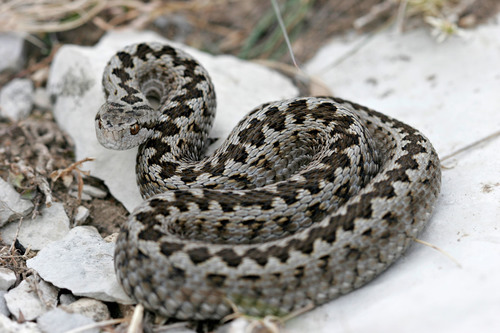
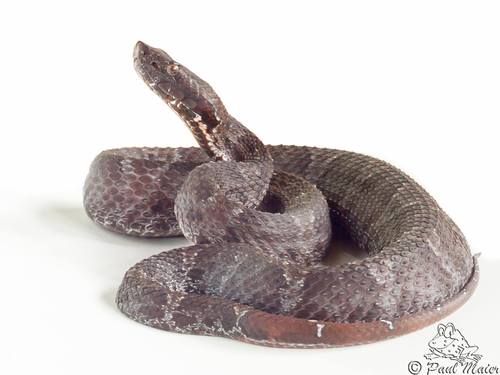
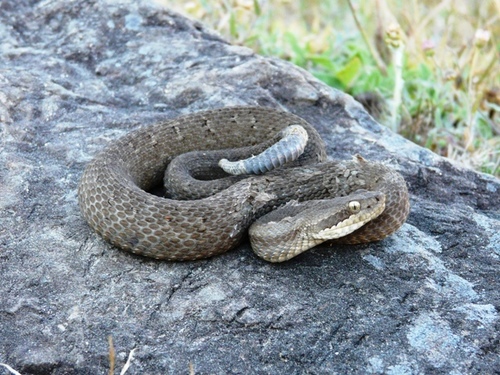
Crotalus campbelli, a member of the Crotalus triseriatus species group, can be told apart from other species in this group by the presence of intercanthals, an infrequently divided upper preocular, and a unique combination of additional morphological traits. Males of this species usually have 150 to 154 ventral scales and 31 to 32 subcaudal scales, while females have 147 to 152 ventral scales and 22 to 26 subcaudal scales. This rattlesnake has a small rattle, a long tail, pale spaces between its dorsal and lateral body blotches, heavy mottling on its underbelly, and a dark-colored proximal rattle and dark underside of the tail. Crotalus campbelli is native to Mexico, where it occurs in the Trans-Mexican Volcanic Belt (locally called the Sierra Nevada) specifically within the states of Jalisco, Colima, and Nayarit. It lives in open rocky areas near montane forests, at middle to high elevations. This species is thought to feed on small mammals and lizards. Because Crotalus campbelli was only recently described in 2014, most of its distinct ecology and biology have not yet been investigated.