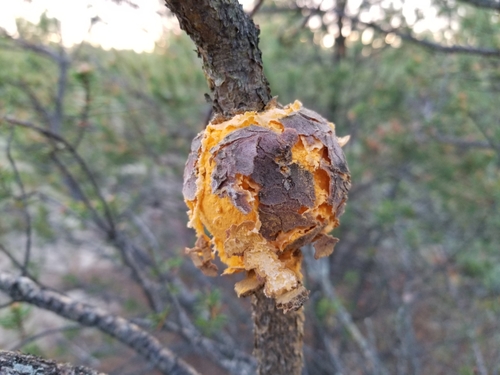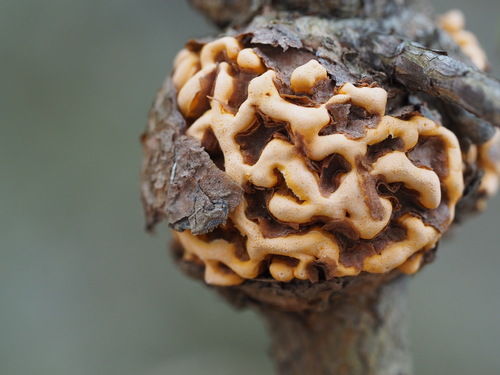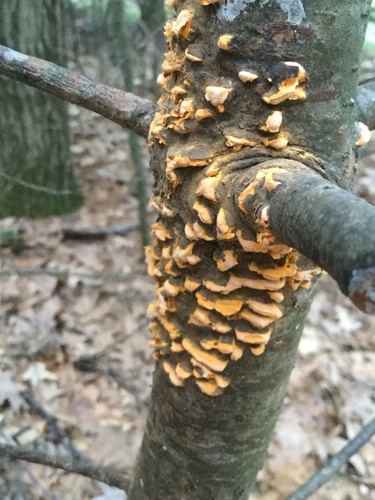
About Cronartium ribicola J.C.Fisch.
Cronartium ribicola J.C.Fisch. is a species of rust fungus in the family Cronartiaceae that causes the plant disease white pine blister rust. It has other common names in different languages: Rouille vésiculeuse du pin blanc in French, white pine Blasenrost in German, and moho ampolla del pino blanco in Spanish. Environmentally, Cronartium ribicola prefers cooler temperatures and moist conditions in low-lying areas, especially during late summer and early fall. Cool temperatures and humidity are required for this pathogen’s spore germination and dispersal. This combination of cool temperatures and high humidity easily encourages dew formation. The free water from dew loosens spores that adhere to leaf surfaces and promotes spore germination. At the microclimate scale, shorter trees growing beneath a forest canopy have cooler, moister conditions. As a result, these young trees are more susceptible to infection by C. ribicola than older, taller trees that form the canopy, which have greater access to warm, dry sunlight. These favorable environmental conditions for the fungus are common across the Northern Hemisphere, leading many areas in the United States to be designated hazard zones for white pine blister rust in pines of the genus Pinus.