About Crocodylus siamensis Schneider, 1801
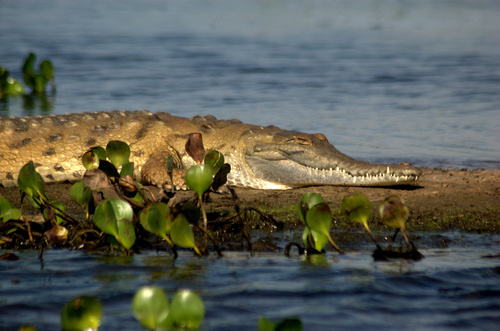
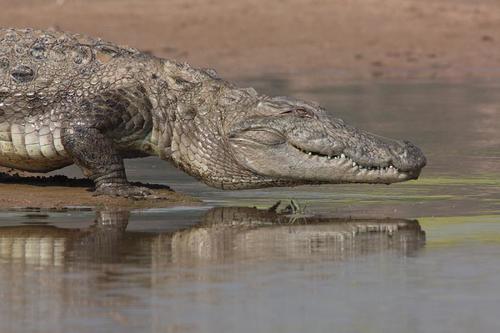
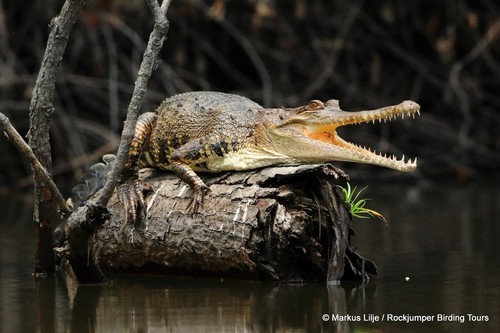
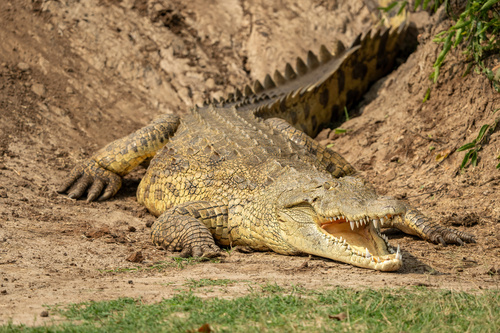
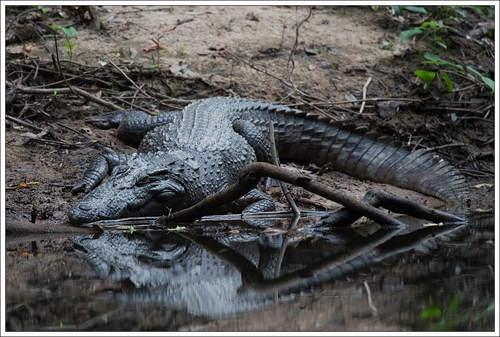
The Siamese crocodile (Crocodylus siamensis Schneider, 1801) is a medium-sized freshwater crocodilian. It has a relatively broad, smooth snout and an elevated bony crest behind each eye. Its overall coloration is olive-green, with some variation to darker shades of green. Young Siamese crocodiles measure 1.2 to 1.5 m (3 ft 11 in – 4 ft 11 in) long and weigh 6 to 12 kg (13 to 26 lb), while adults grow to 2.1 to 3 m (6 ft 11 in – 9 ft 10 in) in length and 40 to 120 kg (88 to 265 lb) in weight. For three wild individuals measuring 2.12 to 2.63 m (6 ft 11 in – 8 ft 8 in) and weighing 40–87 kg (88–192 lb), recorded bite force ranged from 2,073–4,577 N (466–1,029 lbf). Large mature males can reach 4 m (13 ft 1 in) in length and 350 kg (770 lb) in weight. Siamese crocodiles occupy a wide variety of freshwater habitats, including slow-moving rivers and streams, lakes, seasonal oxbow lakes, marshes, and swamps. Since 2000, around 30 sites with Siamese crocodiles have been identified in Cambodia, where the population is conservatively estimated at 200 to 400 individuals. Small populations also survive in Thailand, Vietnam, and Laos. In March 2005, conservationists found a nest with juvenile Siamese crocodiles in the southern Lao province of Savannakhet. A small but ecologically important population also lives in East Kalimantan, Indonesia. Multiple factors contribute to habitat degradation and loss for this species. These include conversion of wetlands for agricultural use, use of chemical fertilizers and pesticides in rice cultivation, and increases in local cattle populations. Impacts from warfare during the Vietnam War in Vietnam, Laos, and Cambodia, ranging from land mines to aerial bombardment, have also contributed to habitat loss. Many river systems, even those located within protected areas, have approved or proposed hydroelectric dams; these projects are expected to eliminate around half of the species' remaining breeding colonies within the next ten years. Dam construction on the upper Mekong River and its major tributaries causes hydrological changes that degrade Siamese crocodile habitat. Potential impacts of dam construction include wetland loss and altered flooding cycles, with dry season flow 50% higher than it is under natural conditions. Despite widespread conservation concern for the species, many aspects of the wild life history of C. siamensis remain unknown, especially its reproductive biology. Adult Siamese crocodiles feed mainly on fish and snakes, and also eat amphibians and small mammals. Very little is documented about the natural history of this species in the wild, but females build mound nests from scraped plant debris mixed with mud. In captivity, Siamese crocodiles breed during the wet season from April to May. Females lay between 15 and 50 eggs, which they guard until hatching. After incubation is complete, the female assists her young as they break out of their eggs, then carries the hatchlings to water in her jaws. Pure, unhybridized Siamese crocodiles are generally unaggressive toward humans. Only four confirmed unprovoked or provoked attacks on humans have been recorded, none of which were fatal. Of these four attacks, one was carried out by a crocodile defending its young, one was likely a defensive act, one was provoked, and the cause of the fourth is unclear. A fifth fatal attack on a child in 1928 is thought to have been carried out by a Siamese crocodile, but this is not confirmed.