About Crocodylus rhombifer (Cuvier, 1807)
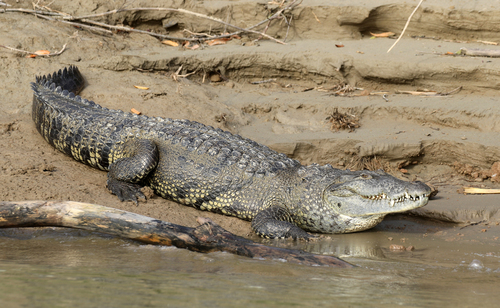
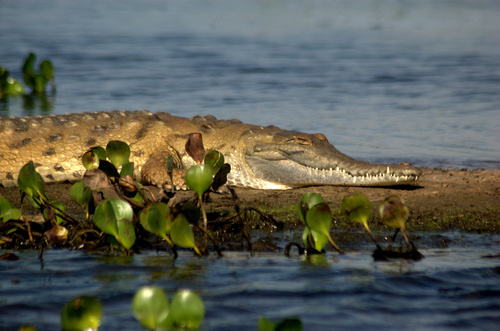
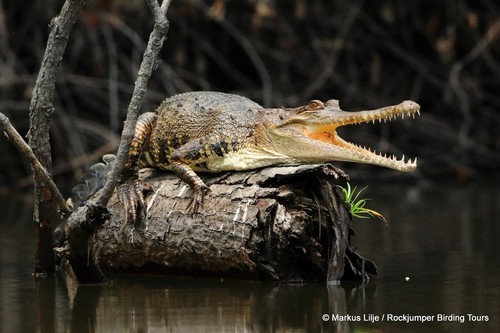
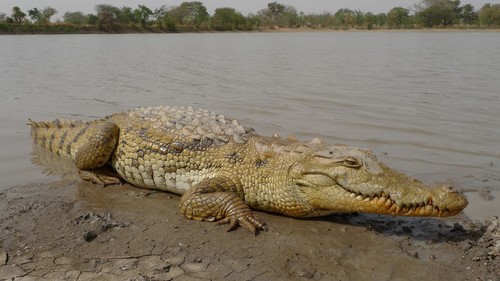
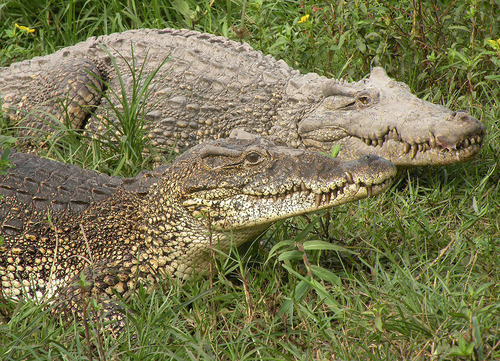
The species described here is Crocodylus rhombifer (Cuvier, 1807), commonly called the Cuban crocodile. It has multiple distinct characteristics that separate it from other crocodilians: adult individuals have brighter coloration, rougher pebbled scales, and long, strong legs. This species is the most heavily armored living member of the genus Crocodylus. It is classed as a small to mid-sized crocodilian. Typical adults measure 2.1 to 2.73 m (6 ft 11 in – 8 ft 11 in) in length and weigh 70 to 120 kg (150 to 260 lb). Large males can grow up to 3.5 m (11 ft) in length and weigh 215 kg (474 lb) or more. Three individuals measuring 1.87 to 2.46 m (6 ft 2 in – 8 ft 1 in) and weighing 30–65 kg (66–143 lb) had a recorded bite force of 1,392–3,127 N (313–703 lbf). Currently, the Cuban crocodile is only found in Cuba's Zapata Swamp, where it is highly endangered. Its historic range covered more of the Caribbean; fossils of the species have been found in the Cayman Islands, The Bahamas, and Hispaniola (the Dominican Republic). It prefers freshwater habitats including swamps, marshes, and rivers, and rarely swims in saltwater. The Cuban crocodile displays unusual behaviors not seen in other crocodilians, and is considered the most morphologically and behaviorally distinct species within the genus Crocodylus. One observed colony has shown behavior strongly suspected to be pack-hunting, which may explain how this species preyed on prehistoric megafauna that it coexisted with, such as giant Caribbean sloths and giant West Indian tortoises. It is also the most terrestrial crocodile, with reduced webbing between the toes of its hind feet and no webbing on its front feet. It demonstrates high intelligence, a trait unusual for crocodilians. The Cuban crocodile's mating season falls between May and July, which is thought to align with environmental changes like rainfall and temperature shifts. In the wild, this species nests in wet marshes, where it digs trenches and covers its eggs with organic material. In captive settings, Cuban crocodiles build mounds to nest. During the nesting period, females lay between 30 and 40 eggs, with an estimated incubation period of 58 to 70 days. Hatching occurs from late August to early September. Predation by humans, raccoons, and other animals means many eggs never hatch. Newly hatched Cuban crocodiles are approximately 2–3 inches in length and weigh 1/4 of a pound. Like other crocodilians, the sex of Cuban crocodile offspring is determined by the temperature of the nest. In conservation programs, eggs are kept in incubators maintained at a constant 32 degrees Celsius to produce male offspring. Cuban crocodiles are an aggressive species, and are known to practice cannibalism. Cannibalism is a major contributing cause of most offspring not surviving to the juvenile stage. In 2012, two Cuban crocodile hatchlings were born as part of conservation breeding at the National Zoo in Washington, D.C. This was the first successful breeding of the species at this zoo in 25 years. The species is known to hybridize with American crocodiles, which creates a potential risk to the conservation of the pure Cuban crocodile species.