About Crocodylus intermedius (Graves, 1819)
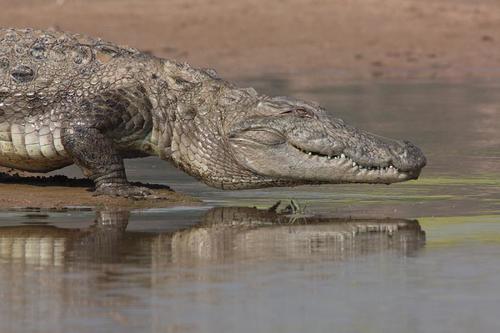
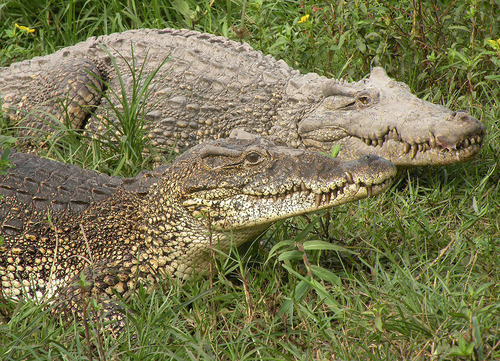
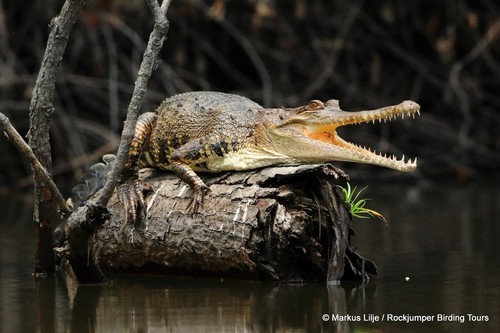
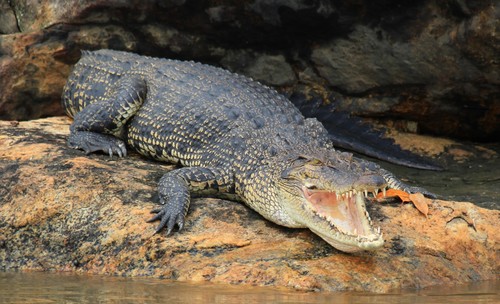
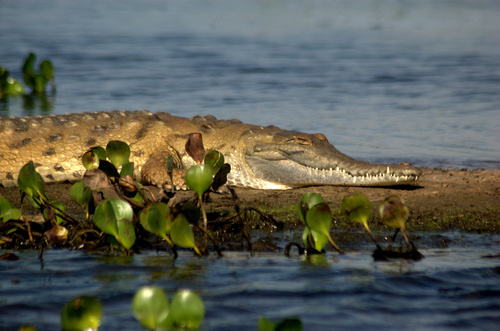
Characteristics: The Orinoco crocodile, Crocodylus intermedius, can be identified by its relatively long, narrow snout, which is narrower than the snout of the similar-looking American crocodile. This species generally has a pale tan hide, though at least three distinct coloration variations are known: some individuals are almost completely yellowish, while others are dark brownish-gray. The skin of Orinoco crocodiles can change color over long periods of time, a phenomenon that has also been recorded in other species that gradually alter the amount of melanin in their skin. These crocodiles have dark brown markings: these markings appear as more prominent bands in younger specimens, and as scattered markings on mature individuals. One recorded individual measuring 3.4 meters (11 feet 2 inches) and weighing 182 kilograms (401 pounds) had a measured bite force of 6,276 Newtons (1,411 pounds-force).
Distribution and habitat: This species is only found in the middle and lower reaches of the Orinoco River basin in Venezuela and Colombia. It has been occasionally reported to occur on the island of Trinidad, but this presence has not been confirmed, and witnesses likely misidentified the rarer Orinoco crocodile as an American crocodile. Orinoco crocodiles were once thought to have inhabited a wide range of riparian habitats, ranging from tropical forests to the streams of the Andes foothills. Today, the species is restricted to the Llanos savanna and its associated seasonal freshwater rivers.
Reproduction: When water levels recede during the dry season, Orinoco crocodiles retreat into burrows they dig into riverbanks. An adult breeding pair mates during the driest part of the year. Adult males attract females by roaring. Females often outnumber males two to one, and appear to select males with the deepest roars. In one monitored reintroduced population, only 6 out of 14 potential adult males sired over 90% of the eggs laid. Usually around 14 weeks after mating, the female Orinoco crocodile digs a nest and lays approximately 40 eggs. This species is a hole-nester, and typically builds its nest on a sand bank. The eggs incubate under a mixture of soil and rotting vegetation for around three months. Sex of hatchlings is determined by incubation temperature, a phenomenon called temperature-dependent sex determination. The most common predator of buried Orinoco crocodile eggs is tegu lizards, though the mother crocodile sometimes catches and kills tegus that approach the nest. At night, newly hatched young emerge from the nest and call to their mother; the mother digs the young out of the nest and carries them to the water, which is at a considerably higher level by this point in the season. Young Orinoco crocodiles are often at risk of predation from American black vultures, tegu lizards, green anacondas, caimans, South American coatis, jaguars, and other carnivores, though the defending mother crocodile sometimes also catches and kills these predator species. Adult Orinoco crocodiles have no natural predators other than humans. Females defend groups of juvenile crocodiles for over three years, though most juveniles gain independence closer to one year after hatching. A study of captive Orinoco crocodiles observed aggressive behavior from adult individuals while nesting, noting that normally relatively docile Orinoco crocodiles cannot be approached when they are actively brooding. If they do not face human persecution, Orinoco crocodiles can potentially reach a lifespan of 70 to 80 years.