About Crocidura russula (Hermann, 1780)
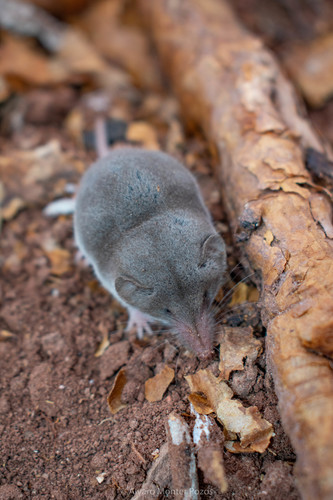
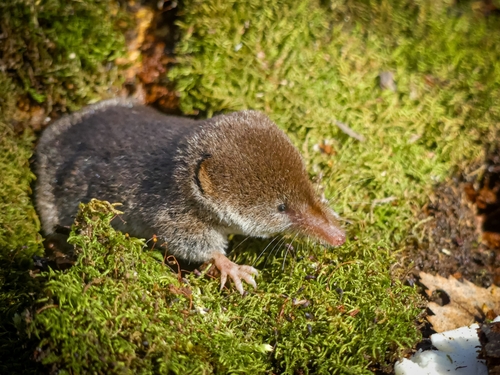
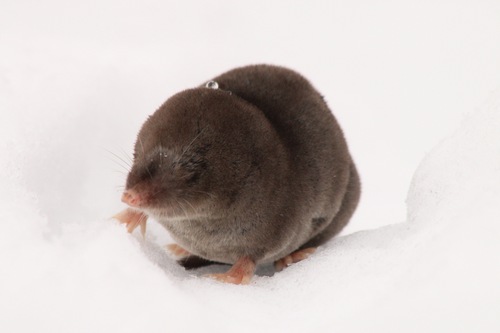
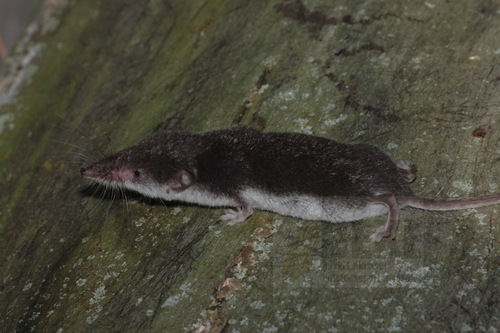
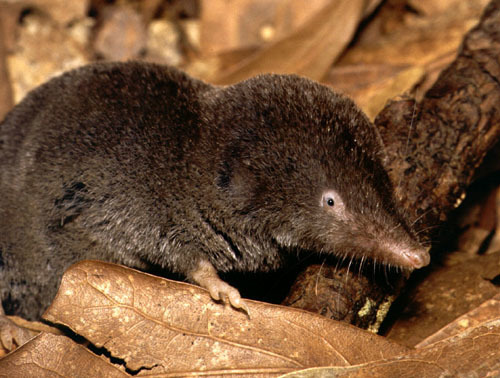
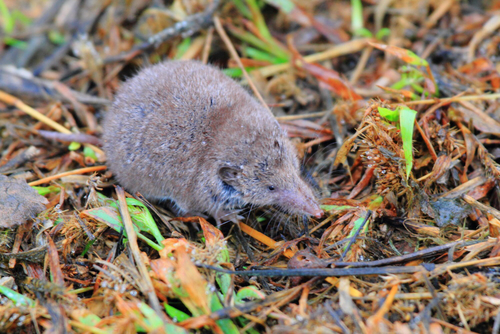
Physical description: The greater white-toothed shrew (Crocidura russula) can be distinguished by examining its unpigmented teeth. Like other white-toothed shrews, C. russula has no iron deposition in the enamel at the tips of its teeth. This species has a greyish or reddish brown upper coat, and a yellowish grey coat on its underside. It is a medium-sized shrew, with a weight of around 11 to 14 grams. The combined head and body length of C. russula is approximately 6 to 9 cm, and its average tail length is 3 to 4.3 cm.
Habitat: The greater white-toothed shrew occurs in temperate regions with abundant insect populations. It is commonly found in habitats including grasslands, woodlands, hedgerows, and prime agricultural land. To prepare for cold seasons, these shrews live near farms and gardens. They typically build nests under stones, under logs, and in abandoned burrows, and are most often found at altitudes below 1000 metres.
Reproduction: The greater white-toothed shrew usually has only one breeding season over its entire lifetime, and fertilization occurs immediately after parturition. C. russula breeds mainly from March to September, producing around four litters, with each litter containing between 2 and 10 young. This species reaches sexual maturity fairly quickly. Young litters stay in their parents' territory until the next breeding season.