About Crocanthemum scoparium Millsp.
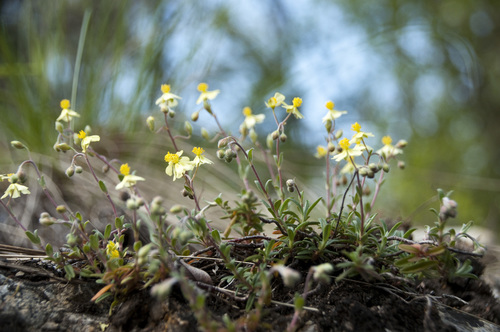
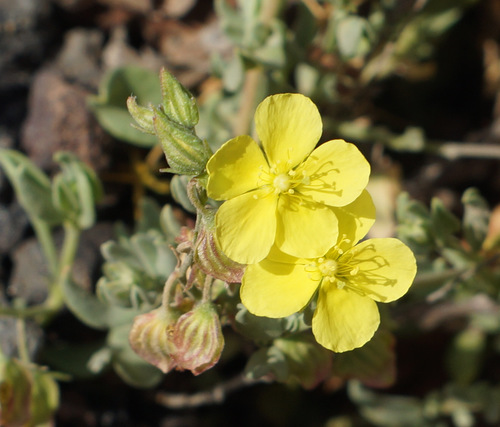
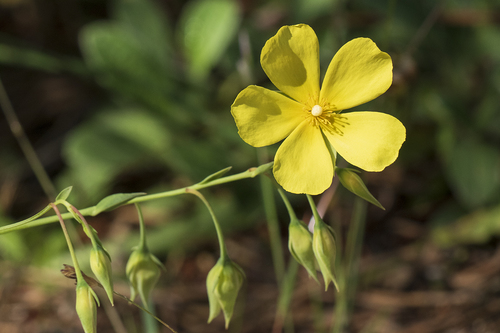
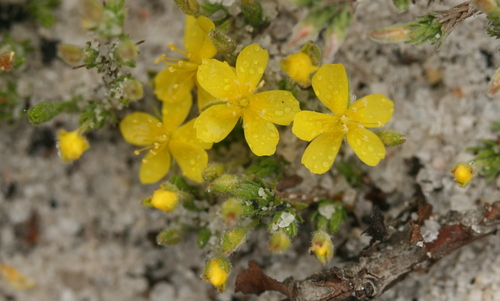
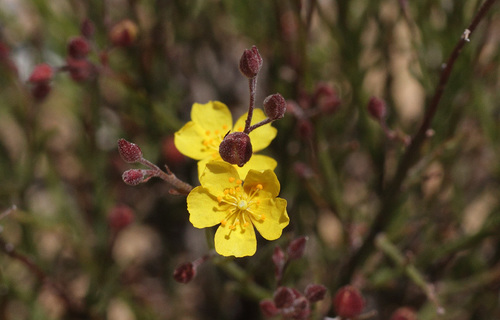
Crocanthemum scoparium, commonly called broom-like frostweed or peak rushrose, is a small drought-tolerant shrub in the Cistaceae family, a group known for hardy, sun-loving plants adapted to dry climates. It is native to North America, found primarily in coastal and inland chaparral ecosystems of California, Baja California, and surrounding regions. This species gets its common name from its distinctive upright, broom-shaped branches, and typically grows 1 to 3 feet (30 to 90 cm) tall. Crocanthemum scoparium grows best in dry, sandy or rocky soils and requires full sun exposure. It is most often found in coastal sage scrub, chaparral, and desert scrub habitats. It is native to the western United States and northern Mexico; within the U.S., its range covers southern California, Nevada, and Arizona, especially in regions with Mediterranean climates, and it grows in similar coastal and inland habitats across Baja California. Highly adapted to survive low-water conditions, this species is valued for use in xeriscaping and native plant gardens. Thanks to its attractive yellow flowers and strong drought tolerance, Crocanthemum scoparium is growing in popularity for native plant gardens and ecological restoration projects. Once established, it needs very little water, making it an ideal option for xeriscaping in arid climates. It also supports local biodiversity by attracting pollinators and other wildlife. To cultivate this plant successfully, replicate its natural growing conditions: plant it in well-drained sandy or rocky soil in a full sun location. It is relatively low-maintenance and thrives with minimal watering after establishment, and occasional pruning may be needed to keep its shape and encourage healthy growth.