About Crithagra totta (Sparrman, 1786)
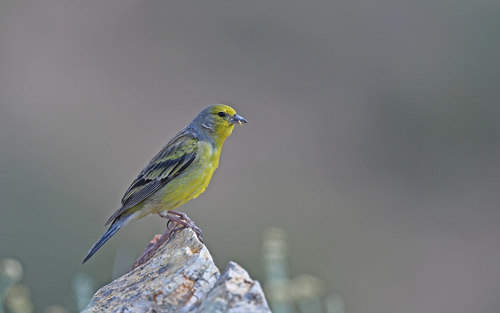
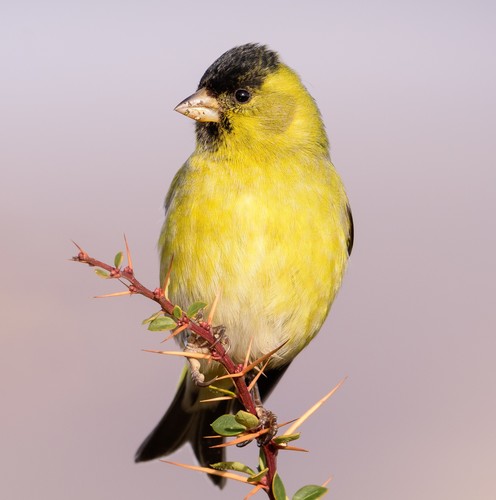
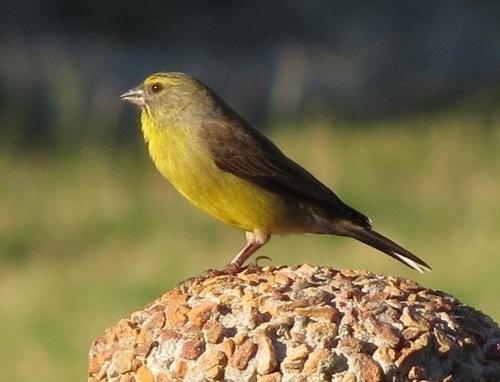
This species, the Cape siskin, has a scientific name of Crithagra totta (Sparrman, 1786), and averages 13 centimeters in total length. The tips of its flight feathers and tail bear white spots, a identifying feature that is present in both sexes and most easily visible when the bird is in flight. Adult males have light brown coloration on the back, wing coverts, rump, and upper tail, with yellow underparts. Their head, nape, and the sides of the neck are yellowish grey and olive, and fine dark brown streaks are most noticeable on the head and sides of the throat. Females have similar overall patterning to males, but are duller in color; they lack the grey coloring on the head and have more extensive streaking across the face and breast. Juvenile plumage closely resembles that of females, but is even duller, with darker or browner underparts. The Cape siskin does not share any geographic range with the slightly larger Drakensberg siskin. Drakensberg siskins lack the white spots on the flight feathers and tail seen in Cape siskins, and have less uniform upperparts. The Cape siskin's call, most often given while in flight, is described as voyp-veeyr. Its song is a weak, pleasant warble that is similar to the song of the yellow-fronted canary.