About Crinia signifera Girard, 1853
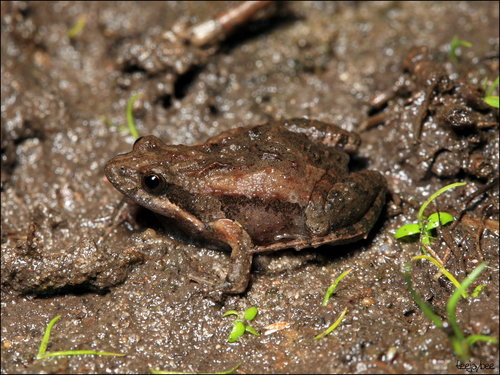
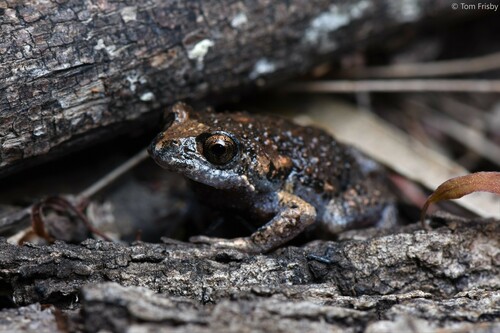
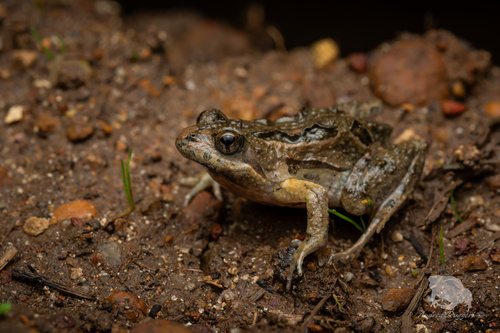
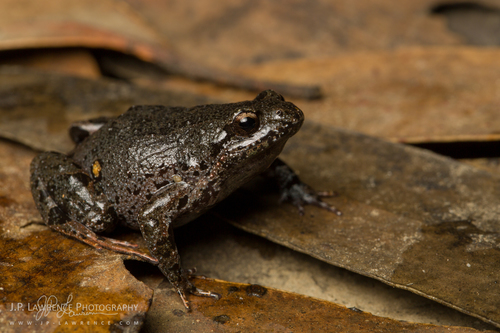
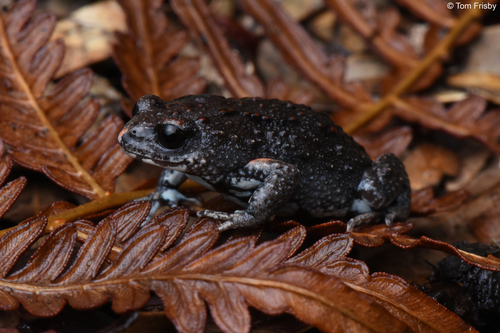
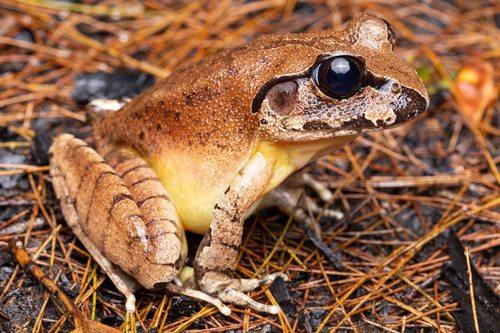
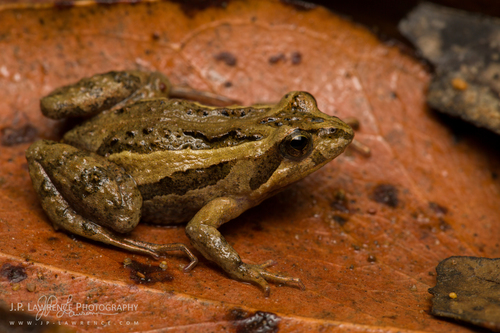
Crini signifera, commonly known as the common eastern froglet, is a small frog that reaches approximately 3 centimetres in length. Individuals range in colour from brown or grey across various shades, and have extremely variable markings, with great variation typically found even within confined local populations. A distinct dark triangular marking is located on the upper lip, and the legs bear darker bands. A small white spot sits at the base of each arm. Both the dorsal (back) and ventral (belly) surfaces of the species are highly variable. The dorsal surface may be smooth, warty, or marked with longitudinal skin folds, and its colour can be dark brown, fawn, light grey, or dark grey. The ventral surface shares a similar base colour to the dorsal surface, but is mottled with white spots. The common eastern froglet’s distribution covers southeastern Australia, spanning from Adelaide to Melbourne, and extending north along the eastern coast to Brisbane. It also lives across most of Tasmania. It is one of the most frequently encountered frog species within its range, because it can successfully occupy many different habitat types. During the breeding season, male common eastern froglets call in large choruses near still water sources or slow-flowing creeks. The male’s call is a repeated crik-crik-crik, and can be heard year-round, in both wet and dry conditions. On average, females lay 100 to 150 eggs in small clusters, which are attached to submerged vegetation. Eggs and tadpoles survive in water that is 14 to 15 °C. Tadpoles are typically brown, and grow to around 36 millimetres in length. Tadpole development into adult frogs is relatively short, taking between 2.5 and 3 months on average, though the duration can change depending on environmental conditions. At a constant water temperature of 15 °C, development can take anywhere from 6 weeks to more than 3 months. Newly metamorphosed froglets are very small, measuring around 8 millimetres. This species feeds on small insects, which are much smaller relative to the frog’s body size than the prey eaten by most other frog species.