About Cricetomys gambianus Waterhouse, 1840
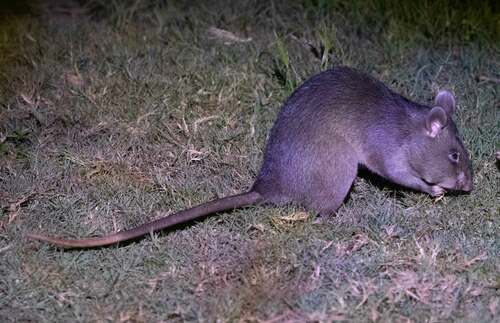
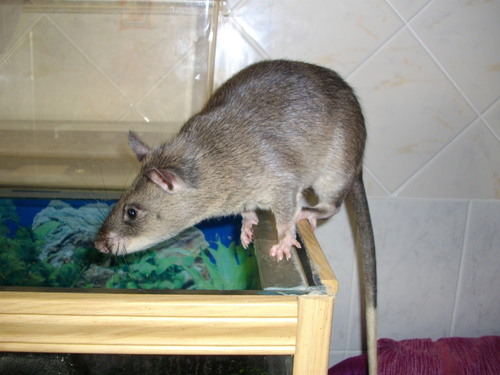
The Gambian pouched rat (Cricetomys gambianus Waterhouse, 1840) has very poor eyesight, so it relies heavily on its senses of smell and hearing. Its common name comes from the large, hamster-like pouches located in its cheeks. It is not considered a true rat, and instead belongs to an African branch of muroid rodents. Adults typically weigh between 1.0 and 1.4 kg, which is equal to 2.2 and 3.1 lb. In its native Africa, this species lives in colonies of up to 20 individuals. Colonies are most often found in forests and thickets, but they also commonly occupy termite mounds. The Gambian pouched rat is omnivorous; it feeds on vegetables, insects, crabs, snails, and a range of other items, but appears to prefer palm fruits and palm kernels. Its characteristic cheek pouches let it gather several kilograms of nuts each night to store underground. There are recorded cases of Gambian pouched rats stuffing their cheek pouches so full of date palm nuts that they can barely squeeze through the entrance of their burrow. A Gambian pouched rat burrow is made of a long main passage with smaller side branches and multiple separate chambers: one chamber is used for sleeping, and the remaining chambers are used for food storage. Gambian pouched rats reach sexual maturity between 5 and 7 months of age. They can produce up to four litters every nine months, and each litter can have as many as six offspring. Males of the species are territorial, and typically act aggressively when they encounter other males.