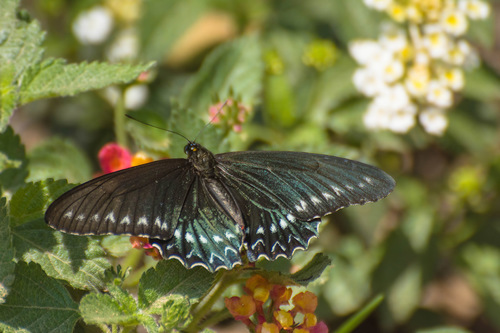
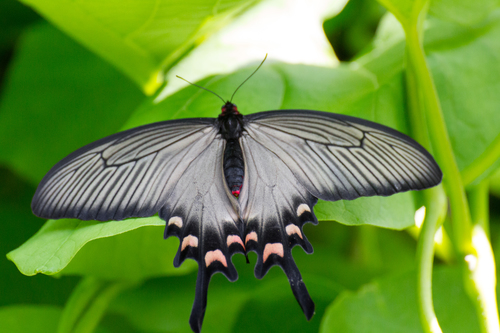
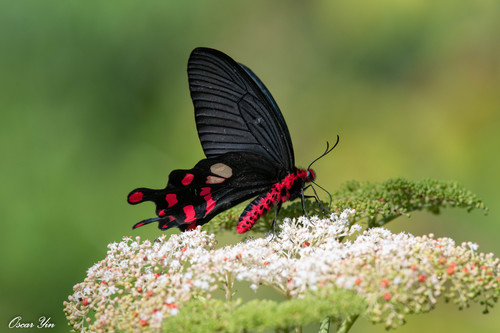
About Cressida cressida (Fabricius, 1775)
For explanation of terminology used here, see External morphology of Lepidoptera. Ecology: The larvae of Cressida cressida feed on Aristolochia species. In the tropics, this includes A. tagala. More commonly, in southern Queensland, the species uses smaller growing Aristolochia species such as A. thozetii and A. meridionalis ssp. centralis, which was formerly listed as A. pubera, A. sp. D'Aguilar Range and A. sp. Mt. Coot-tha. After feeding on these poisonous plants, the caterpillars are unpalatable to predators, and they retain this unpalatability into adulthood. Papilio anactus is a Batesian mimic of the male Cressida cressida, copying both its appearance and flight style to gain the same predator avoidance benefit. Cressida cressida lives mainly in drier forest across its distribution. In Australia, it is often found in dry Eucalyptus forest, where its host plants grow as small scrambling vines in open areas. It is most common in forests along the border of the Great Dividing Range. Cressida cressida is not a threatened species.