About Crepidula onyx G.B.Sowerby I, 1824
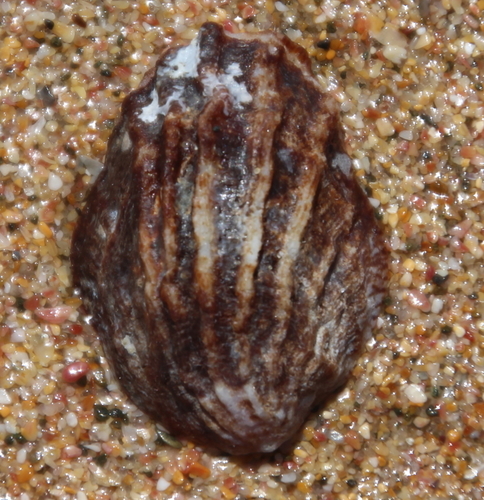
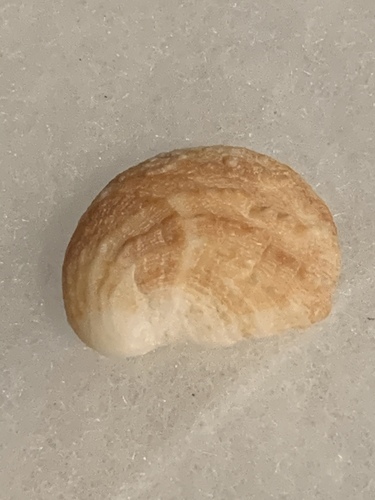
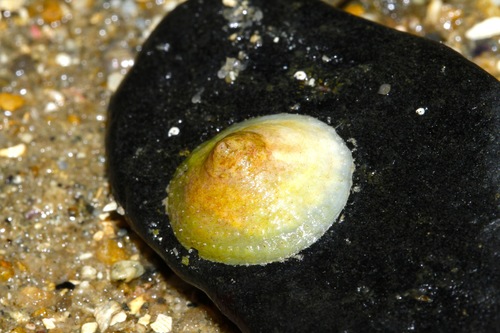
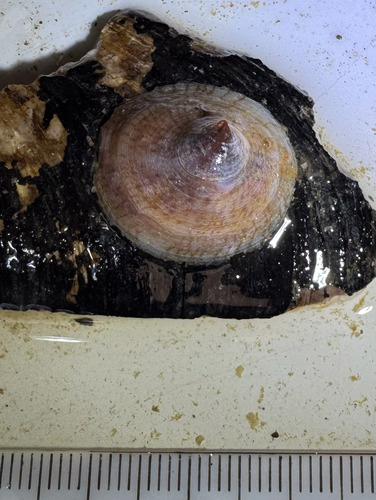
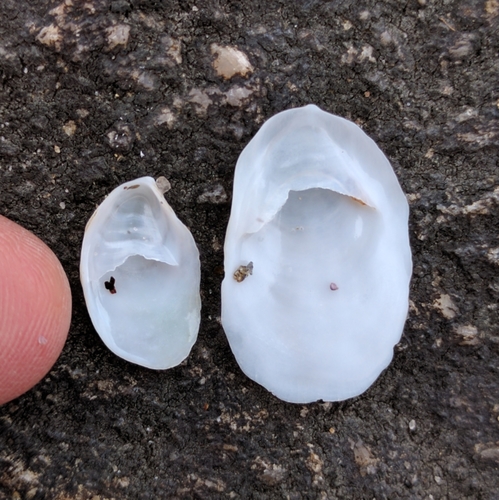
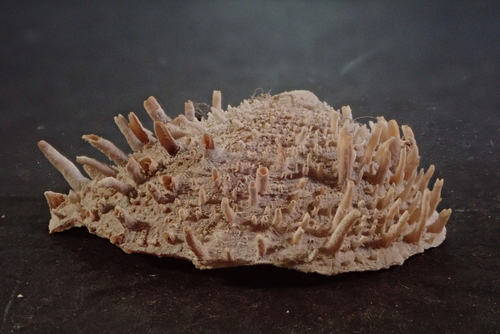
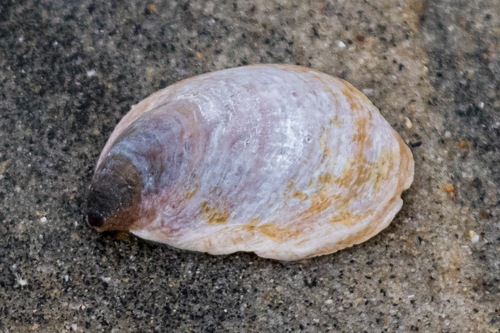
Crepidula onyx, first formally described by G. B. Sowerby I in 1824, has a maximum shell length of 70 mm. The shell interior is glossy, with a strong tan to dark brown color that matches the common coloring of the mineral onyx, and its internal shelf (or deck) is white. This species can be clearly distinguished from Crepidula adunca by several consistent shell traits: it reaches a larger overall size; its apex is low, located near the shell margin, curved to one side, and not distinctly hooked, unlike the high, hooked, centrally placed apex of C. adunca; the ends of its interior shelf are notched, rather than curved forward at both ends; and its periostracum is more prominent. This slipper snail is native to the Eastern Pacific coast of the Americas, with a native range that extends from Southern California down to Chile. It has been introduced outside this native range and has been an established nonindigenous population in Puget Sound, Washington, since 2005. C. onyx is most commonly found attached to rocks, shells, and man-made pilings in protected bays. It also inhabits sheltered sites along the open coast, and occurs from the low intertidal zone down into subtidal waters.