About Creophilus maxillosus (Linnaeus, 1758)
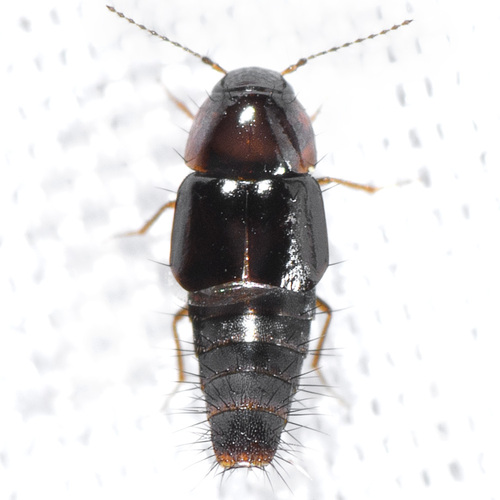
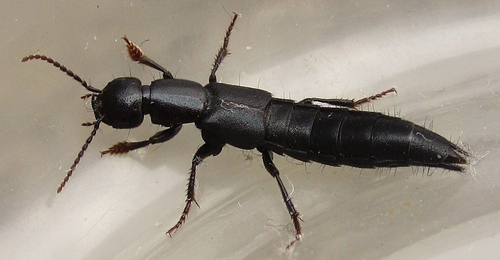
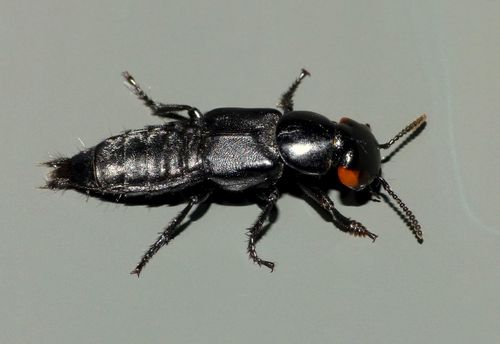
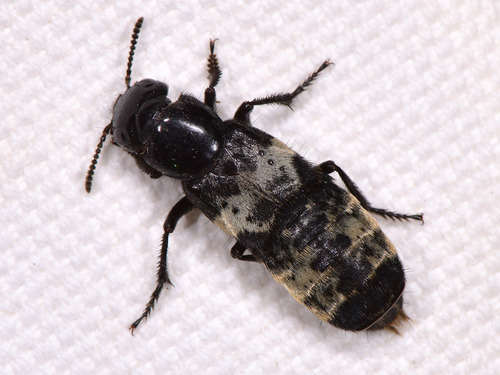
Creophilus maxillosus, commonly called the hairy rove beetle, has distinct physical characteristics across its life stages. Mature larvae measure 20–25 millimetres (0.79–0.98 in) long, with a cylindrical, stout build. Adults are shiny black, approximately 12–18 mm (0.47–0.71 in) long. Their elytra only cover the first few abdominal segments, a key identifying feature. Adults have large prominent eyes, mandibles that close across each other at the front of the head, and can inflict a painful stab if harassed or handled carelessly. Golden setae grow on the posterior angles of the head, the anterior angle of the pronotum, the elytra, and the last few abdominal segments. The antennae are thick, beaded, and made up of 11 segments. Eggs are milky white, 2 to 3 mm (0.079 to 0.118 in) long. Egg development lasts approximately 4 days, and eggs hatch in about 3 days depending on temperature. The larval stage lasts around 14 days. Pupae are around 11 mm wide and the pupal stage lasts 16 days. The total estimated life cycle duration for Creophilus maxillosus is 37 days. This beetle species occurs in woods and any location with carrion, and is generally active from spring through autumn. In eastern United States, it is found most commonly in fall and spring, but can also occur in summer. These active beetles fly swiftly or run rapidly over ground, holding the tip of their abdomen raised like a scorpion's stinger. Typical habitats include forest leaf litter, decaying plant material including fruit, under dead tree bark, carrion, dung, under stones or rocks, and fresh water areas with washed-up brown algae.