About Cratogeomys castanops (Baird, 1852)
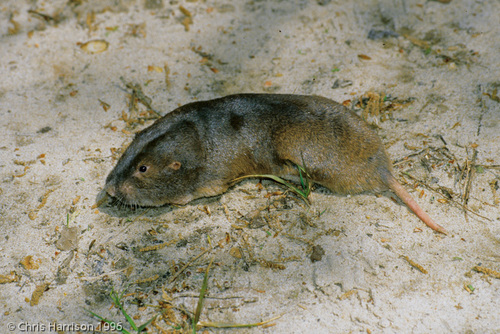
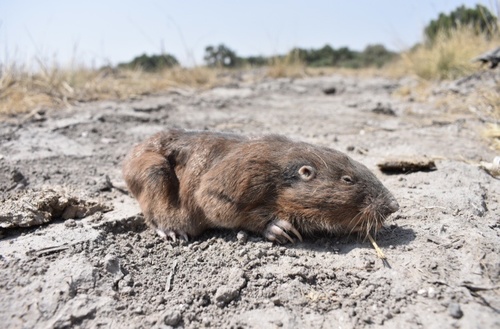
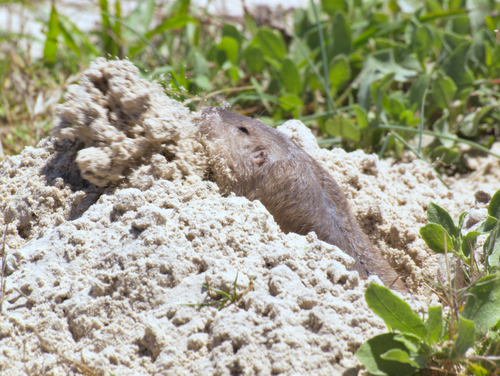
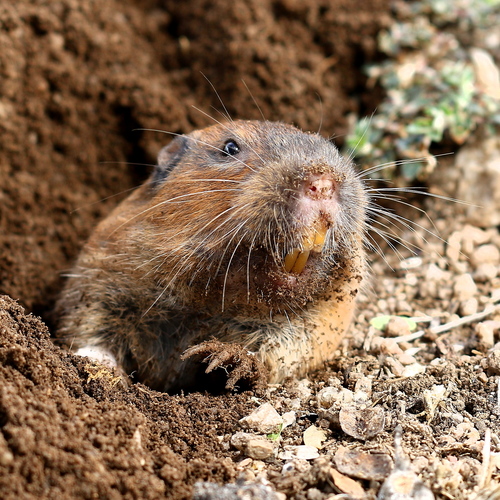
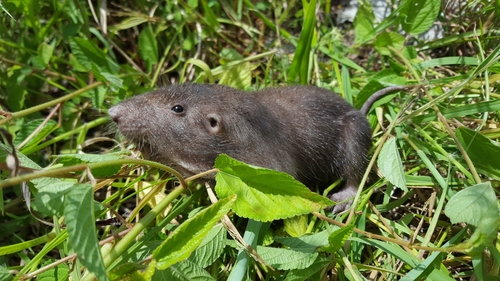
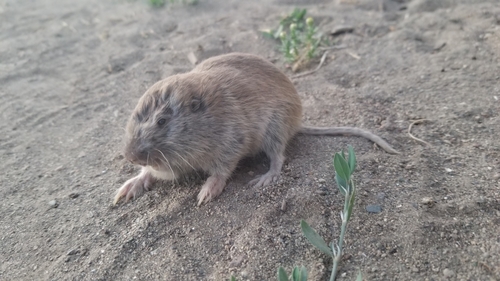
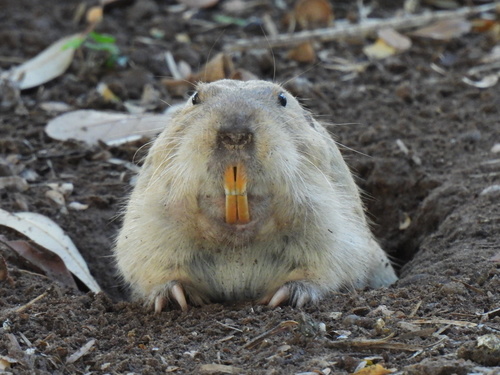
The yellow-faced pocket gopher, Cratogeomys castanops, is a species of pocket gopher native to shortgrass prairies in the southwestern United States and northern Mexico. This species lives north of the Southern Coahuila Filter-Barrier (SCFB). It has a small to medium-sized skull, and fossils of the Cratogeomys genus have been recorded from the pre-Pleistocene Benson Beds of Arizona. The yellow-faced pocket gopher has a yellowish-brown coat, a short tail, and one deep groove running down the anterior middle of each incisor. Reproductive activity for yellow-faced pocket gophers begins in November, and reaches a peak in March and/or April. During mating and copulation, males emit low guttural squeaks throughout their exploratory activities, then bite the female when body contact is made. Once young gophers are old enough to leave the nest, they travel through their mother’s burrows. They disperse from the parental burrow when they are nearly fully grown. Yellow-faced pocket gophers typically live in deep sandy or silty soils that are relatively free of rocks. Where another pocket gopher genus, Geomys, is present, Cratogeomys is restricted to denser, shallower, sometimes rockier soils. Research conducted in Kansas found that unoccupied gopher tracts were largely areas with fine-textured soils planted with crops. The crops (corn, wheat, and grain sorghum) were harvested and disked annually, along with the roadside ditches adjacent to the cropland. Researchers concluded that pocket gophers cannot inhabit these areas because land-use practices have destabilized habitats, eliminating both refuge and dispersal corridors. Small carnivorous mammals, large hawks, and owls prey on yellow-faced pocket gophers.