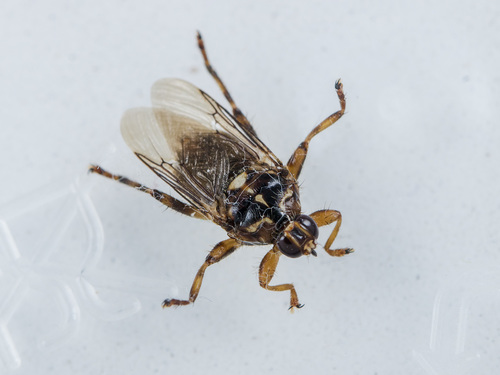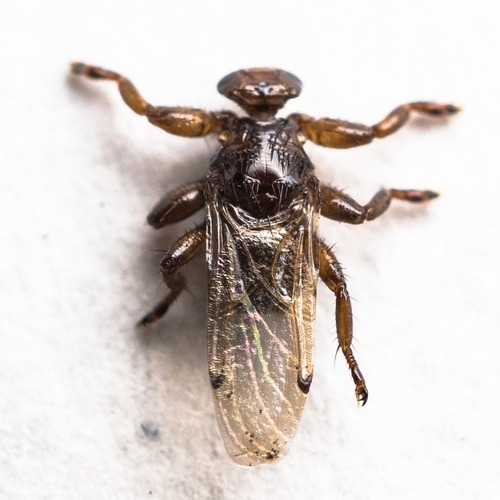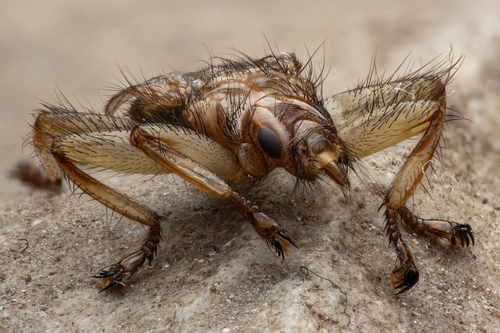
About Crataerina pallida (Latreille, 1812)
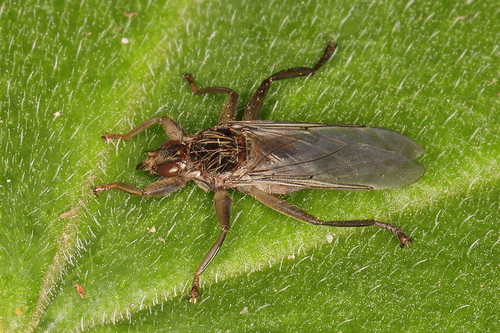
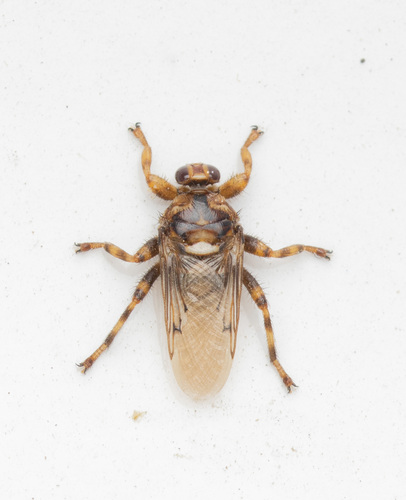
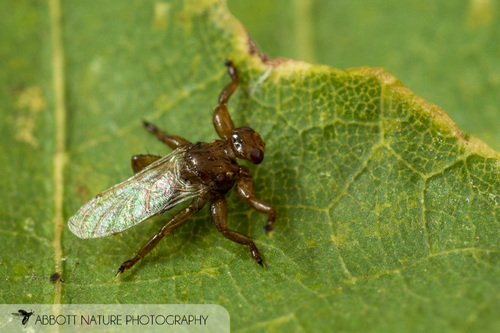
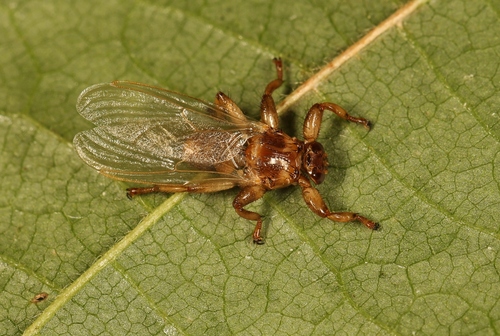
Crataerina pallida, commonly called the swift lousefly, is a species of biting louse fly that belongs to the family Hippoboscidae. These flies are commonly found in the nests of the common swift (Apus apus) across Europe and Asia. The entire life cycle of this lousefly is spent living in association with swifts. Adult louseflies produce larvae in late summer. After production, the larvae develop into pupae, which remain dormant throughout winter inside empty swift nests. When returning adult swifts lay their first eggs in spring, adult flies hatch from the pupae. The newly hatched adults feed on the blood of both swift nestlings and adult swifts, sucking approximately 25 mg of blood every five days. These parasites can act as a serious pest for both adult and nestling swifts. Crataerina pallida is a vertically transmitted ectoparasite, meaning it is passed from parent swift hosts to their offspring. This species is considered relatively benign, because its own fitness depends on the successful reproduction of its swift hosts. Existing evidence shows that C. pallida has little to no effect on either swift nestling growth or nestling fledging success rate.