About Crataegus mollis (Torr. & A.Gray) Scheele
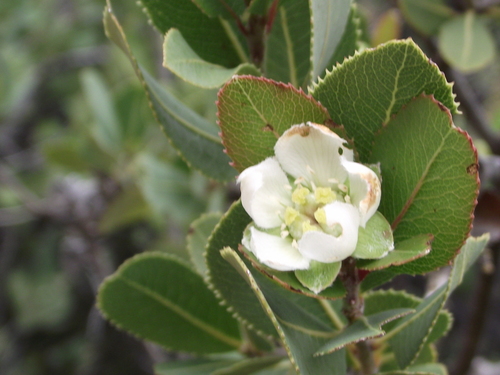
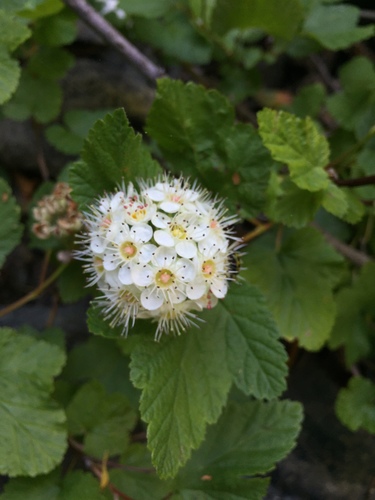
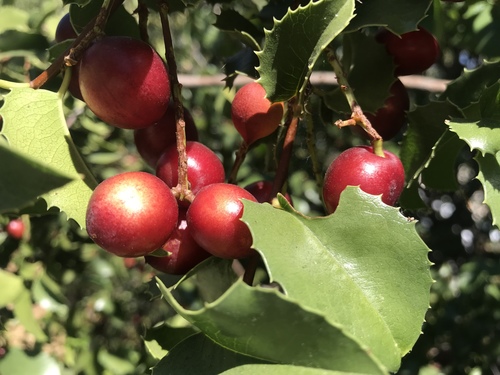
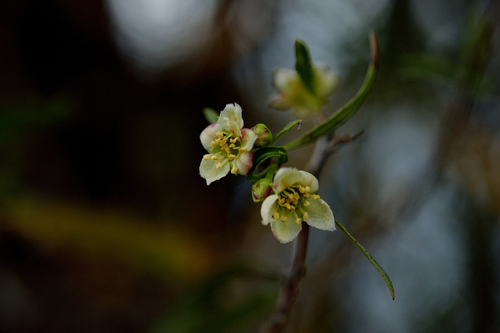
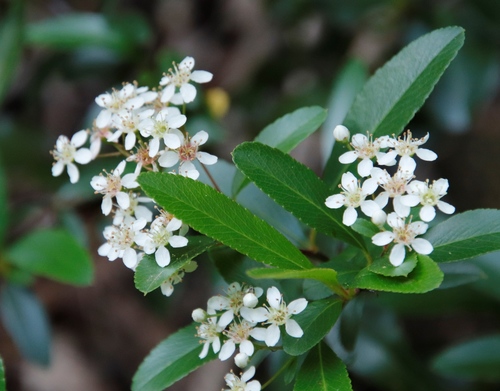
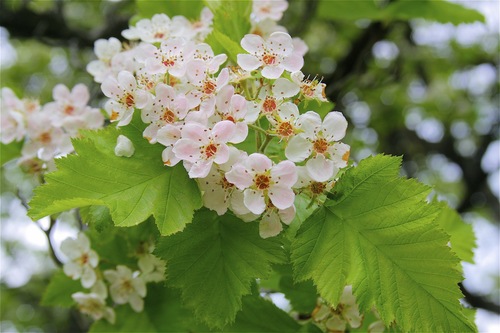
Crataegus mollis (Torr. & A.Gray) Scheele, commonly called downy hawthorn, is a tree species that reaches 10–13 m (33–43 ft) in height. It has an ash-grey trunk and a dense crown of thorny branches. Its leaves measure 5–10 cm (2.0–3.9 in) long, and often drop by late summer because of defoliation from leaf diseases. The tree experiences little overall harm from this early leaf loss. Downy hawthorn is one of the earliest blooming species in the Crataegus genus, and it also produces the earliest ripening fruit of the genus. Its large, brightly colored edible fruit ripens between mid-August and early September, and the ripe fruit decorates already defoliated trees through late summer and early fall, before falling from the tree shortly after ripening. The species produces white flowers that grow in clusters at the tips of branches in spring. Crataegus mollis is closely related to Crataegus submollis, but the two species have separate native ranges. One key difference between the two is stamen count per flower: Crataegus submollis has roughly 10 stamens, while Crataegus mollis has roughly 20 stamens per flower. This species is targeted by Gypsy moths, and common foliage diseases that affect it include leaf rusts and fire blight. Its sharp thorns are a known hazard. Crataegus mollis is uncommon in cultivation. The species' seeds typically do not germinate until two to three years after the fruit ripens, because they require a latent period before sprouting.