About Crassula capitella Thunb.
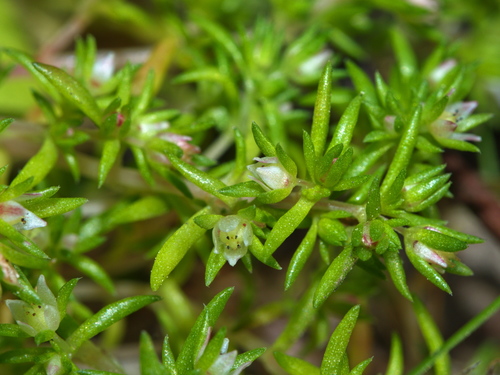
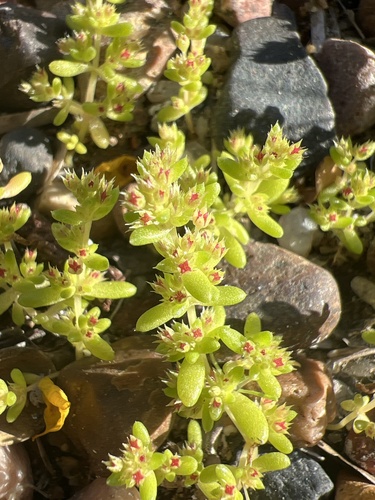
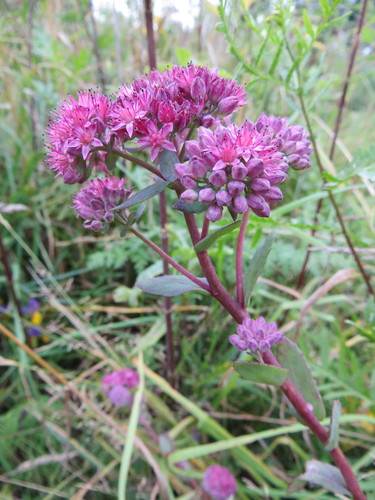
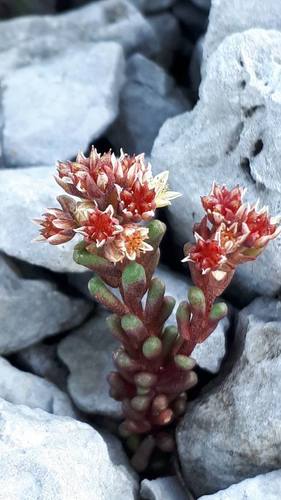
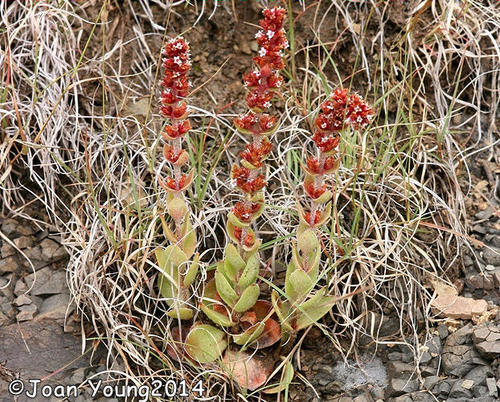
Crassula capitella Thunb. is an extremely variable small succulent herb species, growing 15–40 cm (about 6 inches) tall. Its stems are either erect or rambling and mat-forming, and each stem forms roots at its internodes; these roots take hold if the stem lies against the ground. The species is mostly biennial and blooms in summer. Its narrow, pointed, splayed (often described as "propeller-like") leaves are stacked, and start out light green before turning a strong reddish color in sun. Larger leaves are found near the base of the rosette; moving toward the top of the rosette, leaves gradually shrink in size and transition into floral bracts, as the stem develops a long, pointed inflorescence. Small white star-shaped flowers grow all around each thick, upright stem. Plants will be damaged if exposed to temperatures below 30 °F (−1 °C).
Crassula capitella is native to southern Africa, where it occurs in Transvaal, Free State, Eastern Cape, and parts of southern Namibia and Botswana.
In cultivation, Crassula capitella prefers full sun to partial shade and has average watering needs. It must not be exposed to temperatures below 30 °F (−1 °C), and can develop foliage edema, often caused by rapid changes in moisture.