About Craspedocephalus borneensis (Peters, 1872)
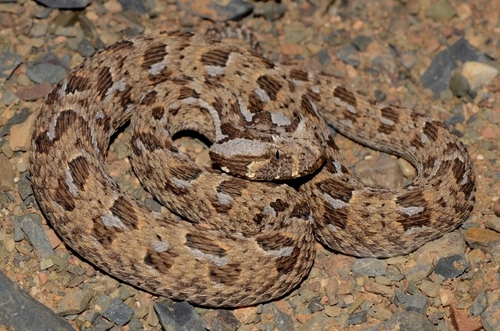
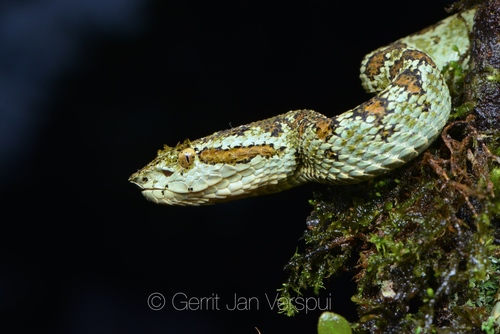
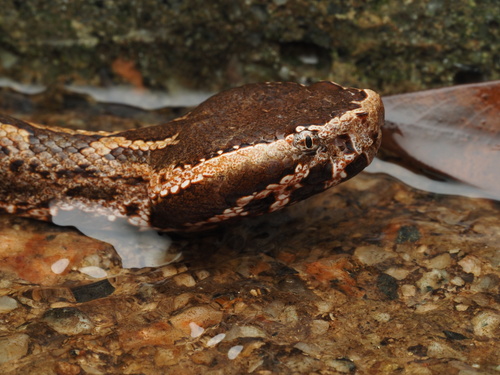
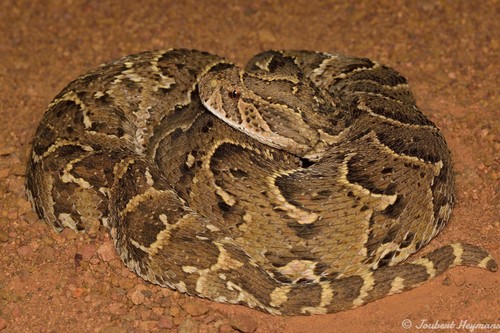
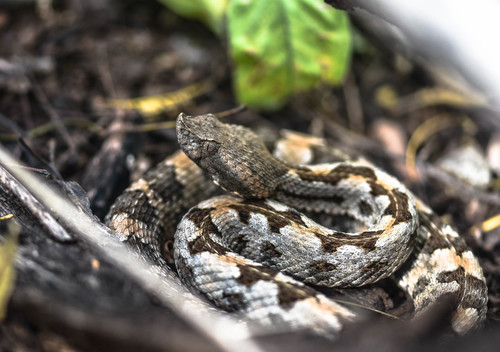
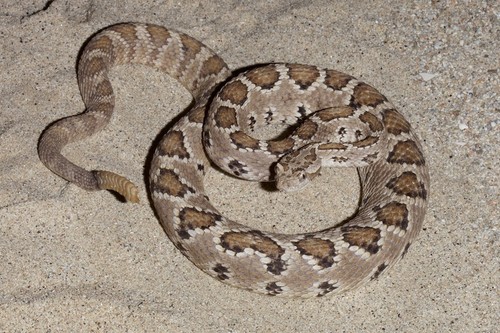
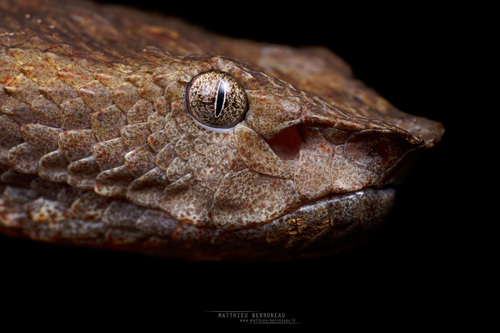
This species, Craspedocephalus borneensis, first described by Peters in 1872, has consistent scalation characteristics: midbody dorsal scales occur in 19–21 rows, ventral scales number 152–180, the anal scale is undivided, divided subcaudal scales number 45–58, and supralabial scales number 8–11. Its coloration is variable. Individual snakes can be brown with darker brown saddle-shaped markings, light brown with a small number of darker markings, or even bright yellow with darker markings. Adult Craspedocephalus borneensis can reach a snout-vent length (SVL) of 83 cm (33 in). The geographic range of this species covers the island of Borneo, including the areas of Brunei, Kalimantan, Sabah, and Sarawak, as well as the Natuna Islands. Its designated type locality is "Sarawack", which corresponds to Sarawak, Borneo. This snake inhabits forests located at altitudes below 1,130 m (3,710 ft). Although it has a prehensile tail, adult individuals are typically found on the forest floor, while juveniles may occur in low-growing vegetation. It is currently unknown whether this Craspedocephalus species reproduces by laying eggs or giving birth to live young.